Two Mars probes used Earth as a slingshot, two days apart, and both burns worked
NASA's two ESCAPADE spacecraft each swung past Earth with a 9-minute engine burn, the first powered Earth flyby NASA has used to send a probe to Mars. They arrive in September 2027.

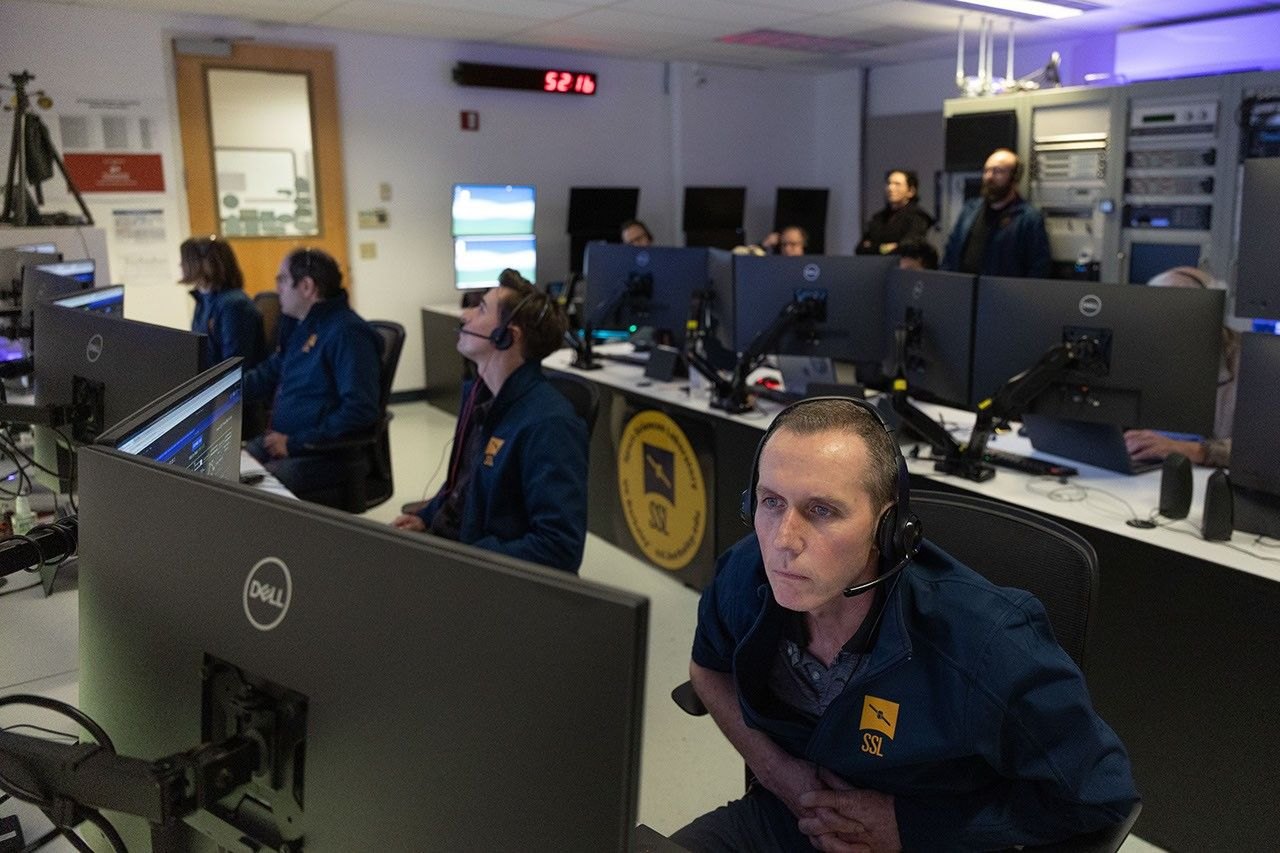
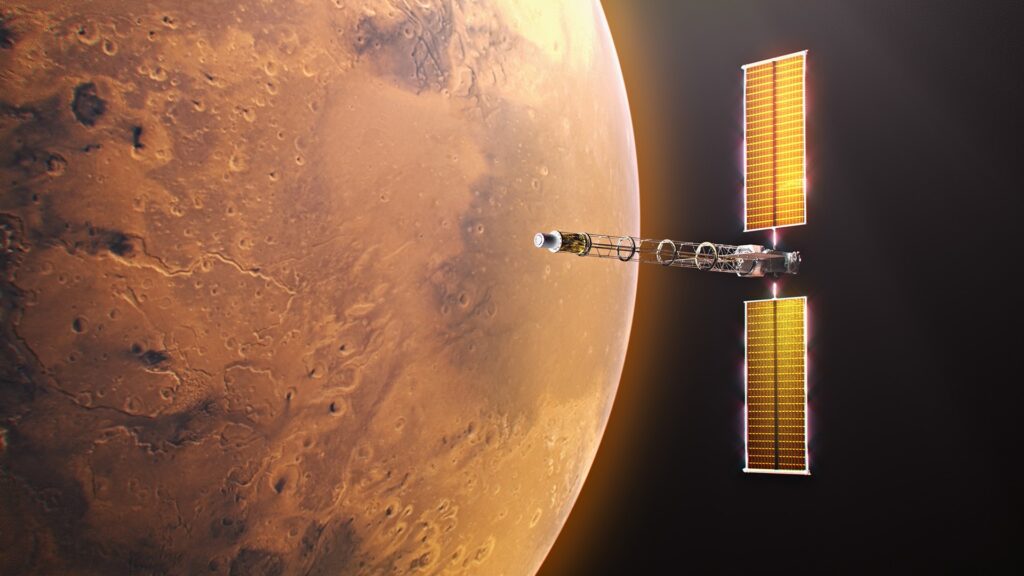
NASA’s twin ESCAPADE spacecraft have each completed a powered flyby of Earth, using the planet’s gravity plus a long engine burn to fling themselves toward Mars. NASA says both are on target to arrive in September 2027.
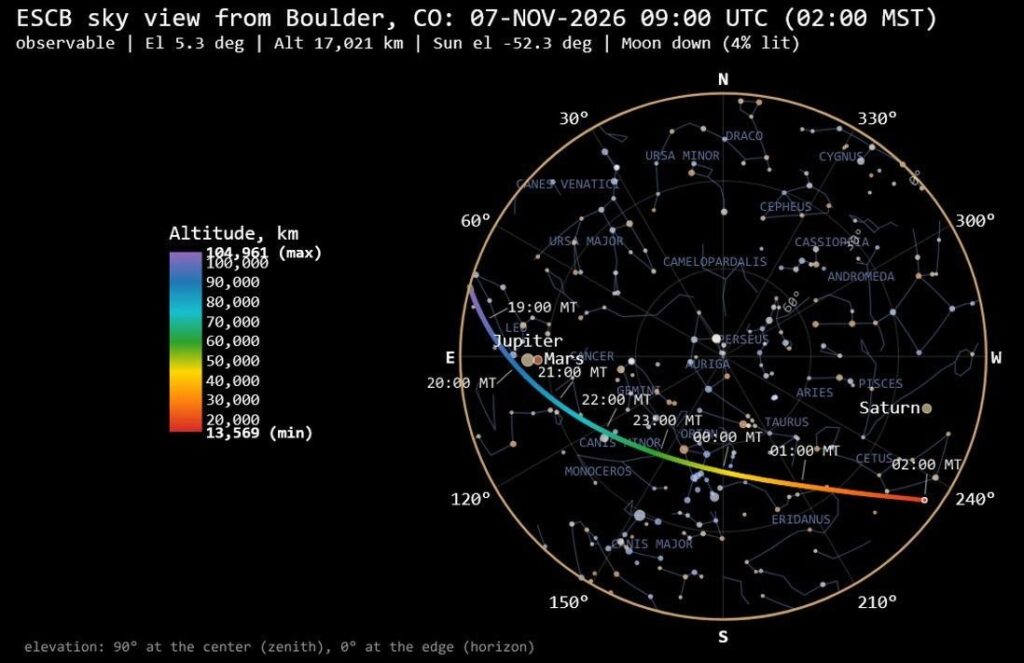
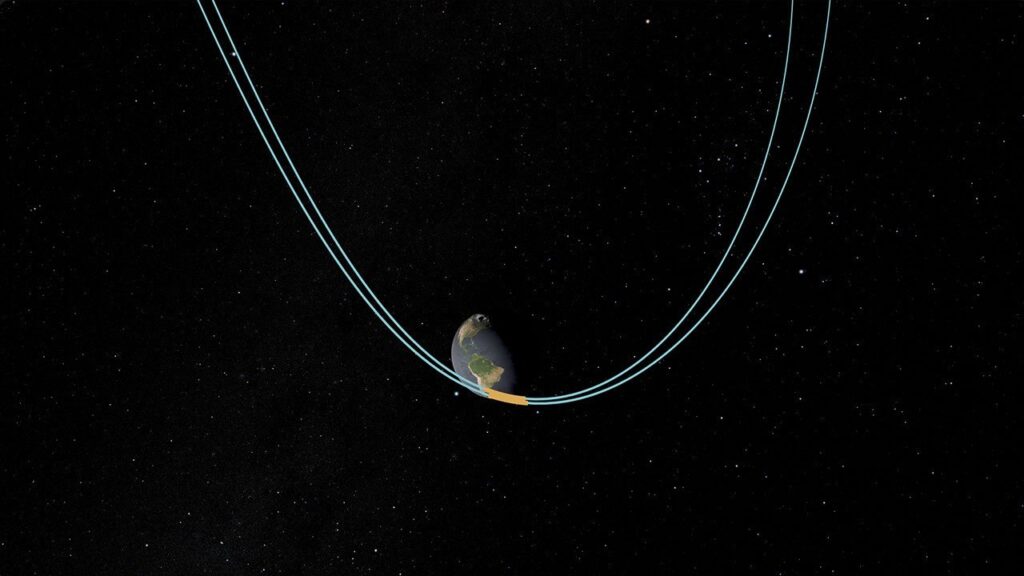
According to NASA’s announcement, the first spacecraft made its closest approach at about 5 a.m. EST (10:00 UTC) on Nov. 7, 2026. The second followed at about 6 a.m. EST (11:00 UTC) on Nov. 9. Each fired its engine for roughly nine minutes. This is the burn that sends a spacecraft irreversibly onto its course to Mars.

A first for NASA: A Mars boost from Earth’s gravity
The first spacecraft passed about 1,000 miles above Earth’s surface, and the second about 650 miles. A burn at the lowest point of a flyby is especially efficient, because the spacecraft is moving fastest there. In NASA’s earlier preview of the maneuver, the burn was expected to add more than 1,000 mph, taking each spacecraft from about 6.3 to about 6.7 miles per second. NASA also described each probe as about the size of a refrigerator.
“This is the first time NASA has used a powered Earth flyby to propel a spacecraft toward Mars, and we’ve now executed this maneuver twice, flawlessly, in just two days,” said Asal Naseri, acting associate flight director for the Heliophysics Division at NASA Headquarters.

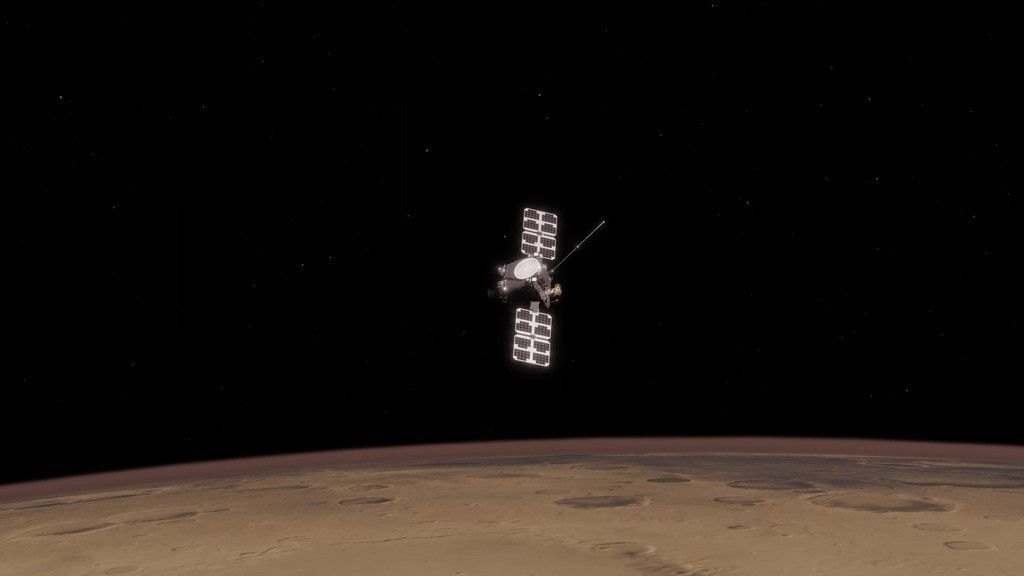
The probes lifted off from Florida’s Cape Canaveral Space Force Station on Nov. 13, 2025. At that point the Sun lay between Earth and Mars, so a direct trip was not practical. Rather than head straight for Mars, they flew a kidney-bean-shaped loop around Lagrange point 2, a gravitational balancing point about a million miles from Earth on the side away from the Sun. They then returned to Earth once the planets were better aligned. On the way they passed several times through Earth’s magnetotail, the part of our planet’s magnetic environment that the solar wind stretches away from the Sun, and took science observations there.
Waiting for a signal at Berkeley
The flybys were run from the mission operations center at the University of California, Berkeley’s Space Sciences Laboratory. NASA’s photo from the first burn shows principal investigator Robert Lillis and the operations team waiting for the spacecraft’s signal.
Both burns were also announced in advance. Our earlier report on the planned flybys covers the schedule, and NASA’s preview said the probes would be faint and most likely need a telescope to see.
Why this route could change how Mars missions are timed
Most Mars missions launch in a narrow window that opens about every two years, when the planets line up. Jeff Parker of Advanced Space, the lead mission designer, said the loiter orbit and Earth flyby give “the flexibility to launch almost anytime” and then use Earth’s gravity for the boost, rather than waiting for the planets to align.
That matters because a flexible launch date lets a small mission fly when a rocket is ready, not when the calendar allows. ESCAPADE belongs to NASA’s SIMPLEx program, which backs smaller, lower-cost planetary missions. NASA says the mission is funded by its Heliophysics Division, and that the University of California, Berkeley leads it with partners including Rocket Lab, NASA’s Goddard Space Flight Center, Embry-Riddle Aeronautical University, Advanced Space and Blue Origin.
Two orbiters, two places at once: The science plan
The scientific goal is to understand how the solar wind, a stream of charged particles from the Sun moving at about a million miles per hour, interacts with Mars and strips away its atmosphere. Mars has no global magnetic field like Earth’s, so the wind reaches its upper atmosphere more directly. Most earlier missions have measured this from a single spacecraft, which cannot separate changes over time from changes by location. NASA says ESCAPADE will be the first science mission to coordinate two orbiters around Mars.
Lillis put it this way: “the first time we will be able to make coordinated observations of the Martian environment from two different locations simultaneously.” Michele Cash, ESCAPADE program scientist at NASA Headquarters, said the results could help plan for future human exploration of Mars.
The 10-month cruise and the Mars arrival dates
During the cruise, the spacecraft will study the solar wind between Earth and Mars and make a series of trajectory correction maneuvers, small burns that fine-tune the path. Mars orbit insertion burns, each about 11 minutes long, are planned for Sept. 7 and Sept. 9, 2027.
After arrival, the probes will spend several months maneuvering into their first science formation, following one another in the same orbit. Science operations are expected to begin in June 2028. Six months later they will split into different orbits: one farther out to watch the incoming solar wind, the other closer to study how Mars responds. That campaign is scheduled to last five months.