Life aboard the International Space Station in 2026: Crew, routine and a 2030 end date
Eleven people were aboard the International Space Station when Crew-13 arrived on Oct. 1, 2026, and NASA's own figures show how they live and work in orbit before its planned 2030 end.

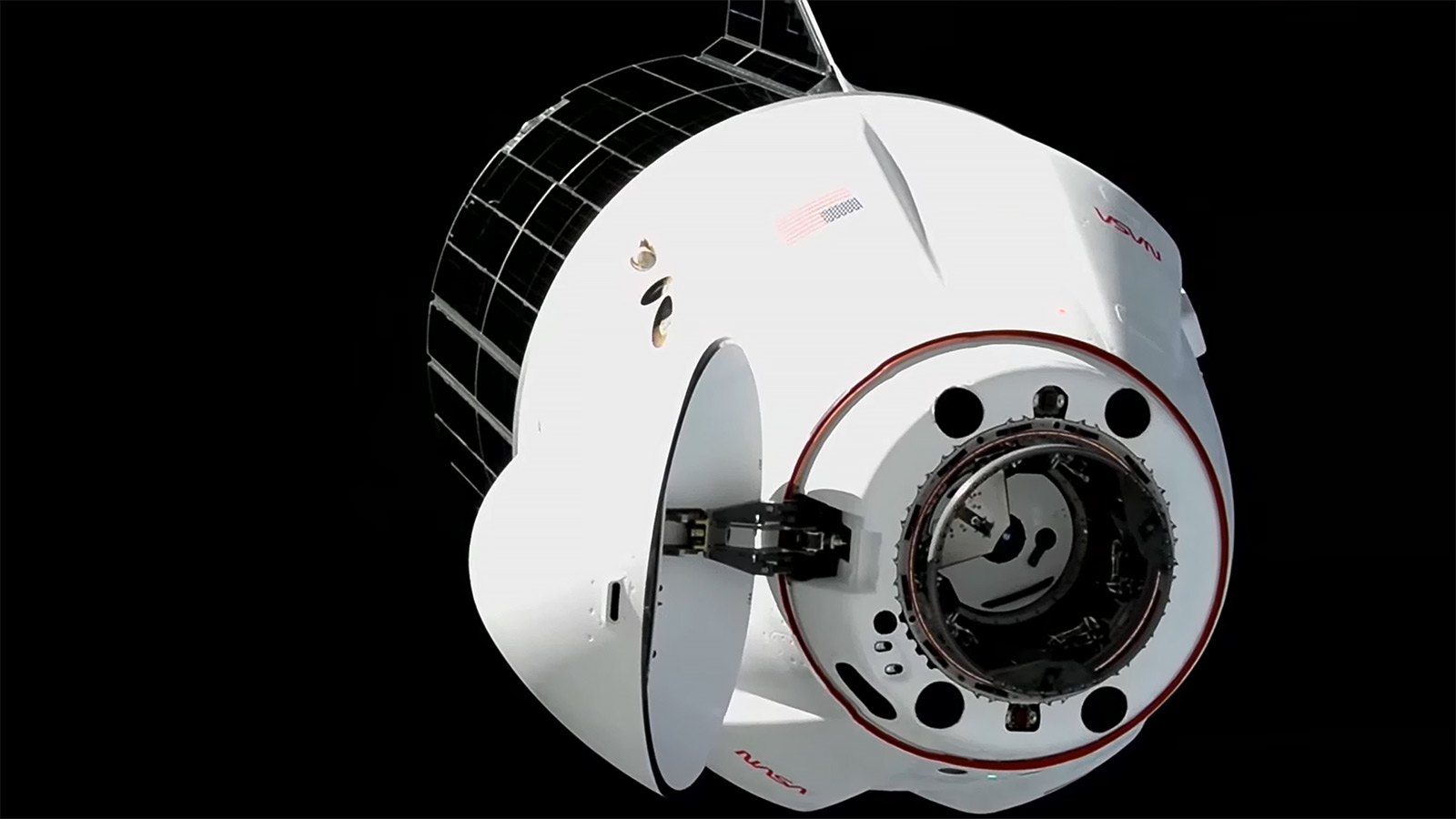
Eleven people were aboard the International Space Station after Crew-13 entered the outpost on Oct. 1, 2026. NASA says the station is operated through 2030, when a SpaceX-built vehicle is due to bring it down.
Eleven people and six docked spacecraft
NASA’s station blog reports that the Dragon hatch opened at 9:19 p.m. EDT on Oct. 1 (01:19 UTC on Oct. 2). NASA astronauts Jessica Watkins and Luke Delaney, Canadian Space Agency astronaut Joshua Kutryk and Roscosmos cosmonaut Sergey Teteryatnikov joined Expedition 75, the station’s current numbered crew rotation.

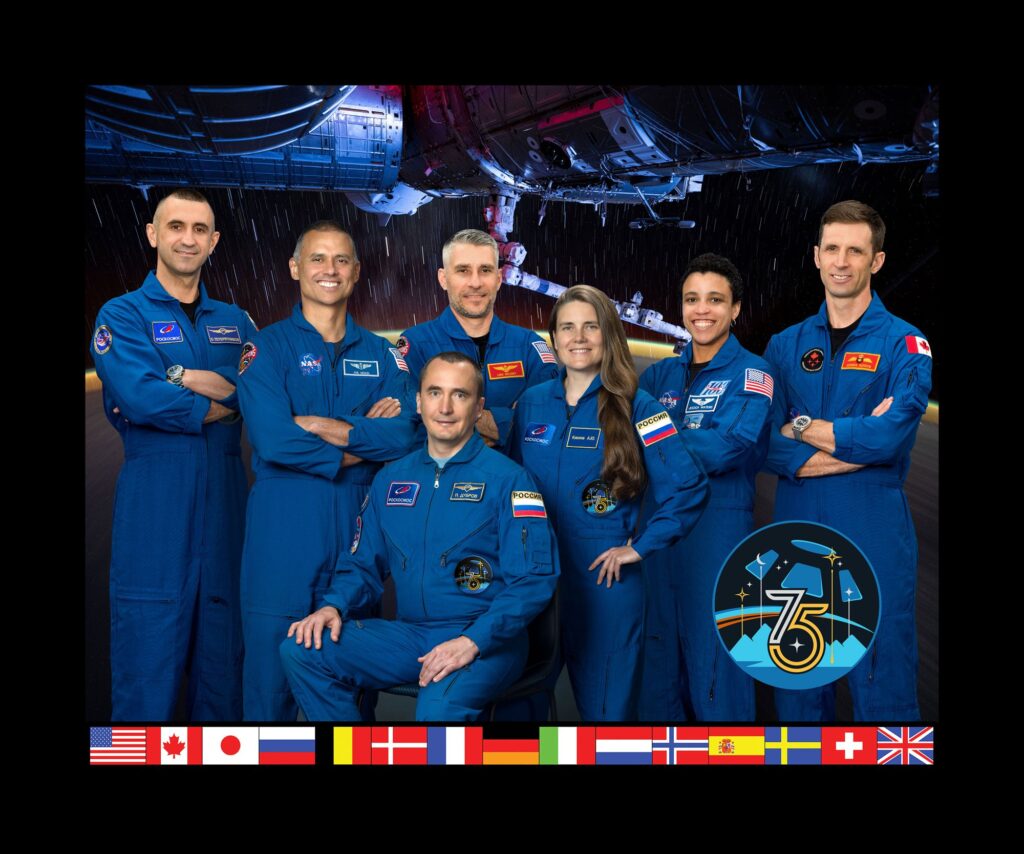
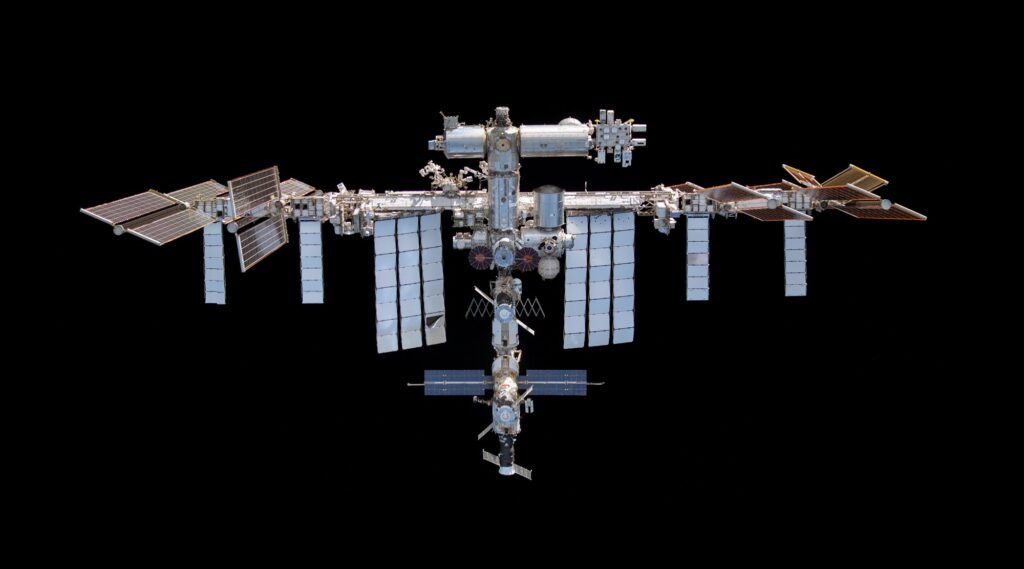
Already aboard were NASA astronauts Jessica Meir, Jack Hathaway and Anil Menon, ESA astronaut Sophie Adenot, and Roscosmos cosmonauts Pyotr Dubrov, Anna Kikina and Andrey Fedyaev. That made 11 people. NASA’s configuration image from the same day shows six spacecraft attached: the Crew-12 and Crew-13 Dragons, a Northrop Grumman Cygnus XL, the Soyuz MS-29 crew ship and the Progress 95 and 96 cargo ships.
The Expedition 75 page says the expedition began on July 26, 2026 and is scheduled to end in spring 2027. Dubrov is commander. Planned research includes in-space manufacturing, augmented reality and artificial intelligence methods for crew health checks, and bioprinting of human tissue. The page also lists four spacewalks between Aug. 6 and Sept. 1, each lasting between 6 hours 23 minutes and 6 hours 49 minutes.

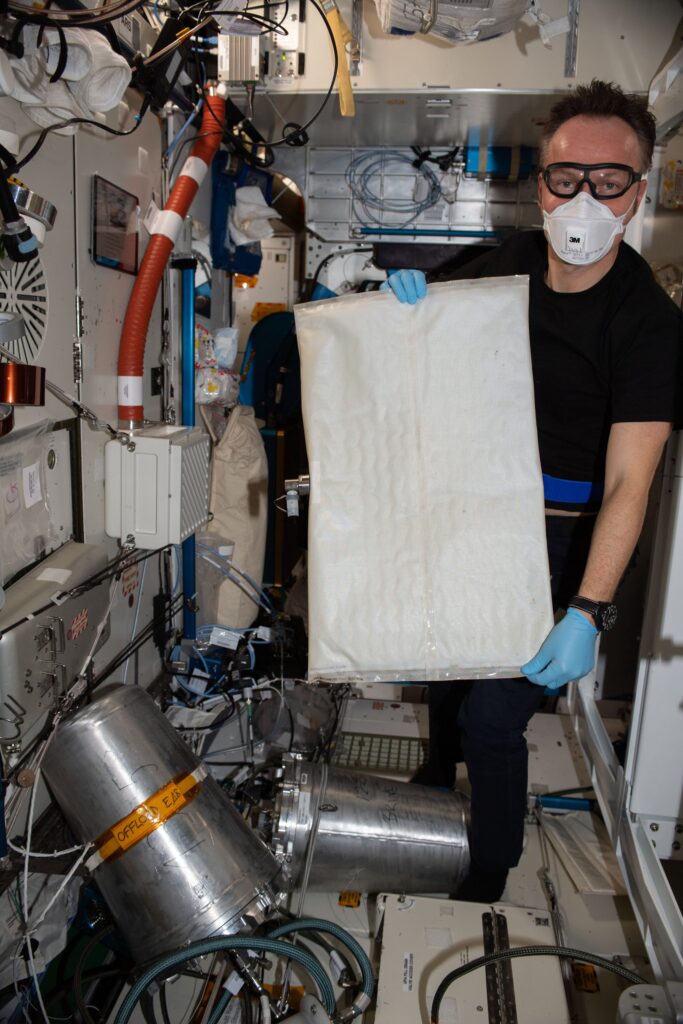
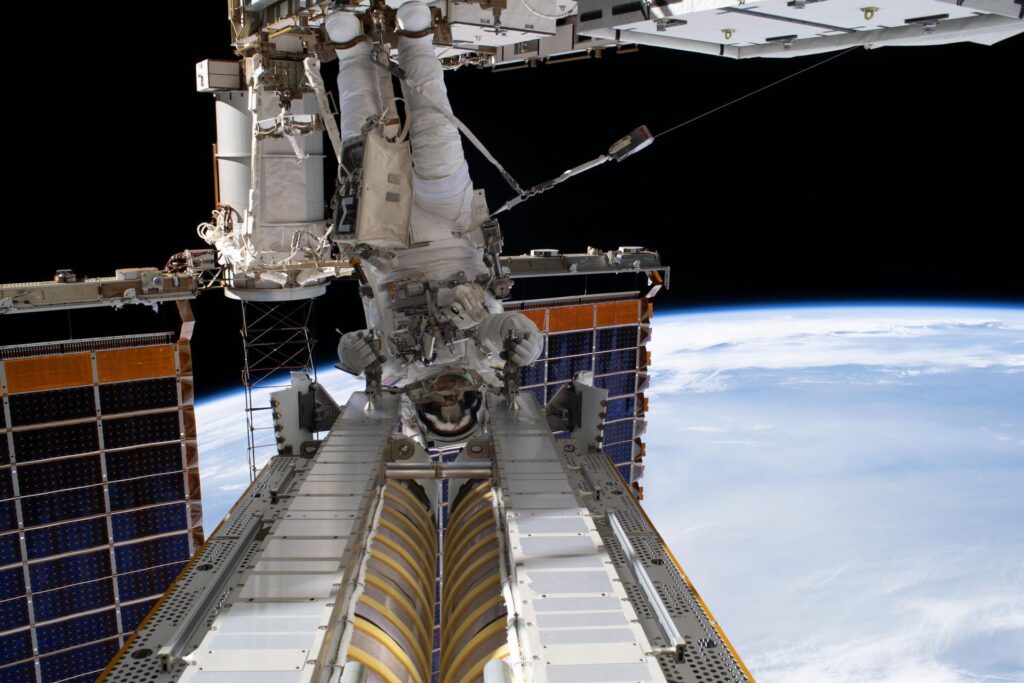
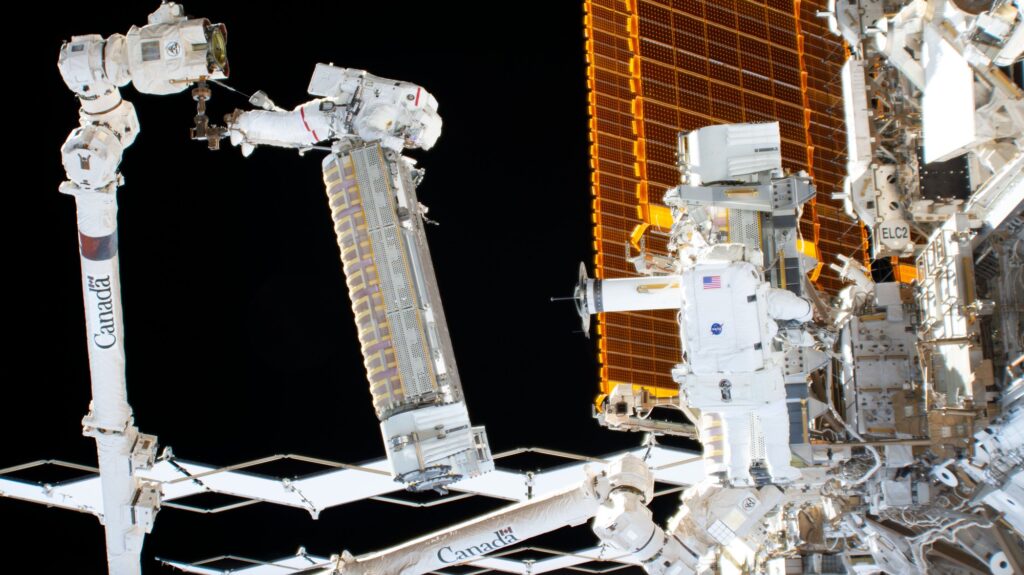
Supplies arrived on Oct. 15. According to NASA’s docking report, SpaceX’s 35th commercial resupply mission docked to the Harmony module at 14:27 UTC, carrying more than 6,300 pounds of food, supplies and equipment. The cargo included hardware for making artificial retinas in microgravity, the near-weightlessness of orbit, and brain organoids, tiny lab-grown clusters of brain cells, for studying neurodegenerative disease. The final set of ISS Roll-Out Solar Arrays, new solar panels that unroll in space, is aboard and is scheduled for installation later this fall. Dragon is scheduled to leave in mid-November.
How much room the crew actually has
NASA’s facts and figures give the station a pressurized volume of 35,491 cubic feet (1,005 cubic meters). The habitable volume, which excludes visiting vehicles, is 13,696 cubic feet (388 cubic meters). The agency compares the living space to a six-bedroom house and counts six sleeping quarters.

The structure measures 356 feet (109 meters) end to end and has a mass of 925,335 pounds (419,725 kilograms). It circles Earth 16 times in 24 hours, about once every 90 minutes, at roughly 250 miles (400 kilometers) altitude and about 17,500 mph, according to NASA. It is operated by five space agencies from 15 countries. NASA says people have lived aboard continuously since November 2000, and more than 280 people from 26 countries have visited.
Two and a half hours of exercise and a 98% water loop
Living without gravity has to be countered by routine. NASA’s astronaut health FAQ says the crew’s daily schedule includes 150 minutes of workouts, meant to keep muscles, bones, the heart and lungs, and balance and movement control in working order. The equipment includes the ARED resistive device, which mimics weightlifting, the T2 treadmill and the CEVIS cycle ergometer, a stationary exercise bike. Older NASA material cites about two hours a day, so the figure has varied by source and period. The FAQ adds that flight surgeons individualize diet and fitness plans because spaceflight effects differ between astronauts. A typical stay lasts about six months.

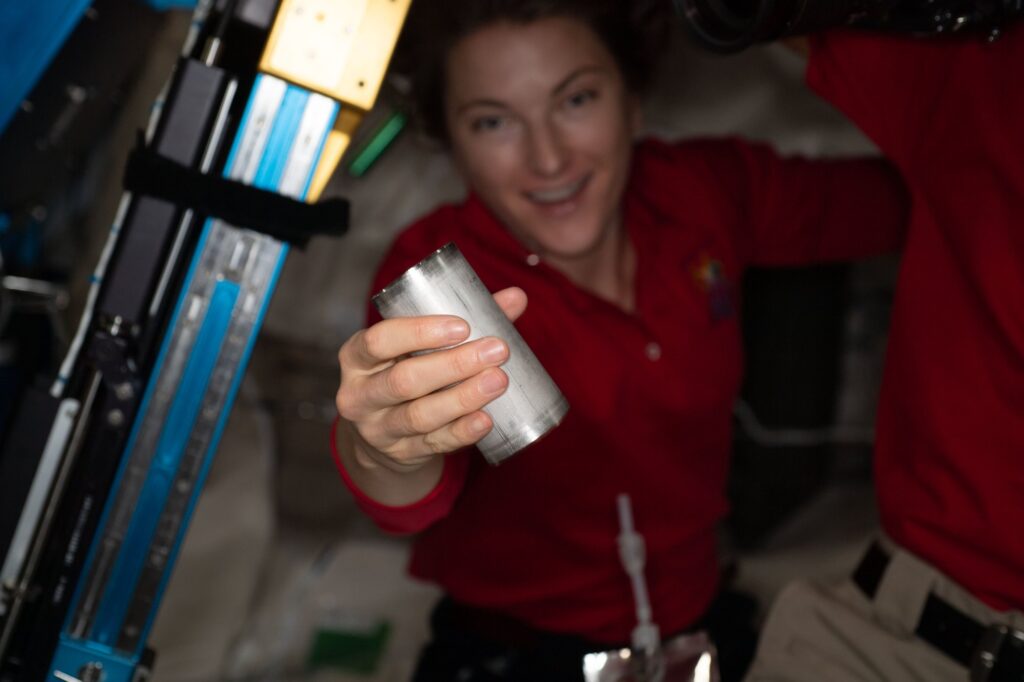
Water is the other constraint. NASA’s June 2023 milestone release reports that the Environmental Control and Life Support System reached about 98% total water recovery once the Brine Processor Assembly was added. It recovers water from the brine left after urine distillation.
“Before the BPA, our total water recovery was between 93 and 94% overall,” said Jill Williamson, the system’s water subsystems manager.
Williamson added that NASA had “now demonstrated” total recovery of 98%. That is a demonstrated figure, not a guaranteed daily rate. NASA technical papers still describe the brine processor as a technology demonstration.
A retirement date and no finished replacement
NASA’s June 2024 announcement selected SpaceX to develop the U.S. Deorbit Vehicle in a single-award contract with a total potential value of $843 million, excluding launch. NASA will own and operate the vehicle. The agency says the station must be deorbited in a controlled way after the end of its operational life in 2030, with re-entry over an unpopulated part of the ocean. The U.S., Canada, Japan and ESA member states have committed to operating through 2030. NASA’s FAQ says Russia plans to extend its segment through 2030.
The private stations that are meant to follow are not yet under contract. NASA’s commercial destinations page says the acquisition was taken off hold on June 4, 2026, the final request for proposals, the formal call for company bids, was posted on Oct. 9, proposals are planned for Dec. 8 and a contract award for spring 2027. Those dates are planned, not confirmed. The page does not name the bidders, and Axiom Space and Blue Origin are not confirmed as winners of anything yet.
The gap is the uncertain part. If the award slips or a new station is not ready for crews by 2030, NASA has said nothing on the page about continuing operations. Readers who want the research side of the station’s first quarter century can read our report on 25 years of research on the International Space Station.