Station’s solar upgrade nears its finish: The last two roll-out arrays are due outside
NASA says the eight roll-out solar arrays will raise the station's power by more than 160 kW, and the final pair arrived on Dragon on Oct. 15.

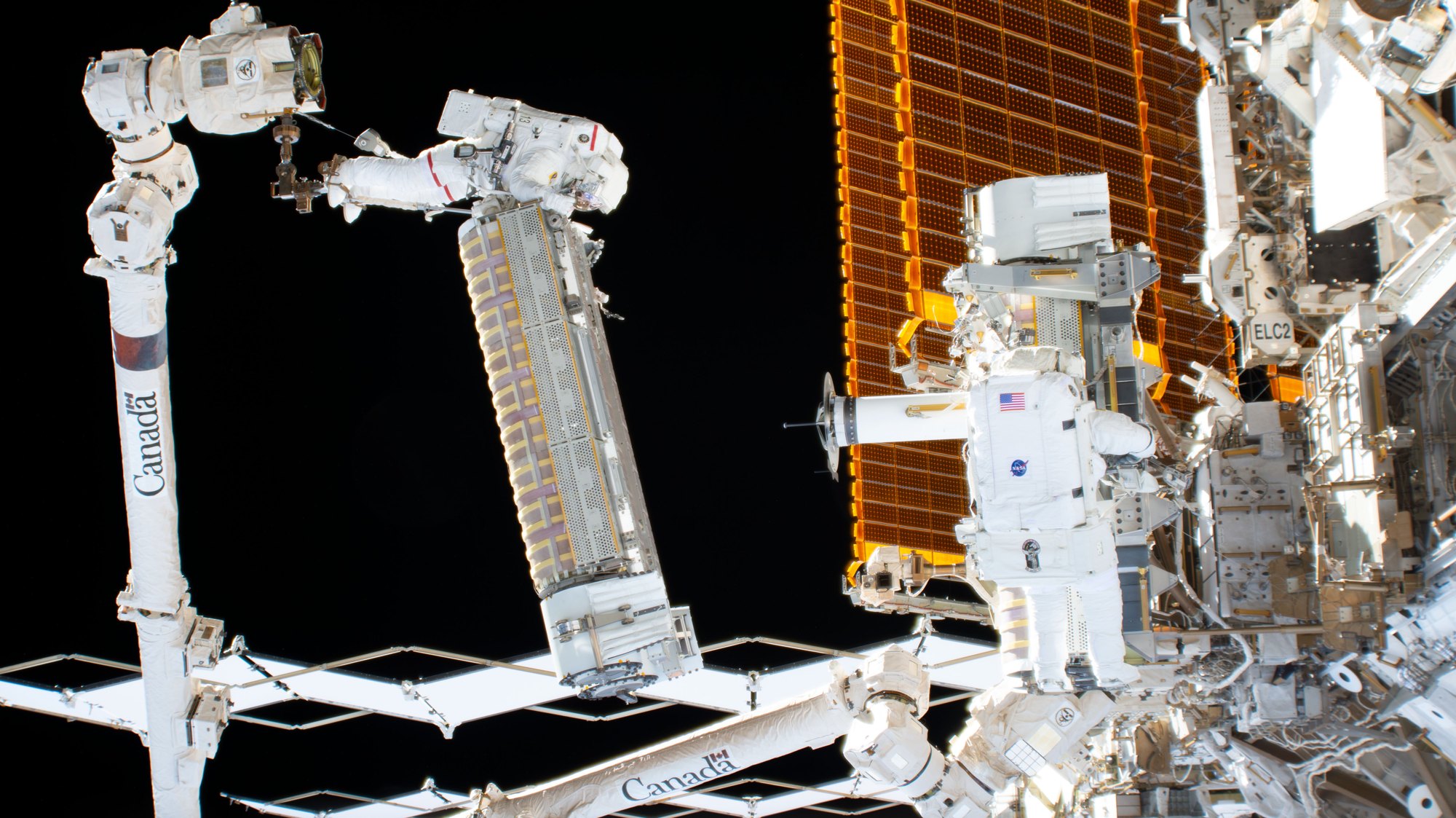
NASA says the eight International Space Station Roll Out Solar Arrays (IROSAs) will together raise station power by more than 160 kW. The last two arrived on a SpaceX Dragon on Oct. 15 and are due to be installed outside the station later this fall.
The figures come from a NASA station research feature published on Oct. 15. NASA says the station sits about 250 miles above Earth, where sunlight powers life support, daily operations and hundreds of research investigations.

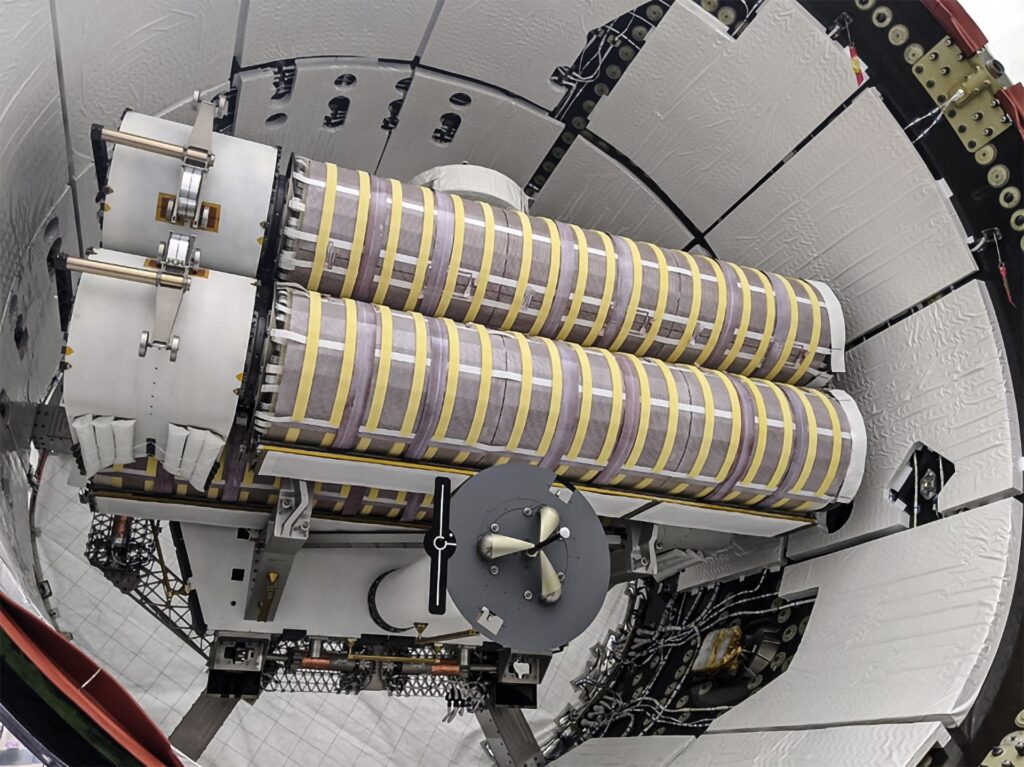
A solar array that launches as a cylinder
An IROSA launches rolled up and unfurls like a yoga mat after installation, NASA explains. The lightweight, compact design cuts mass and volume at launch. A self-deploying system is meant to lower the risk during rollout.
Redwire designed, built and tested the arrays under a contract with Boeing. NASA says they are about half the size of the station’s legacy arrays, yet each is capable of producing about 28 kilowatts of additional power. The design was first tested on the station in a 2017 technology demonstration.

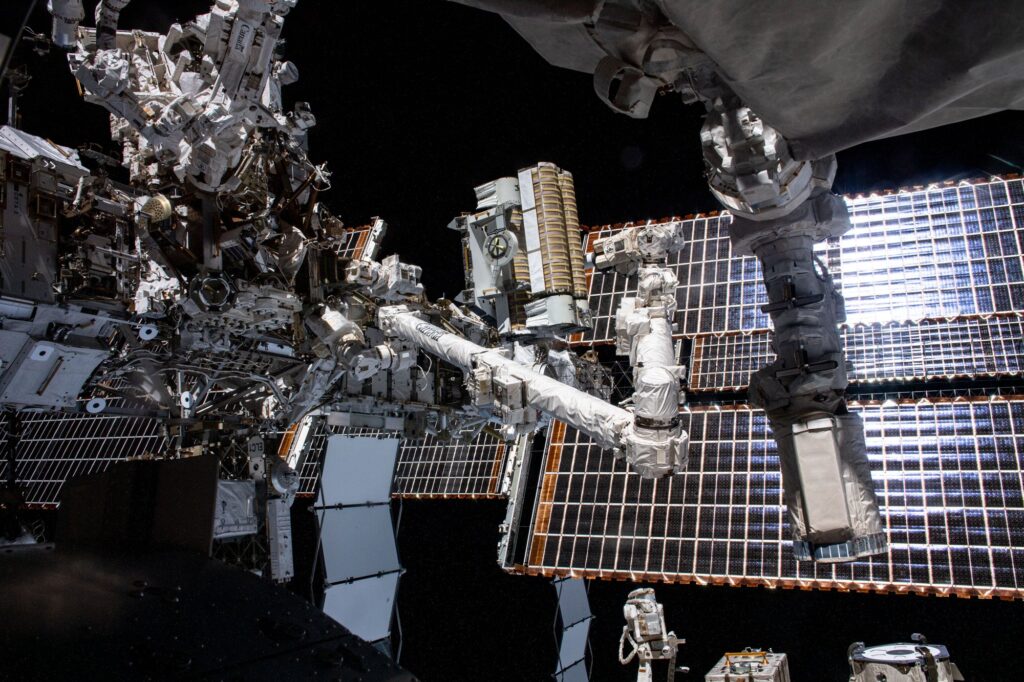
Six IROSAs were installed outside the station between 2021 and 2023. The first two flew in a Dragon trunk on SpaceX’s 22nd commercial resupply mission in 2021. In 2023, power projections prompted a request for another set. That set rode in the trunk of the Dragon on SpaceX’s 35th resupply mission, which brings the total to eight.
Dragon docked Oct. 15; spacewalks come next
NASA’s station blog reported that the Dragon docked at 10:27 a.m. EDT on Oct. 15 (14:27 UTC) at the space-facing port of the Harmony module. The blog says the arrays will be installed later this fall.

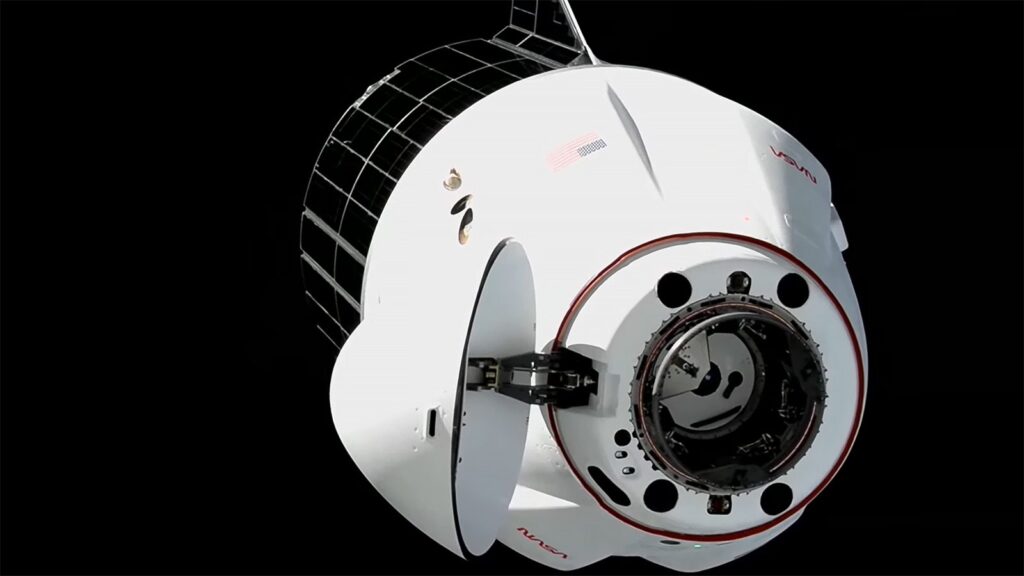
Our earlier report on the cargo covered the handling plan. Ground teams are to command the Canadarm2 robotic arm to pull the arrays from the trunk and park them temporarily on logistics platforms on the truss. NASA astronauts Anil Menon and Joshua Kutryk are scheduled to finish the installation on two spacewalks, on Oct. 29 and Nov. 5.
Who gains from the extra power
The practical beneficiaries are the researchers and operators who share the station’s electrical budget. The NASA feature says the added capacity supports research and operations, and it describes the station as a testbed for technologies needed for expeditions beyond Earth orbit. It names the Double Asteroid Redirection Test as one example of planetary defense work the station has supported.
The size comparison is the notable engineering point. Because the arrays are about half the size of the legacy wings, they take up less room at launch for each kilowatt they produce. That is why two of them fit in a Dragon trunk alongside other external cargo.
The schedule also shows how the upgrade was built in stages. A pair of arrays was added after power projections changed in 2023, which NASA describes as a request for “another set”. The station’s electrical capacity was planned in steps and revised as the projections moved. The final two spacewalks would then complete a program that began with the 2017 demonstration. The crew’s daily work on the ISS depends on that supply.
NASA says that with the full upgrade in place, the revitalized power system supports its legacy in low Earth orbit and helps advance technology for the solar system beyond.