Dragon’s 6,300 pounds of cargo opens a science rush on the space station
Five spacecraft are docked at the space station as the crew unloads SpaceX's CRS-35 Dragon and starts experiments, with roll-out solar arrays waiting in the trunk.

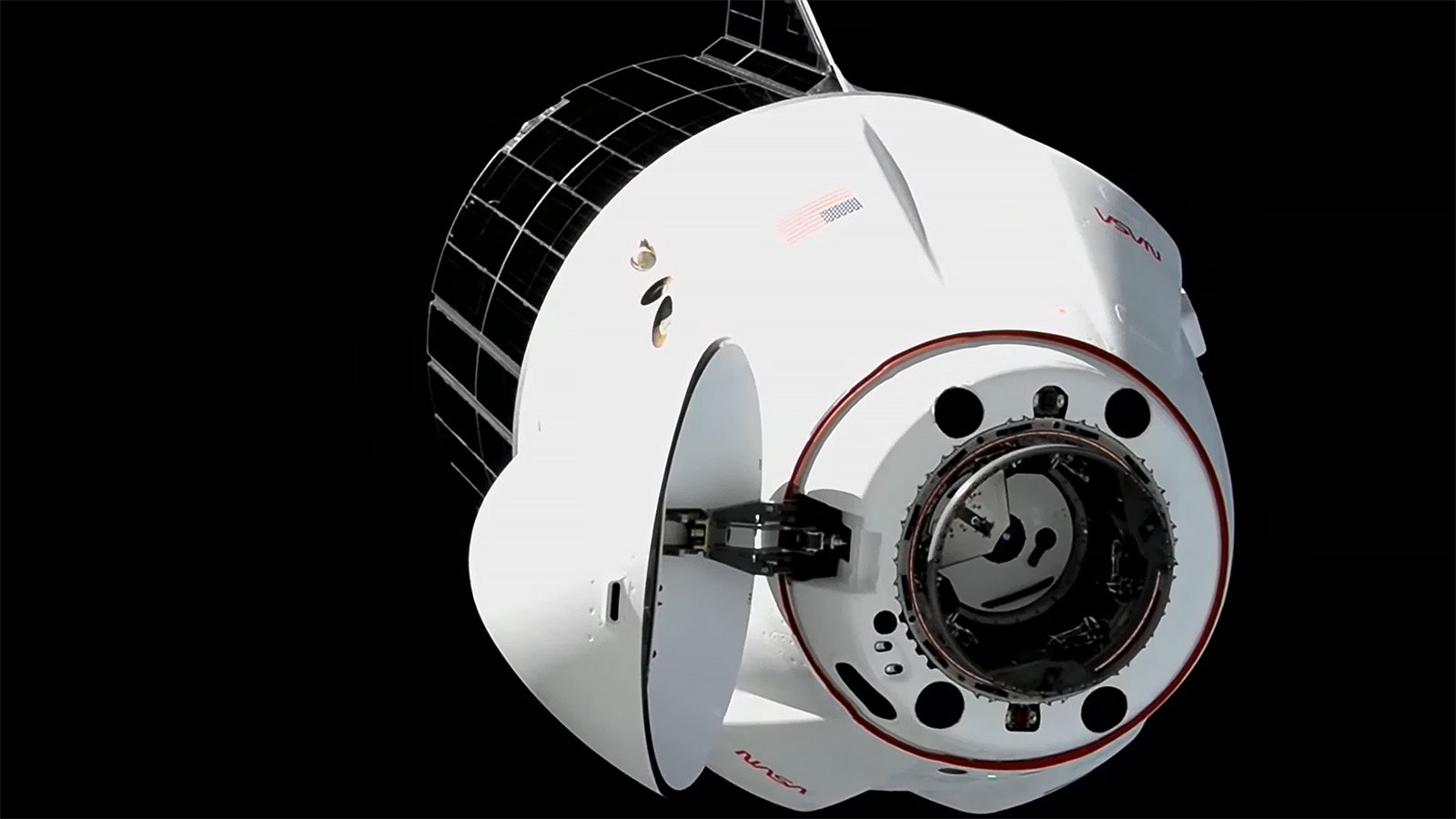
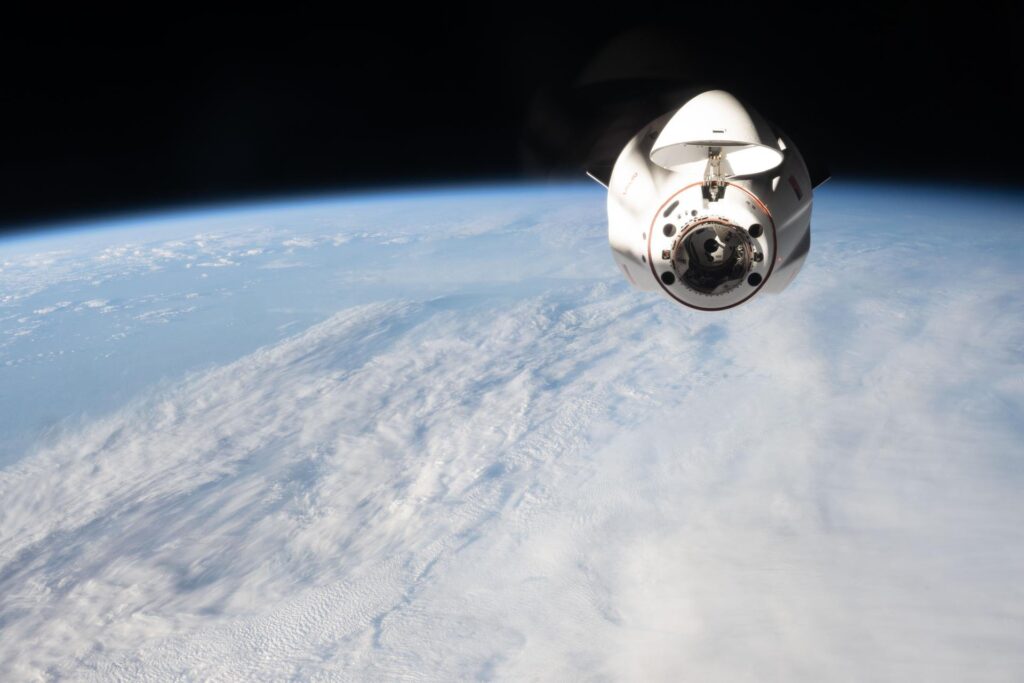
The Expedition 75 crew has begun unloading SpaceX’s CRS-35 Dragon and is activating new experiments, NASA said on Oct. 16. Dragon docked to the station on Oct. 15 at 14:27 UTC (10:27 a.m. EDT).
Unloading begins and five spacecraft are docked
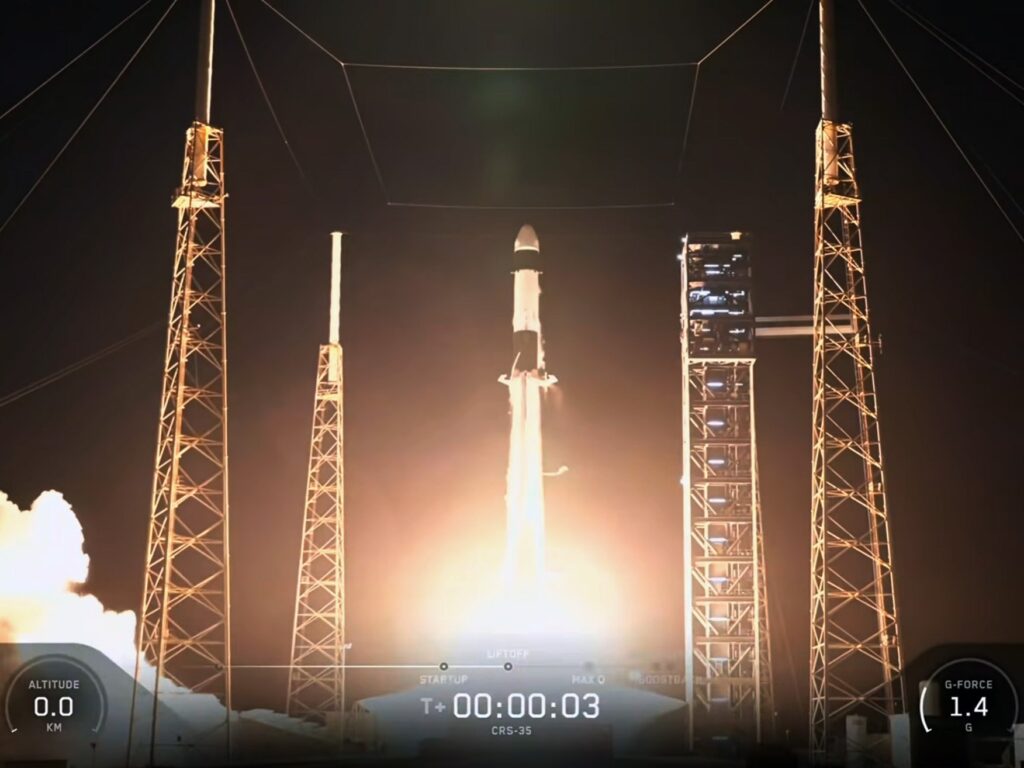
The uncrewed Dragon made an automated docking at the space-facing port of the Harmony module. It had launched on a Falcon 9 from Florida at 10:33 UTC (6:33 a.m. EDT) on Oct. 13, carrying more than 6,300 pounds of science, supplies and roll-out solar arrays, according to NASA. The station now hosts five visiting spacecraft: the CRS-35 and Crew-13 Dragons, the Soyuz MS-29 crew ship, and the Progress 95 and 96 resupply ships.

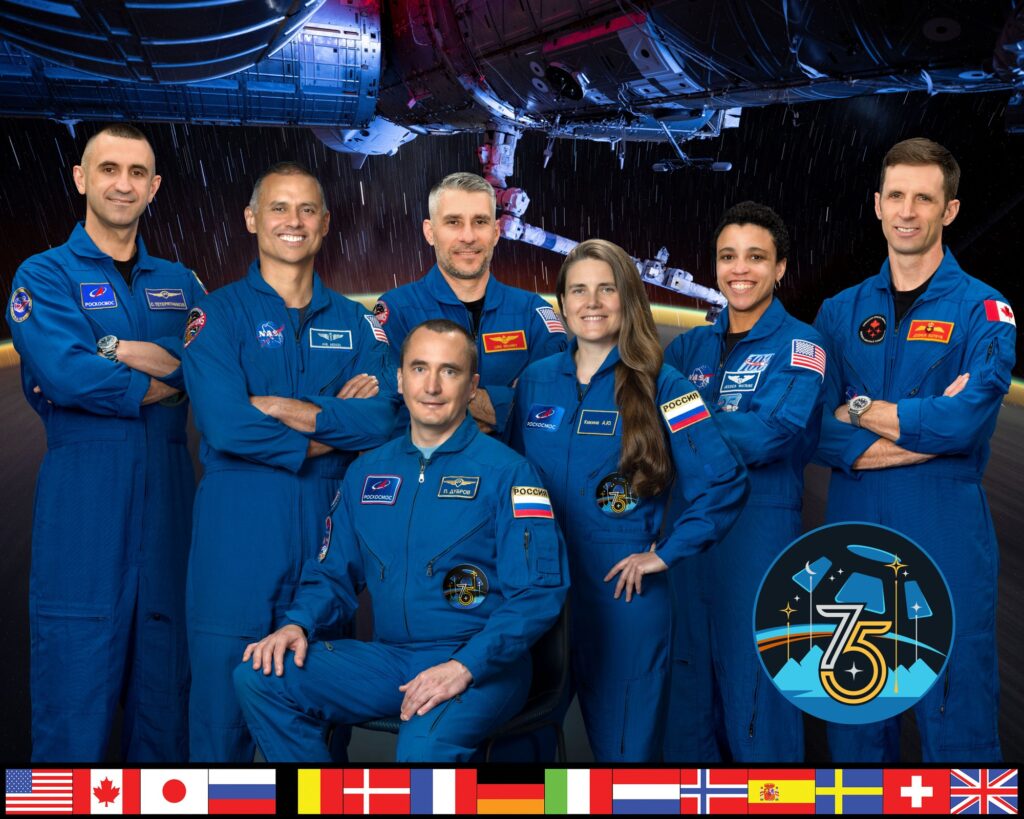
NASA flight engineer Anil Menon ran pressure and leak checks, equalized pressure between Dragon and the station, and opened the hatch. Jessica Watkins and Luke Delaney of NASA and Joshua Kutryk of the Canadian Space Agency followed him in. The four moved scientific samples from portable freezers and incubators into station freezers and research racks, where they wait for study.
Upcoming experiments will look at building artificial retinas and culturing heart tissue without gravity. Work starting Friday and continuing through the weekend includes crystallizing proteins to help design more targeted cancer therapies. Another investigation tracks how plants respond genetically to microgravity, the near-weightlessness of orbit. NASA ties the research to improving spacecraft life support.

Solar arrays wait in the trunk
Two roll-out solar arrays are installed in Dragon’s unpressurized trunk, the external cargo section. Ground engineers will command the Canadarm2 robotic arm to remove them and stow them temporarily on logistics platforms on the station’s truss, its main structural backbone. Menon and Kutryk will finish the installation on two spacewalks scheduled for Oct. 29 and Nov. 5. Once active, the arrays will add to the station’s power generation.
Elsewhere on the station, commander Pyotr Dubrov and flight engineer Anna Kikina of Roscosmos finished a week-long study of an exoskeleton suit, the Teledroid, used with virtual reality goggles and hand controls to manipulate tools in a simulated space environment. Roscosmos flight engineer Sergey Teteryatnikov took part in a virtual reality study of balance and orientation in weightlessness and serviced the Elektron oxygen generator.

Artificial retinas and heart tissue: What the cargo is for
The retina and heart work shows what the station is used for: biology that is hard to do under gravity. In a separate post on the docking, NASA said the cargo includes equipment to manufacture artificial retinas in microgravity, aimed at restoring vision on Earth. It also holds 3D heart tissue models to support large-scale drug testing on future missions.
NASA listed further payloads that the crew update does not mention. Materials will be used to study how a new type of glass forms in microgravity. Brain organoids, small lab-grown models of brain tissue, may reveal treatment targets for neurodegenerative diseases, including Alzheimer’s, Parkinson’s and multiple sclerosis. These samples are time-sensitive, which explains the quick transfer into freezers and racks on the first day.

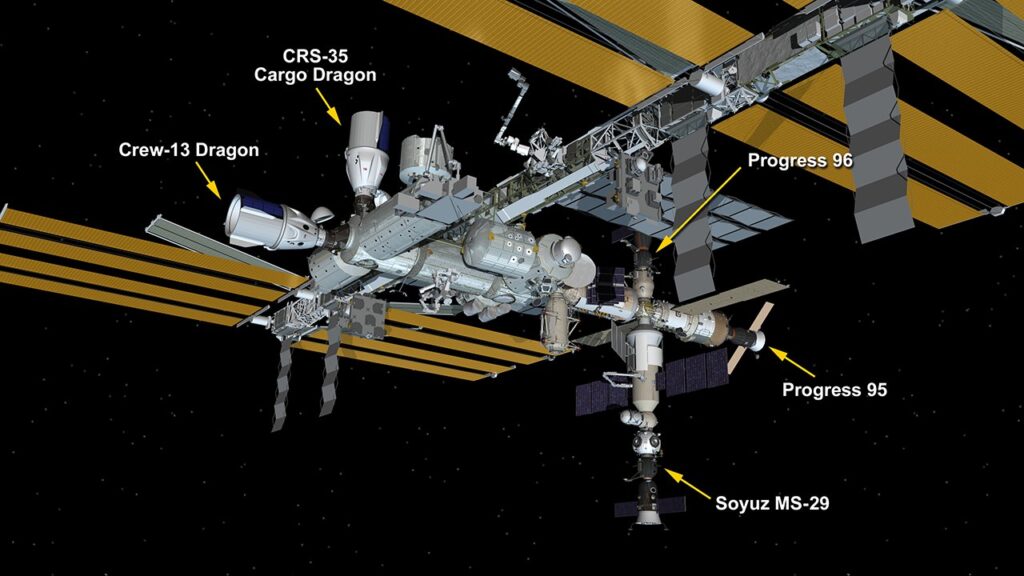
The solar arrays are significant too. NASA says this Dragon carries the final set of International Space Station Roll-Out Solar Arrays, so the Oct. 29 and Nov. 5 spacewalks close out an upgrade that has run for several years.
For background on the research it has hosted over 25 years, see our piece on MIT’s role in station research.
Dragon stays until mid-November
According to NASA, Dragon will stay docked until mid-November. It will then return with time-critical research and cargo, splashing down off the coast of California.