Kutryk’s first spacewalks: Canada’s astronaut, robot arm and voice all play a part
Canadian astronaut Joshua Kutryk will step outside the space station on October 29 and November 5 to install the last two new solar arrays, with Canadarm2 and a Canadian capcom backing him up.

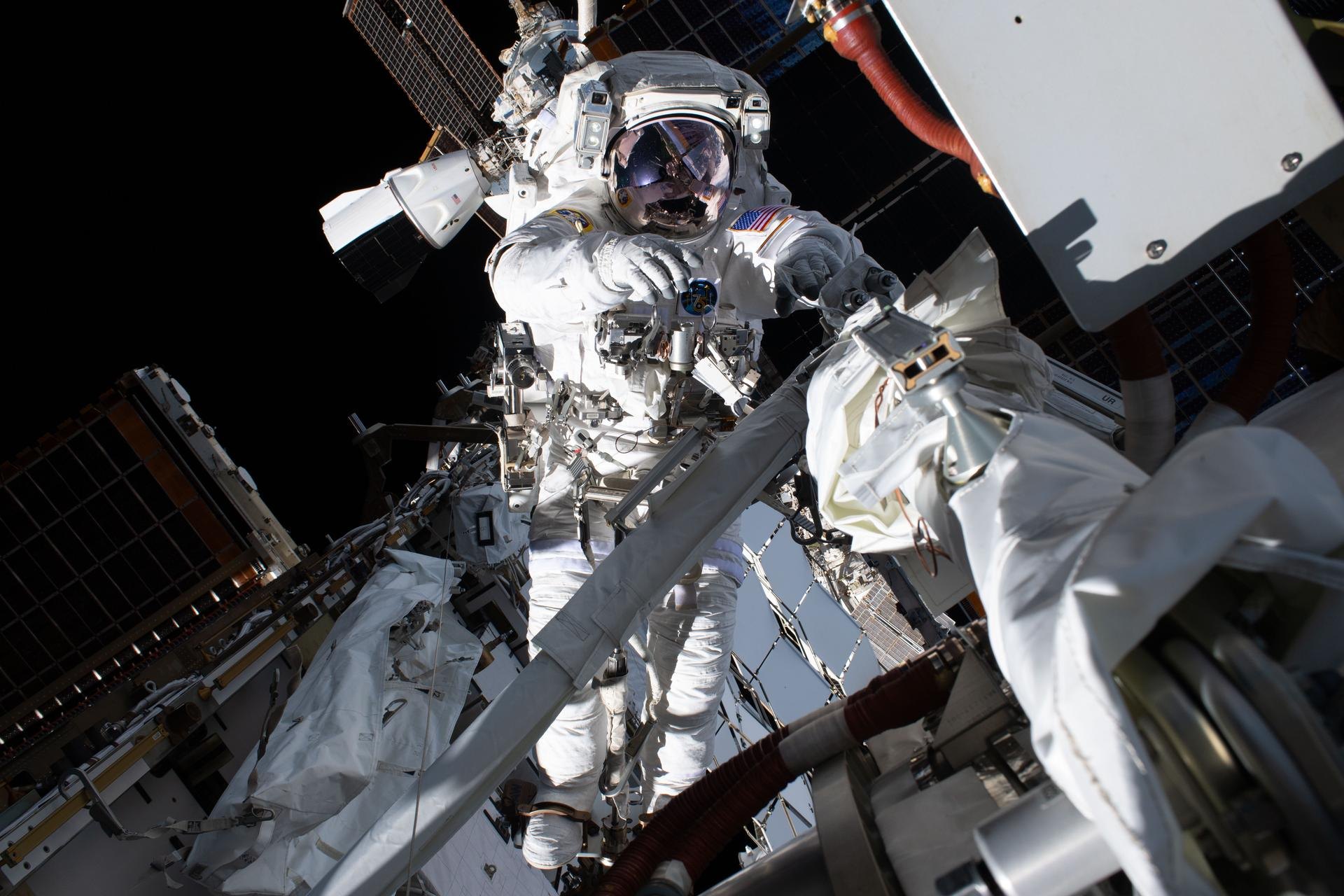
Canadian Space Agency astronaut Joshua Kutryk is scheduled to make his first two spacewalks on October 29 and November 5, with NASA’s Anil Menon, to install the International Space Station’s last two new solar arrays, the CSA said.
Canada will be involved at three points: Kutryk outside, the Canadarm2 robotic arm helping move the hardware, and CSA astronaut Jenni Gibbons as the voice linking Mission Control to the crew.

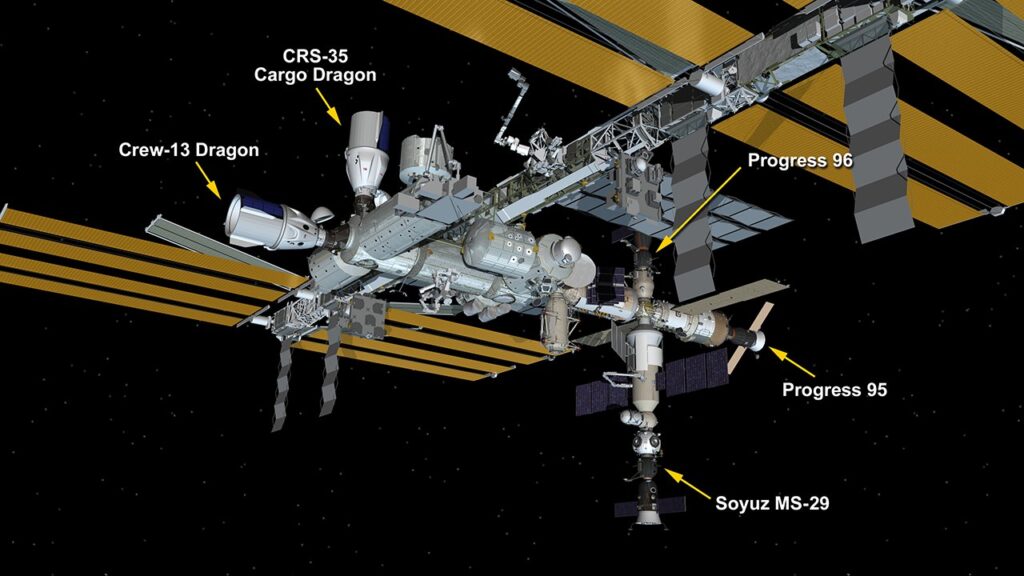
Two walks to finish the power upgrade
NASA previewed the plan earlier on October 20. According to NASA, the first walk, on Thursday, October 29, will install and deploy the seventh ISS Roll-Out Solar Array (IROSA) on the station’s 2A power channel. A roll-out array is a solar panel that arrives rolled up like a carpet and unfurls once it is fixed in place. The second walk, on Thursday, November 5, covers the eighth and final array, on the 3B channel, which NASA says completes the power augmentation upgrades.
NASA numbers these as the 285th and 286th spacewalks for station assembly, maintenance and upgrades. The CSA notes that the station circles Earth every 90 minutes at about 8 km/s (28,000 km/h), and that both walks were rehearsed underwater with replicas of station components, including Canadarm2, and in simulators. It is Kutryk’s first spacewalk, and he is part of the Crew-13 mission.

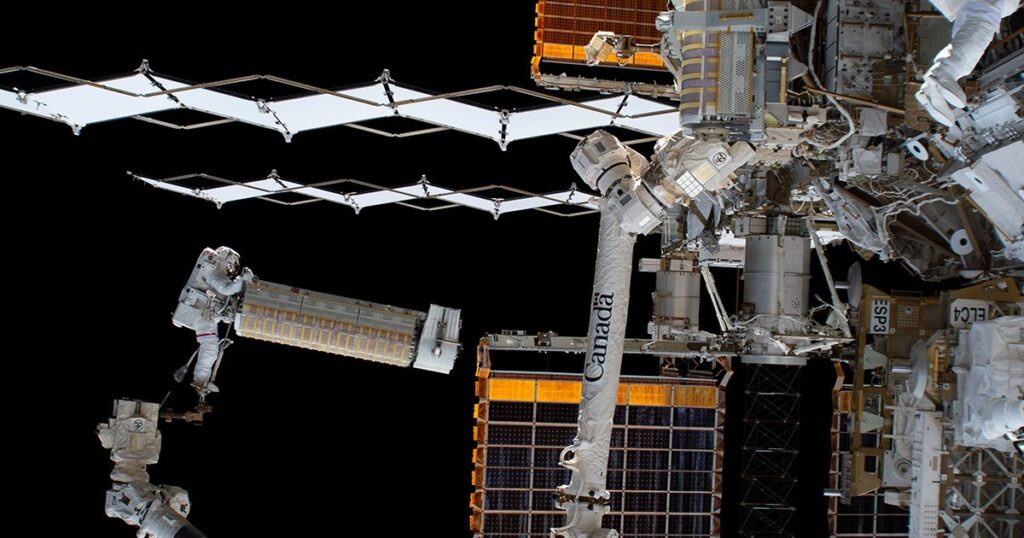
The arrays came up in the trunk of a SpaceX Dragon cargo spacecraft, the cargo flight we covered in Dragon’s 6,300 pounds of cargo opens a science rush on the space station. According to the CSA, Canadarm2 removed the new arrays from the trunk last week and placed them on the station’s Mobile Base, the movable platform the arm rides on. During the walks it will help the astronauts pick up each rolled-up array and move it to its new position.
Who does what: A Canadian arm, a Canadian voice
The arm will not be driven by Kutryk. The CSA says NASA astronauts Luke Delaney and Jessica Watkins will operate Canadarm2 from inside the station while he works outside. Meanwhile the agency’s flight control and engineering teams at its Robotics Mission Control Centre in Longueuil, Quebec, will be on console to monitor and support the work in real time. The CSA says these teams helped plan the walks and designed the unusual sequence of arm movements they require.
Gibbons will serve as “capcom,” short for capsule communicator, from NASA’s Johnson Space Center in Houston. The capcom is the single person who relays instructions and key information from the ground experts to the crew. The CSA says she held the role of lunar capcom during the Artemis II mission and was heavily involved in earlier solar array installations on the station.
What 55 extra kilowatts means for an aging station
The first fact is the size of the upgrade. NASA says the eight roll-out arrays together raise available power by up to 30%, lifting the station’s generating capacity from 160 kilowatts to about 215 kilowatts. That is an extra 55 kilowatts for a laboratory that has been continuously crewed for decades; our piece on life aboard the International Space Station covers its planned 2030 end date.
The second is what that power is for. NASA’s release says the seventh array will support critical station operations, including the station’s safe, controlled deorbit. In other words, the new arrays are meant to keep the outpost powered through its final years and through the steering burns that will bring it down. NASA also notes that Menon, who prepared the mounting hardware on an earlier spacewalk on August 6, 2026, helped build a modification kit on the Starboard 6 truss, the structural beam where an array was due to be installed.
On the Canadian side, the numbers are of a different kind. Canadarm2 and Dextre, Canada’s robotic contribution, have been helping to maintain the station for over 25 years, according to the CSA. This job fits that history: the arm does the heavy lifting, and astronauts handle the final connections by hand.
If the schedule holds, the November 5 walk would finish the power upgrade that has been underway for several years.