Artemis II’s heat shield lost far less material than on Artemis I: 9 spots versus 103
NASA's analysis found Orion's heat shield performed as expected on Artemis II: pieces of its charred outer layer broke off in 9 places, versus 103 after Artemis I.


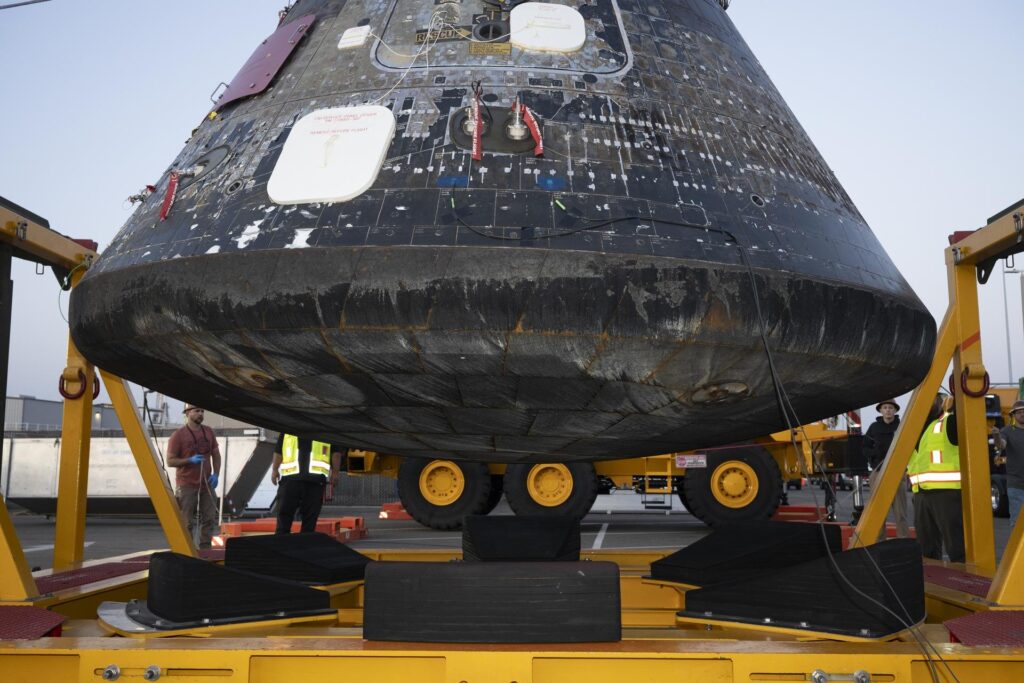
NASA says the heat shield on its Orion capsule performed as expected on Artemis II, the first crewed Orion flight. The shield’s outer layer is designed to char and wear away slowly as it absorbs the heat of reentry; engineers found 9 spots where pieces of that charred layer had broken off, compared with 103 after Artemis I, according to the agency’s latest heat shield release.
What NASA found
NASA published an underwater photo of the heat shield, taken by U.S. Navy divers shortly after Artemis II splashed down in the Pacific Ocean off San Diego on April 10, 2026. Seen through the water, the shield looks teal. The agency’s engineering write-up, dated Oct. 15, says follow-up analysis confirmed what the first inspections, including that diver imagery, had indicated: the thermal protection system did its job.

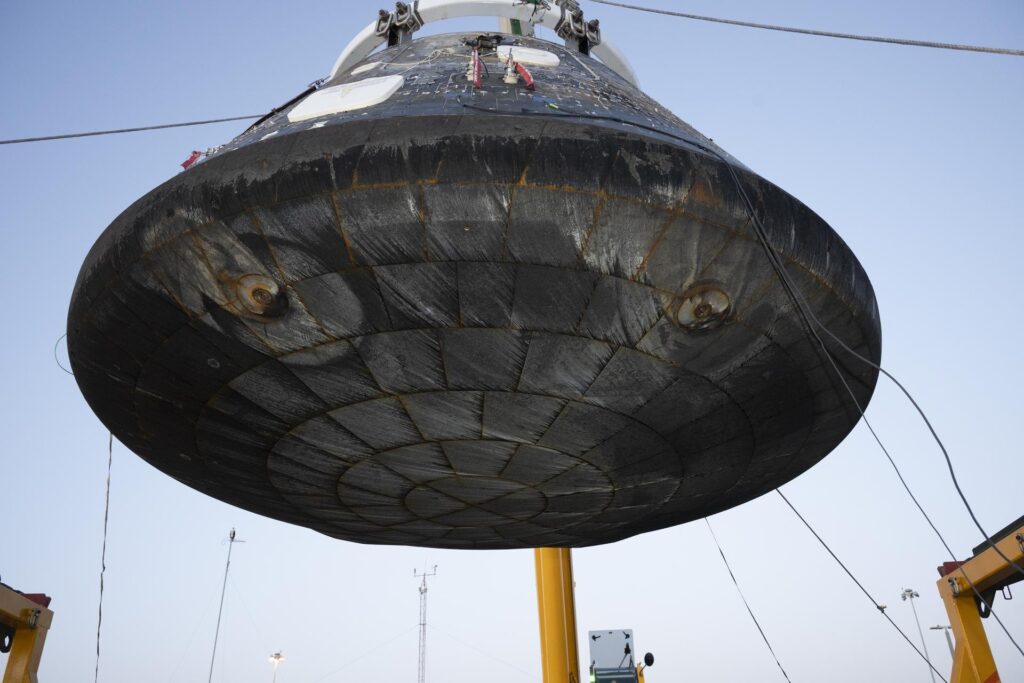
During reentry Orion reached a maximum velocity of 39 times the speed of sound, NASA said. External temperatures exceeded 4,000 degrees Fahrenheit at peak, while the cabin stayed in the mid-70s Fahrenheit. Orion entered within 192 feet of its targeted entry interface and landed 0.59 miles from the predicted splashdown site.
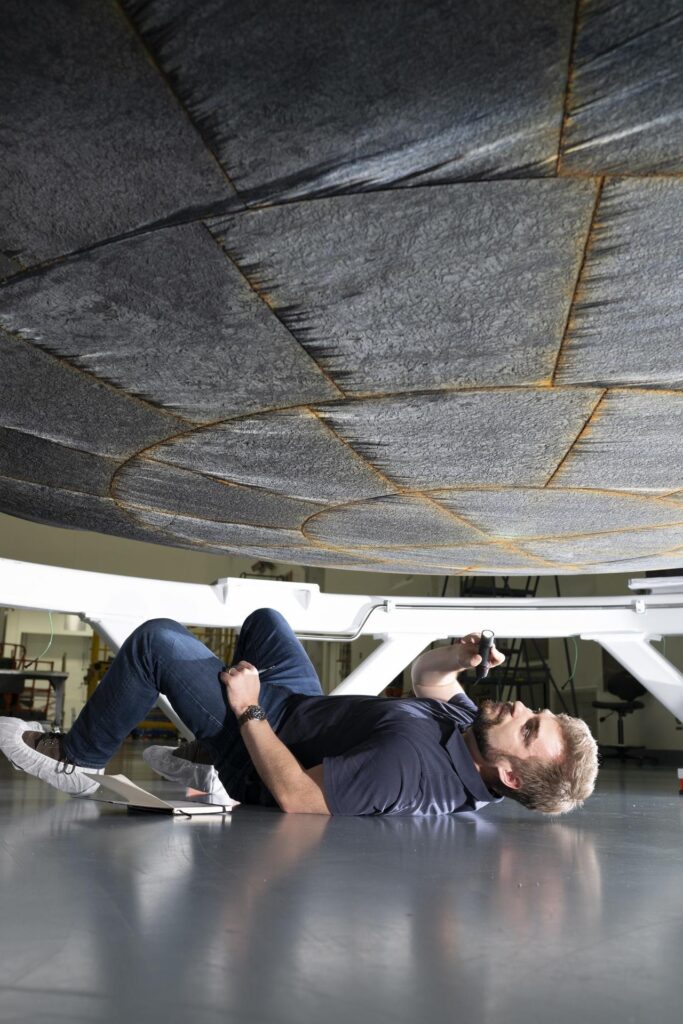
The analysis covered the heat shield’s 186 unique blocks of Avcoat, the material that chars and wears away to protect the capsule, including the seams between them and the Avcoat around the compression pad separation bolts. NASA said these features were consistent from Artemis I to Artemis II. The backshell, which is covered by 1,300 ceramic tiles, also performed as expected, and the windows, vents, thrusters and side hatch showed no signs of overheating.

A changed trajectory
On Artemis I, in 2022, the heat shield suffered unexpected char loss. After studying those findings, NASA shortened the downrange distance between atmospheric entry and splashdown for Artemis II. Pre-mission analysis showed that limited how long the shield stayed in the temperature range linked to the Artemis I phenomenon. NASA reports that cracking and char loss were reduced by a factor of ten.
Work on the hardware continues. Laser scans of the shield surface are being compared with pre-flight measurements to determine how much material receded. Sample extraction and internal X-ray scans began in August at NASA’s Marshall Space Flight Center in Huntsville, Alabama.
Same shield, gentler entry: What the result means for crews
The heat shield was the most scrutinized part of Orion after Artemis I, and its record is now two flights long. The first, uncrewed, ended with the char-loss problem. The second carried astronauts and, by NASA’s count, showed far fewer spots of lost char. Because the design was unchanged between the flights, the improvement is credited to the shorter entry trajectory rather than new hardware. That matters for planning: the same shield design can be kept for crews while the flight profile is managed.
According to NASA, the Artemis III heat shield was attached at Kennedy Space Center in early July, and the crew and service modules were joined at the end of July. Upgrades for that flight aim at uniformity and consistent permeability of the Avcoat blocks, and the spacecraft has been powered up for the first time while engineers check the connections between modules.
NASA describes Artemis III as planned for next year in low Earth orbit, with Randy Bresnik, Frank Rubio, Andre Douglas and ESA’s Luca Parmitano rendezvousing with human lander test articles from Blue Origin and SpaceX. Lunar landings are planned to begin with Artemis IV in 2028. Reentry from the Moon is the demanding case for any crew capsule, and a well-documented heat shield record is a precondition for those later missions.
Marshall’s lab results are still to come
The remaining Marshall results will show how the Avcoat behaved below the surface. NASA has not said when those findings will be published.