A swirl on the Sun’s surface may explain why its atmosphere is so hot
A new paper links tiny swirls on the Sun's surface, recently imaged by the Inouye Solar Telescope, to the long-standing puzzle of why the corona is hundreds of times hotter than the surface.

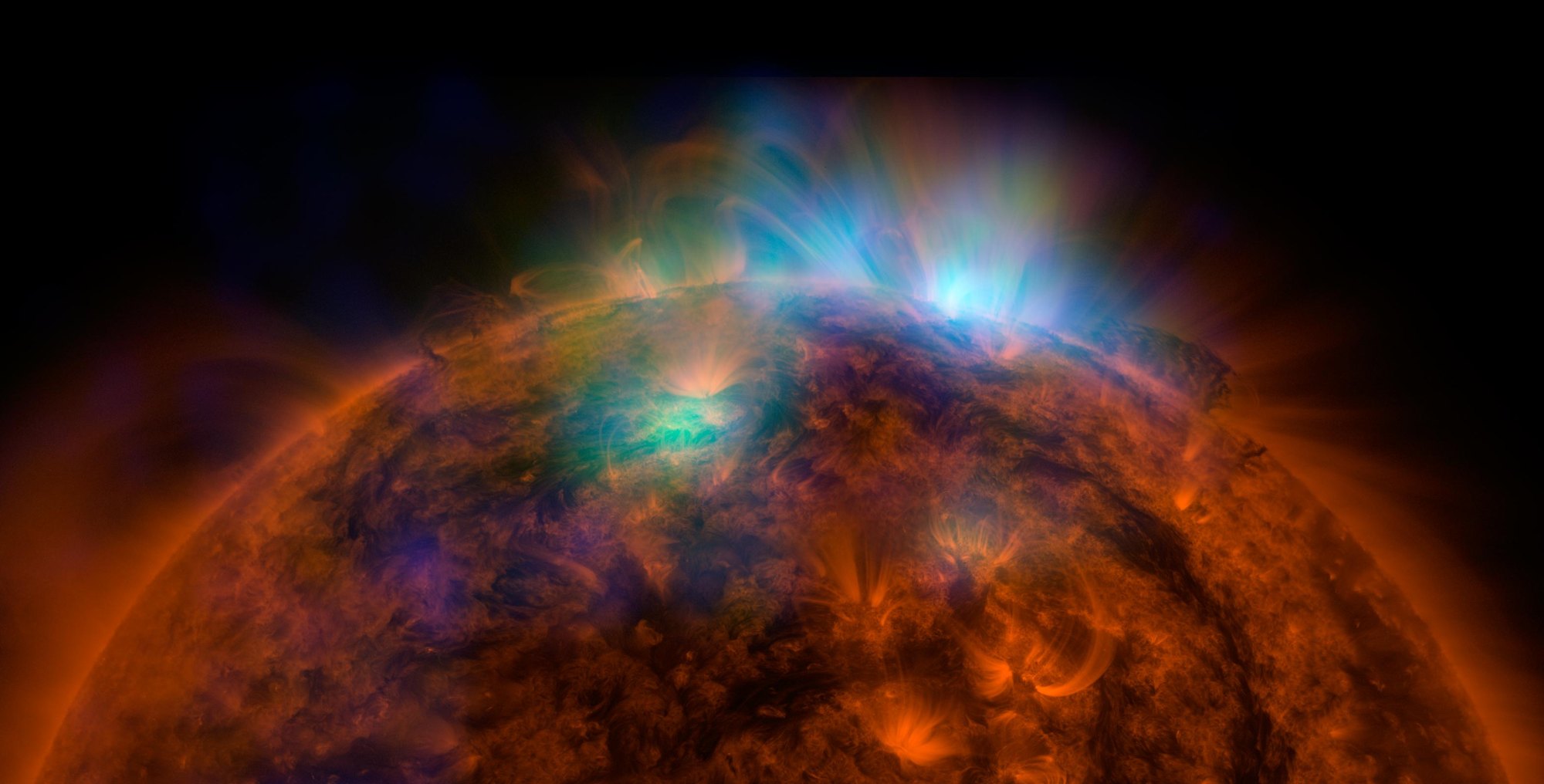
Physicist Katariina Nykyri of Embry-Riddle Aeronautical University has proposed that swirling vortices on the Sun’s visible surface help heat its outer atmosphere, the corona, to more than a million degrees. The university reported her paper, published November 5.
A hot atmosphere above a cooler surface
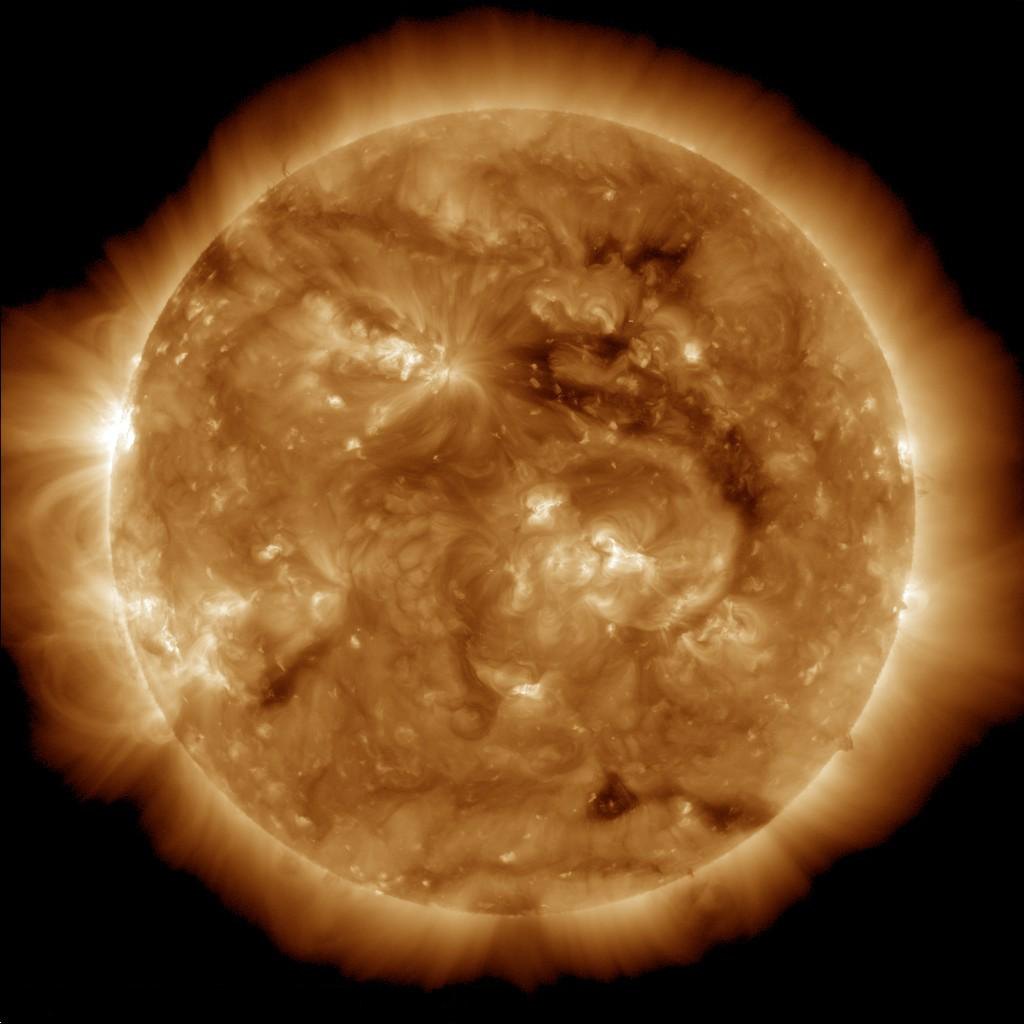
The corona is the Sun’s thin outer atmosphere, the faint glow visible around the Sun during a total solar eclipse. It is hundreds of times hotter than the visible surface beneath it, which seems backwards: moving away from a fire normally means getting cooler. Explaining where the extra energy comes from is one of the oldest open questions in solar physics.

Nykyri, a professor in the Department of Physical Sciences, published the proposal in The Astrophysical Journal Letters. The paper is titled “Photospheric Kelvin – Helmholtz Vortices as Possible Drivers of Coronal Heating: Implications of the DKIST Observations.” The photosphere is the Sun’s visible surface, and DKIST is the NSF Daniel K. Inouye Solar Telescope.
According to Embry-Riddle, the idea draws on 27 years of her research into space weather, which she began as a Ph.D. student.

Vortices where fluids slide past each other
Kelvin-Helmholtz waves form where two fluids, or two layers of plasma (hot, electrically charged gas), move past each other at different speeds. The effect resembles wind blowing across water and rolling it into curling waves. The Inouye telescope recorded such waves on the Sun’s surface, and an August study led by Kuridze and colleagues in Nature reported the images, the university said.
Nykyri’s model asks what happens to the Sun’s magnetic energy once those vortices exist. It uses scaling laws, relationships that let researchers estimate large-scale behavior from measurements at another scale. These come from spacecraft measurements near Earth, where similar waves occur at the edge of our planet’s magnetic field. With them she estimates how magnetic energy turns into heat.
The paper also tackles a mismatch in size. The observed vortices are tens of kilometers across, while the thin magnetic layers where magnetic field lines break and reconnect, releasing energy as heat, are nearly a million times thinner. Nykyri argues that the vortex motion squeezes those layers thin quickly enough to close the gap.
“Understanding how it is heated is key to understanding and eventually predicting our sun’s behavior.”
What the model adds, and who may use it
Vyacheslav “Slava” Lukin, director of the Plasma Physics Program at the U.S. National Science Foundation, said the new model “unifies these explanations into one cohesive whole.” Nykyri also says the work may help fusion energy research, which also depends on controlling magnetic fields in hot plasma.
The telescope behind the observations has a 4 m clear aperture, according to materials from the U.S. National Solar Observatory. That is why it can pick out vortices only tens of kilometers wide on a star about 150 million km away. Features that small were previously hard to tell apart from the noise of the surface.
This is a proposed explanation, and Embry-Riddle’s account presents it as one that links the new observations to earlier theories rather than a closed case. Testing it will mean comparing the predicted heating with further Inouye observations of the surface and the corona above it.
Better coronal models matter beyond curiosity. The corona is the source region of the solar wind, the stream of charged particles that drives space weather. Knowing how it is heated is a step toward forecasting it, as Nykyri says. Readers following current solar activity can check the northern lights forecast for what that wind is doing at Earth now.
Aroh Barjatya, executive director of Embry-Riddle’s Center for Space and Atmospheric Research, called the work an example of “innovative, interdisciplinary and tenacious” research.