Strawberries, cucumbers and lemon basil are NASA’s next picks for deep-space menus
NASA reports test results for three possible space crops, and says a prototype growth chamber is set to launch to the space station to test crop production for Moon and Mars missions.

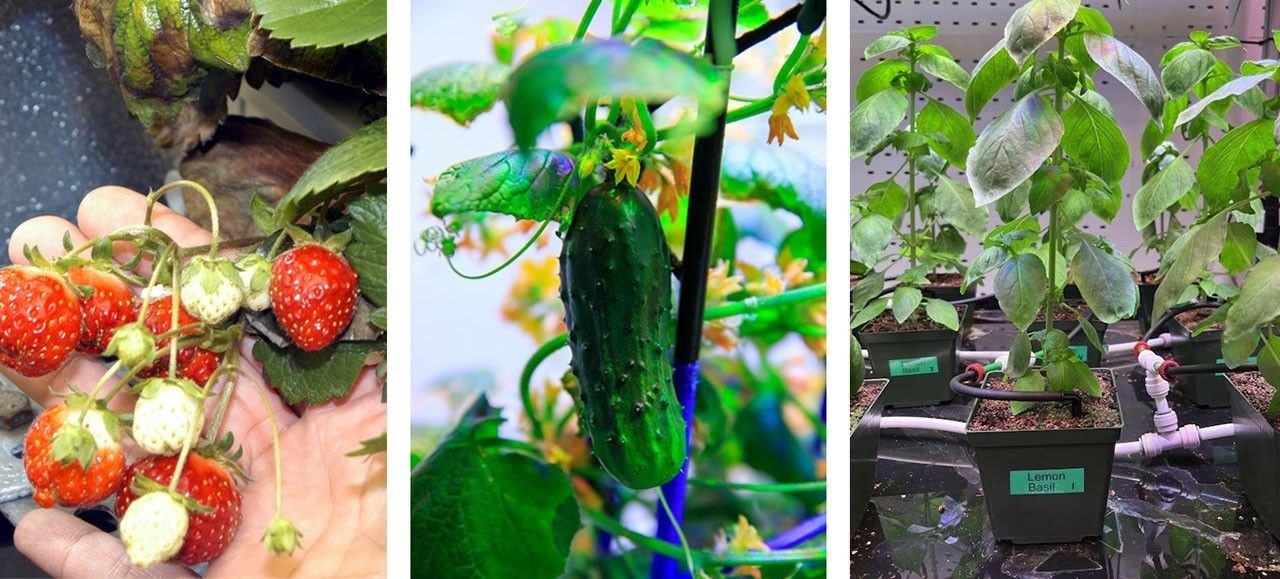
NASA says strawberries, cucumbers and lemon basil are promising crops for future Moon and Mars missions, based on recent tests. The agency also said a prototype growth chamber is set to launch to the International Space Station to test how such crops can be grown.
The findings come from a NASA Science report published on Nov. 25, 2026. NASA notes that plants can absorb carbon dioxide, produce oxygen and recycle water, which matters more the farther crews travel from Earth. Fresh food also gives astronauts variety, and NASA ties that to their well-being on long missions.

A wild strawberry beat NASA’s pick in the lab, but still lost
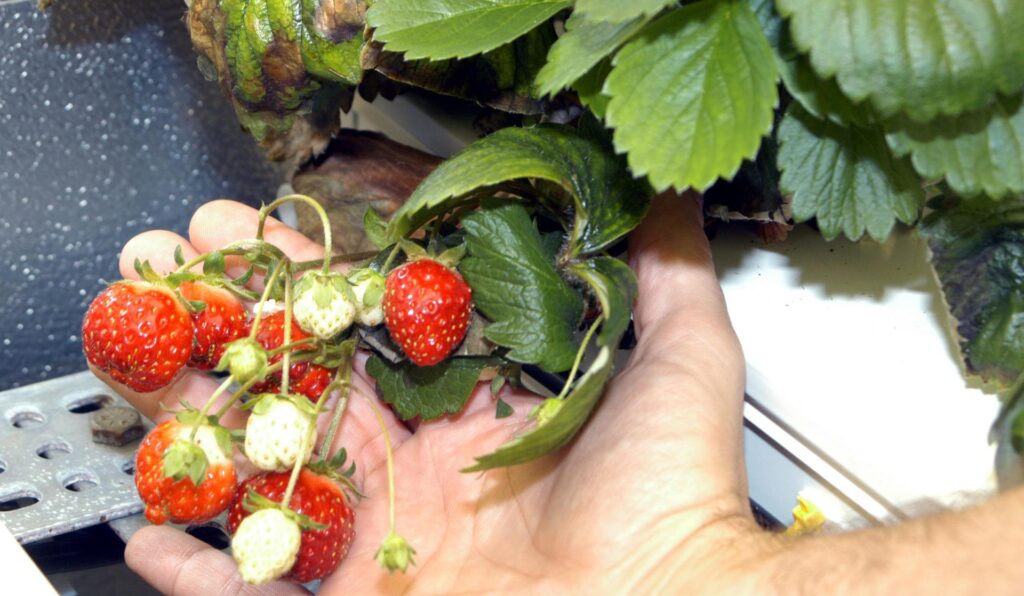
Few sweet fruits are being considered for spaceflight, and strawberries are one of them. NASA describes them as nutritious, aromatic and self-pollinating, meaning a plant can set fruit without help from insects or a second plant. Researchers at NASA’s Kennedy Space Center in Florida are growing them in chambers built to mimic spacecraft conditions, together with the Australian Research Council Centre of Excellence in Plants for Space, the University of Melbourne and the University of Western Australia.
The team compared NASA’s leading candidate, a variety called ‘Delizz’, with a wild strawberry under simulated space conditions. A study from September in the journal Life Sciences in Space Research found the two plants gave very different berries: Delizz bore big red ones, while the wild plant bore small yellow ones, the result of a recessive genetic mutation. Grown from seed, the wild plant made twice as many buds, flowers and fruit.

It still lost. The wild strawberry sent out too many runners, the shoots a strawberry plant uses to spread, and those would take up scarce room aboard a spacecraft. Delizz kept its place as NASA’s top pick.
Cucumbers could be the first gourds grown in orbit
Many crops have flown, NASA says, but none from the gourd family, which includes cucumbers. NASA-funded researchers tested cucumbers for growth, yield and nutrition under spaceflight conditions. According to an August paper in the journal HortScience, some leaves grew larger than normal, yet the plants kept delivering edible cucumbers at a steady pace.
NASA argues that a wider range of crops helps beyond the menu. More plant biodiversity can improve the odds that at least some crops succeed on long missions.
Lemon basil clears its first hurdles
Lemon basil has cleared the first round of space crop screening at Kennedy and has gone through seed sanitization, a step required before flight to remove microorganisms from the seeds. Next, researchers will assess how it grows in plant pillows, the small growing units that can hold plants aboard the station. NASA points to menu fatigue as a real problem for crews eating packaged food, and says fresh herbs can make those meals feel new.
Ohalo III: The first working crop system in orbit
The ground tests feed into a flight experiment. A new investigation from NASA’s Biological and Physical Sciences Division is set to launch to the station, and NASA’s separate Ohalo III page describes it as a technology demonstration of the first operational crop production system in space. NASA does not give a launch date in either document.
Per that page, Ohalo III is meant to address the limits of the station’s shelf-stable food supply and will validate how water is delivered to plants and how volume is used in microgravity. The project scientist is Dr. Matthew Mickens of Kennedy. NASA lists vertical farming, indoor growing and precision agriculture on Earth as possible spin-offs. Its page shows a multi-cropping demonstration with red romaine lettuce, Twiggy Orange tomato, Prospera basil and two mustard varieties growing together.
Why the crop list is still short
Putting the pieces side by side shows how much of this work is about fitting plants into a spacecraft, not about taste. The wild strawberry produced twice the fruit, yet lost on runners. Cucumbers grew food but with enlarged leaves. Lemon basil has cleared only a preliminary round and a seed-cleaning step, and has not yet been grown in the plant pillows it would use on the station.
The work also has a long history at Kennedy. NASA’s image library holds a 2004 photo of strawberries grown in a controlled environment chamber at the Space Life Sciences Lab, taken to show how crops behave under spacecraft-like temperature, humidity and carbon dioxide levels. The chamber research is the same kind of testing described now, and it is still at ground-lab stage for strawberries.
Other teams are probing the same question from the soil side. Oregon State researchers reported that potatoes grown in simulated Moon soil with worm compost matched plants grown in Earth soil. Together, the results sketch a possible Moon base menu: a staple crop, a fruit, a gourd and a herb. Which of them will actually fly depends on tests like these and on what Ohalo III shows once it reaches orbit.