NASA spreads up to $171 million across 302 small-business projects for Moon and Mars
NASA's small-business program selected 302 early-stage projects, from batteries that survive the lunar night to landing pads that withstand repeated rocket blasts.

NASA’s Small Business Innovation Research and Small Business Technology Transfer (SBIR/STTR) program has selected 302 projects for up to $171 million in seed funding, the agency announced on November 20. The work targets Moon and Mars exploration.
Two funding rounds, one batch of awards
The program pays startups and small businesses to prove that a technology works and then carry it toward use on NASA missions or in the commercial market. That path runs in phases, and this batch covers two of them.

Phase I is the proof-of-concept stage. Each new Phase I contract receives up to $225,000 to show the merit and feasibility of an idea. Some of these are STTR awards, which go to small businesses partnered with a research institution.
Phase II is the larger follow-up. It funds 98 contracts of up to $1.3 million each, continuing Phase I projects that NASA selected in 2025, with the aim of demonstrating the technology and delivering it.
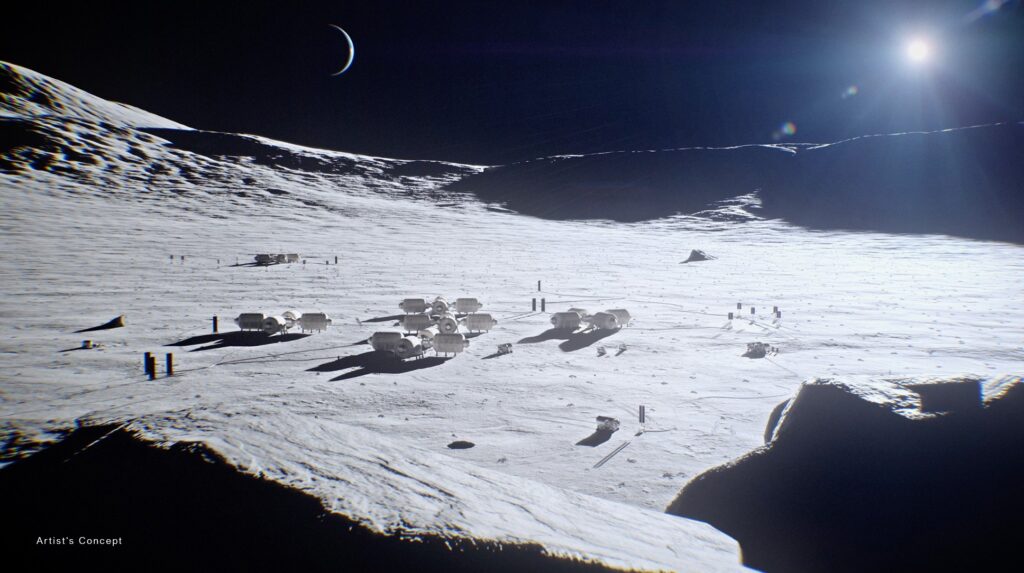
NASA says the projects cover Artemis and the establishment of a U.S. Moon Base, including next-generation batteries, robotic systems that can sense the extreme lunar environment, and tools for preparing infrastructure such as landing pads. Complete lists of the selected proposals are on the program’s website.
Four projects NASA singled out
Rollable solar arrays: Opterus Research and Development Inc. received a Phase II award for modular solar arrays that roll up, can be handled by robots and keep working in dusty conditions. According to NASA, the design could scale to 50 kilowatts and supply power to both the agency and commercial companies building on the Moon.
A robotic arm that sees and feels: Intelligent Fiber Optic Systems Corporation won a Phase I award for a 10-foot extendable arm that pairs a camera with sensors for surface texture, contact force and temperature. NASA lists cleaning solar panels, positioning habitat structures and collecting samples from hard-to-reach spots as possible jobs. The same arms could inspect power lines or nuclear reactors on Earth.
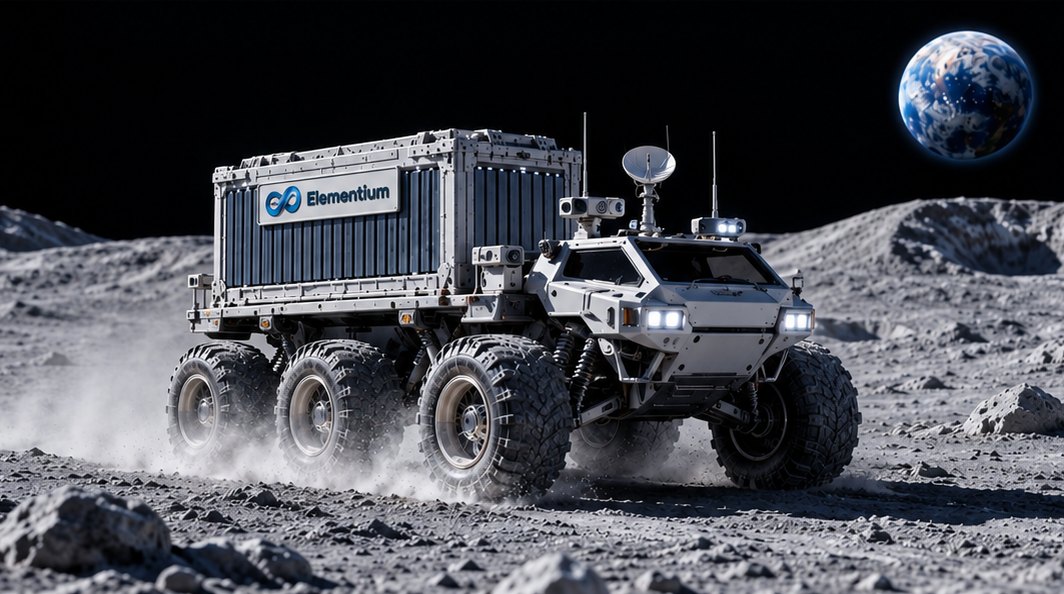
A battery that skips the heater: Elementium Materials Inc. is developing an ultra-cold-tolerant battery module, also under a Phase I award. NASA says it works down to minus 76 degrees Fahrenheit without active heating. That matters because the lunar night lasts 14 Earth days and is bitterly cold; heaters and insulation add mass, and the mass saved could carry other tools or experiments.
Landing pads that last: Slate Geotechnical Consultants Inc. and the Colorado School of Mines will compare two ways of preparing lunar regolith, the loose, gravel-like surface material, for repeated landings. Without a prepared pad, a rocket plume can blast out regolith, throw up dust or dig craters that endanger spacecraft and nearby equipment. The STTR Phase I project will also study how rovers could repair and maintain such pads.
Small checks for a big Moon plan
Set against the cost of lunar hardware, these are small bets. Dividing the full figure by the number of projects gives an average of roughly $566,000 each, and a Phase I award of $225,000 is a fraction of what a flight instrument costs. That is the point of seed funding: NASA can back hundreds of ideas cheaply and carry forward only those that prove out in Phase II, rather than committing to one design early.
The topics line up with demands NASA already faces. Our earlier reporting on NASA’s plan for a nuclear reactor on the Moon by 2030 shows how much surface infrastructure the agency wants running within this decade, and every such system needs power storage, robotic upkeep and a stable place to land. Commercial landers are also arriving on a schedule: Firefly’s Blue Ghost Mission 4 targets the Moon’s south pole no earlier than 2029. Repeated landings at such sites are what make the reusable-pad research relevant.
The awards also serve the second goal NASA states for the program, fueling the U.S. space economy. Companies that win here can sell the same technology on Earth, as the sensing arm and cold-climate battery examples show, which gives small firms a revenue route beyond a single agency customer.
The program is part of NASA’s Research and Technology Mission Directorate and is managed by the agency’s Ames Research Center in California’s Silicon Valley.