Mars helicopter rotors spun past the speed of sound in tests, with 30% more lift
In a chamber that mimics Mars, NASA's rotor blades for future helicopters broke the sound barrier and held together, a step toward carrying science instruments.

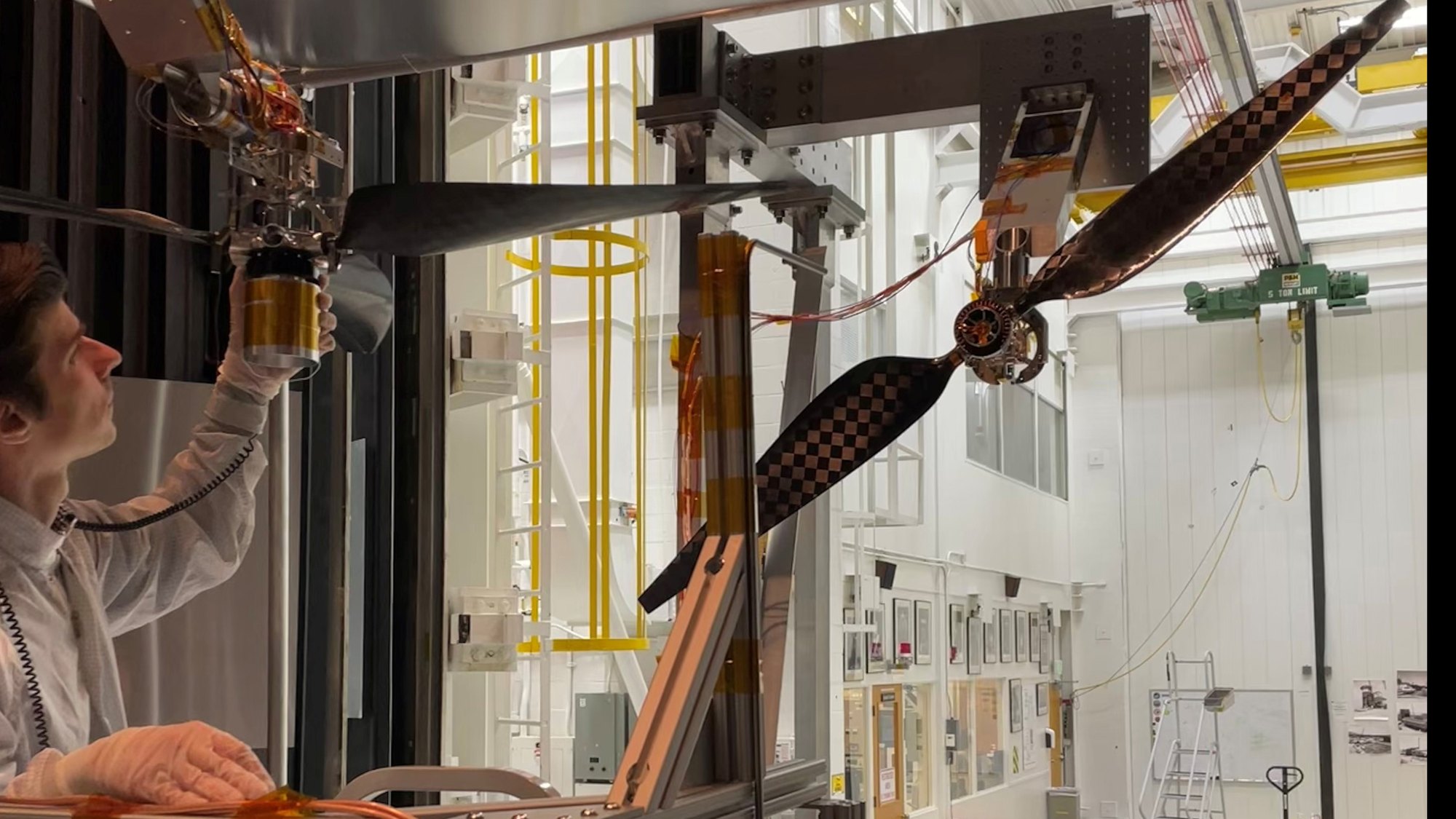
Rotor blades for NASA’s next-generation Mars helicopters spun faster than the speed of sound and stayed intact in tests at the Jet Propulsion Laboratory, NASA reported. The blade tips reached Mach 1.08, which raised lift by 30%.
Why Mars rotors have to chase the speed of sound
Mach 1 is the speed of sound. On Mars it is roughly 540 mph (869 kph), well below the roughly 760 mph (1,223 kph) at sea level on Earth. Mars also has an atmosphere only about 1% as dense as Earth’s, so a rotor has very little air to push against. To make useful lift, the blades must turn very fast, which brings their tips close to the speed of sound.

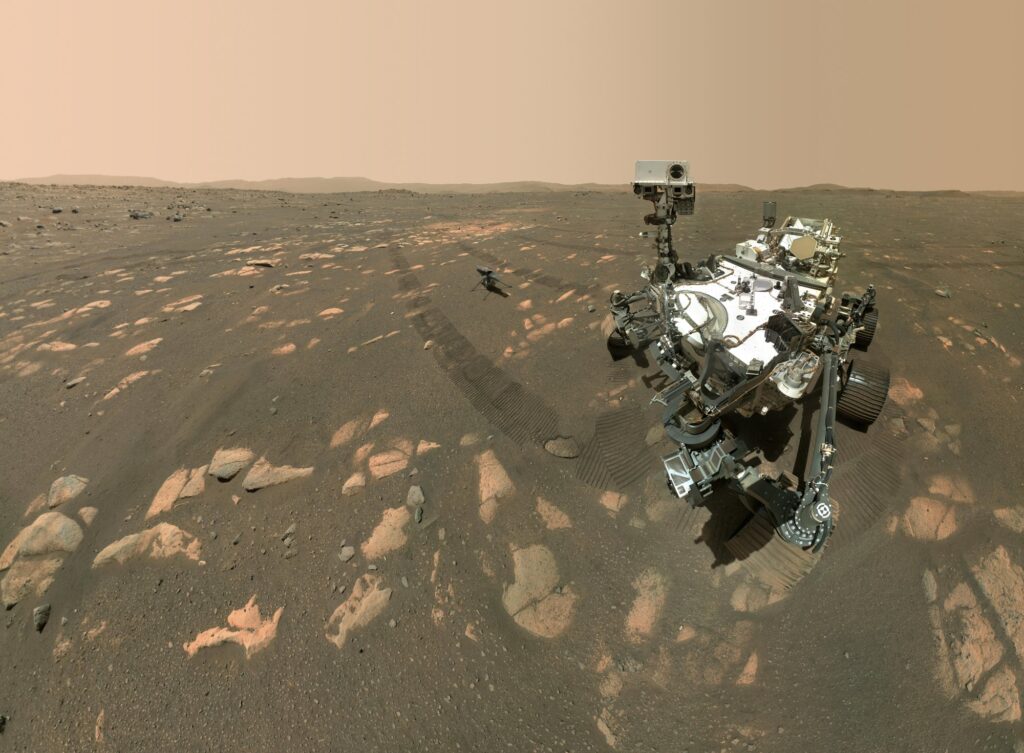
That is a problem for a helicopter. Near Mach 1, airflow changes in ways that are hard to predict and can shake a blade apart. NASA’s Ingenuity helicopter, which made the first powered, controlled flight on another world on April 19, 2021, avoided the issue. Its rotor tips were kept at Mach 0.7 across its 72 flights, and its rotor speed never exceeded 2,700 revolutions per minute (rpm).
137 runs in a chamber built to imitate Mars
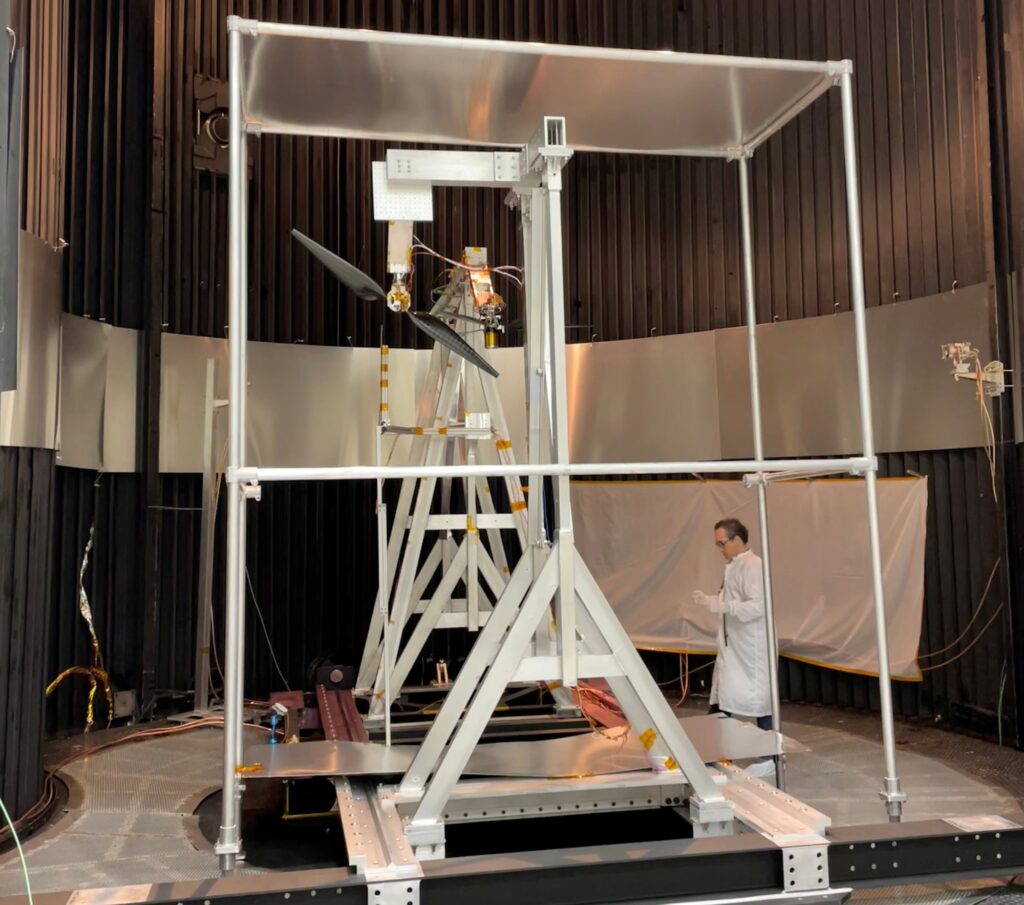
The tests took place in March in JPL’s 25-Foot Space Simulator in Southern California, a large chamber that recreates Martian conditions. Engineers ran 137 test runs on two rotor designs developed and manufactured by AeroVironment in Simi Valley, California. NASA’s Mars Exploration Program funded the campaign.

A three-bladed rotor reached 3,750 rpm, or Mach 0.98, before wind was added to the test. A two-bladed rotor, which is slightly longer and is the design used for the SkyFall project, needed only 3,570 rpm for the same near-supersonic tip speed. Shannah Withrow-Maser, an aerodynamicist at NASA’s Ames Research Center, said the team had expected to reach about Mach 1.05 and hit Mach 1.08 on the final runs.
Al Chen, Mars Exploration Program manager at JPL, said NASA is asking these aircraft to do more than Ingenuity did. Jaakko Karras, JPL’s rotor test lead, compared flying near Mach 1 to the unpredictability faced by test pilot Chuck Yeager.
What a stronger rotor could buy: Heavier payloads
The practical goal is carrying more. Ingenuity was a technology demonstration with a small camera. Faster, stronger rotors can lift more mass, and NASA says the data will help engineers design aircraft that carry heavier payloads, including science instruments. The 30% gain in lift at Mach 1.08 is the headline figure for that case.
The work feeds directly into SkyFall, a project that plans to carry three next-generation Mars helicopters to the Red Planet in December 2028. It builds on the same pioneering flight record that Ingenuity set after arriving with the Perseverance rover.
What to watch as SkyFall takes shape
Supersonic tips on the test stand are one step; a full helicopter has to survive launch, cruise, landing and repeated flights in thin, cold air. Ingenuity itself was designed for five flights and completed 72, a reminder that margins on Mars are tested only by flying. Mach 1.08 is also above the roughly Mach 1.05 the team had planned for, which gives engineers some room to work with.
Mars missions are also working with limited power. Our earlier report on Curiosity noted that the rover is trimming its power use as its output slowly falls, a reminder that anything sent to the surface has to do more with less. A helicopter that can lift more per flight uses its limited energy more productively. The next milestones to look for are further rotor and full-aircraft tests ahead of the December 2028 launch plan; NASA has not given dates for those in this release.