Hubble images a dust-lined galaxy, one of 111 done in a 260-galaxy survey
NASA's Hubble photographed the edge-on spiral NGC 1827, 37 million light-years away, as part of a survey of 260 satellite galaxies around 22 Milky Way-like hosts.

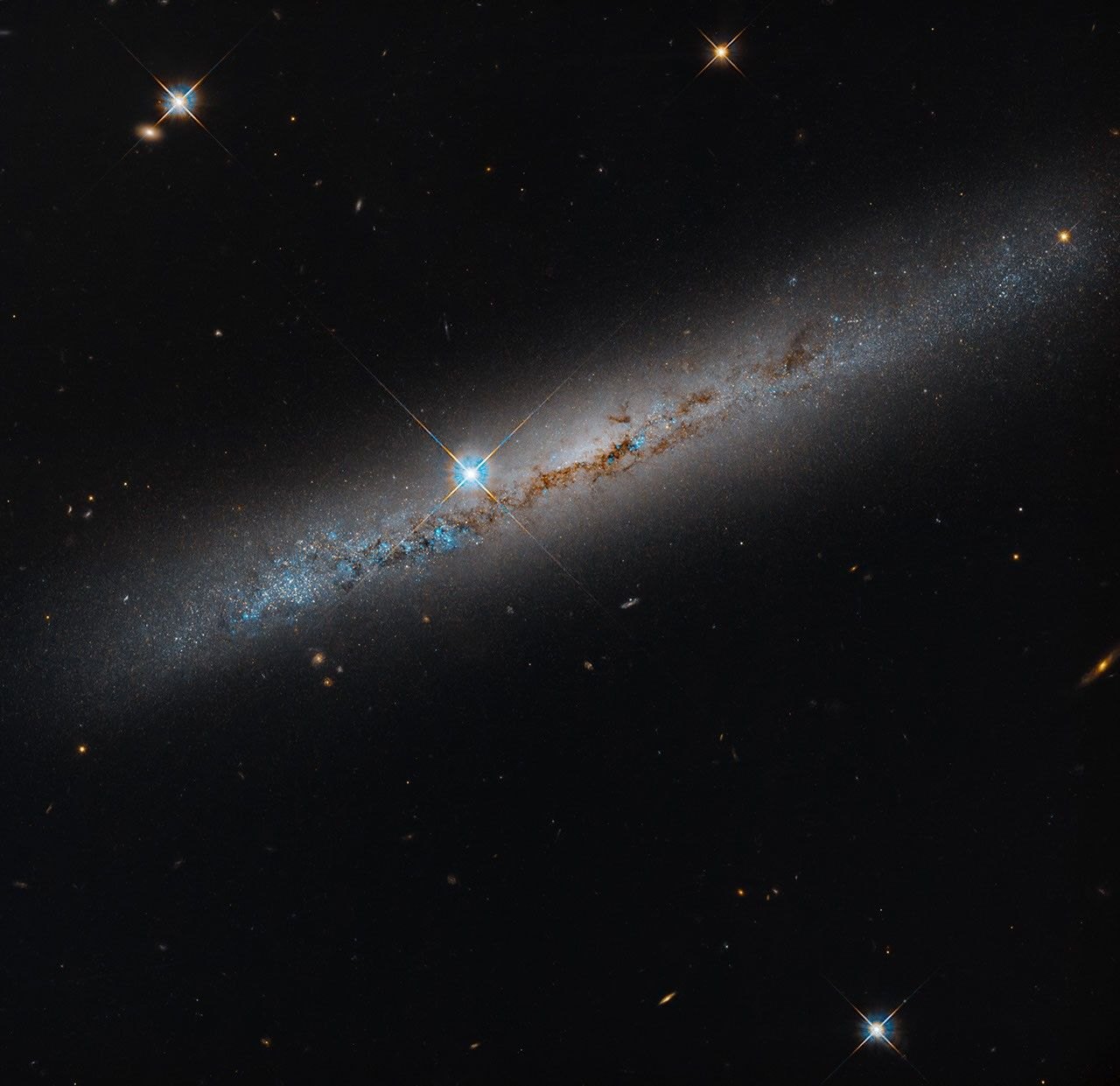
NASA has released a Hubble Space Telescope image of NGC 1827, an edge-on spiral galaxy, one whose disk is seen from the side, about 37 million light-years away in the constellation Columba. It is one of 111 galaxies imaged so far in a survey of 260.
An edge-on spiral crossed by dust
NASA describes NGC 1827 as an intermediate spiral galaxy seen exactly from the side. Rusty-brown dust lanes run along the length of the disk and split it in two. Bright-blue regions dot the disk, alongside dark lanes where, according to NASA, new stars are likely forming. In the image, the blue points look denser on the left side of the galaxy.

A bright star appears just to the left of the galaxy’s central bulge, but NASA says it is a foreground star lying between Earth and the galaxy. Its four diffraction spikes, the star-shaped streaks around bright points, come from light bending around the internal supports that hold Hubble’s secondary mirror. Other foreground stars in the frame show the same spikes, which makes them easy to tell apart from the distant galaxies scattered across the black background.
The picture was taken with Hubble’s Advanced Camera for Surveys. The image is credited to NASA, ESA and Michael Jones of the California Institute of Technology, with processing by Gladys Kober of NASA and the Catholic University of America.

Part of a satellite galaxy survey
The image comes from a Hubble program that targets 260 satellite galaxies around 22 Milky Way-like host galaxies. All the hosts lie within about 32 million light-years of Earth. NASA says Hubble has already observed 111 of the satellites. The other 149 will need one orbit each.
The program’s goal, NASA says, is to characterize low-mass galaxies in systems like our own. These small galaxies are a hard test for cosmological models, our best descriptions of how galaxies and the structure around them form, which NASA says struggle to match observations on small scales. The new data should help researchers refine those models.
111 galaxies down, 149 to go
The survey is about 43% complete by galaxy count, since 111 of 260 satellites are done. It averages roughly 12 satellites per host galaxy. Each galaxy gets a single orbit, and NASA says a Hubble orbit takes about 95 minutes. So the remaining 149 orbits add up to roughly 236 hours of orbital time, or about 10 days if they ran back to back. They will not run that way, because Hubble splits its time across many programs.
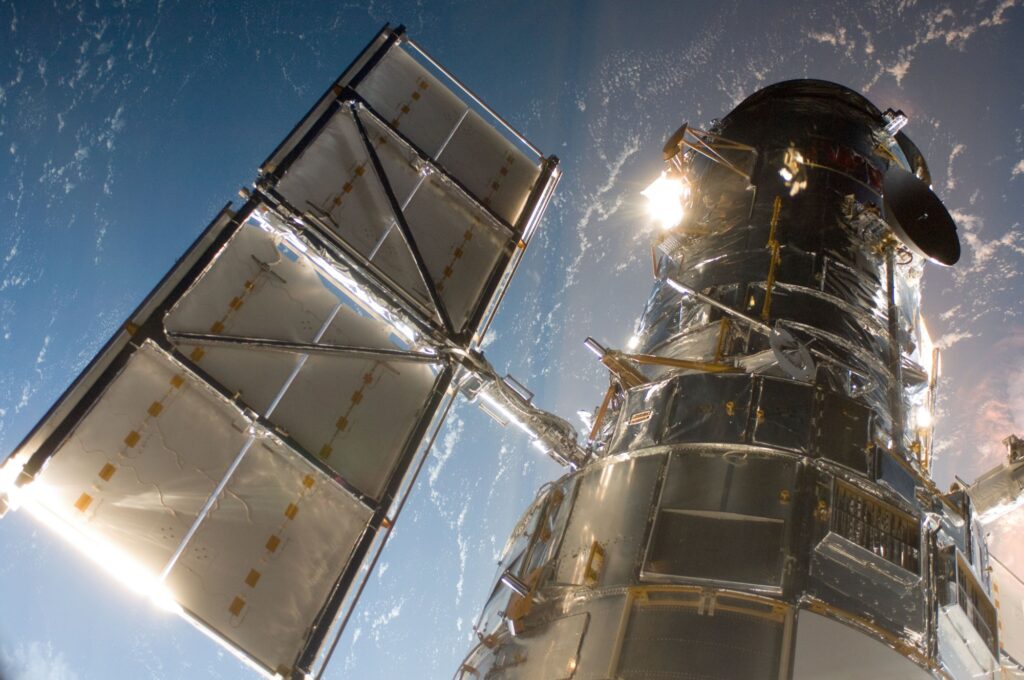
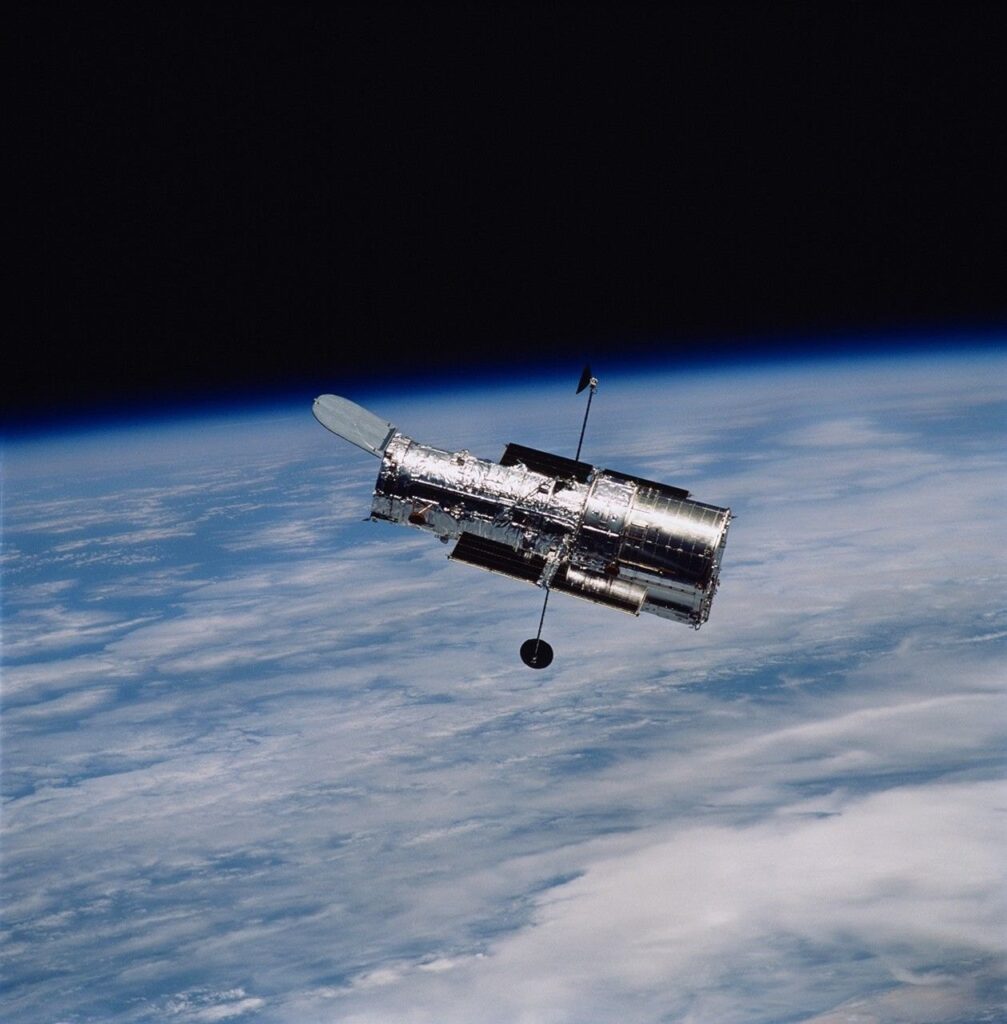
The instrument is also a veteran. According to NASA, the Advanced Camera for Surveys was installed during Servicing Mission 3B in 2002. A January 2007 electronics failure disabled its two most-used science channels. Astronauts repaired the Wide Field Channel during Servicing Mission 4, while the High Resolution Channel could not be fixed. The telescope itself launched on April 24, 1990, and carries a 2.4-meter primary mirror, NASA says. Its sharp, stable view is what lets a single orbit resolve dust lanes and star-forming regions in a galaxy 37 million light-years away.
The scientific stakes sit in the satellites rather than in any one galaxy. A sample of 260 satellites spread across 22 Milky Way-like systems gives modelers a much larger set of real objects to compare against than the satellites of our own galaxy alone.
No end date for the survey yet
With 149 galaxies left, Hubble will keep adding images to the program. NASA does not give a completion date.