Hubble’s new Messier 30 portrait shows a cluster the Milky Way may have captured
NASA and ESA's new Hubble picture of Messier 30 combines ultraviolet, visible and near-infrared data from three programs, and points to a cluster that may not be native to our galaxy.

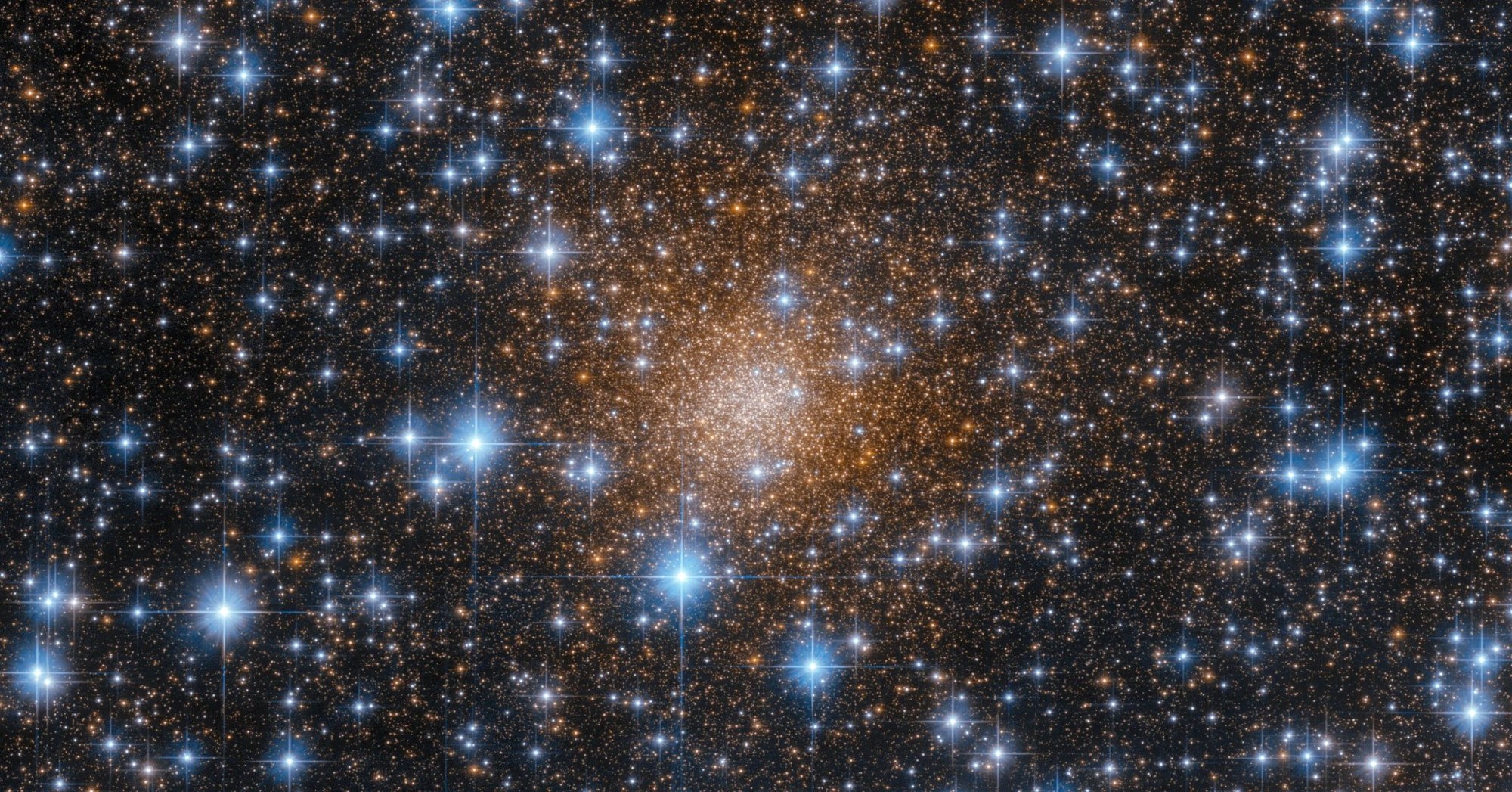
NASA and ESA have released a new Hubble Space Telescope image of Messier 30, a globular cluster 27,500 light-years away. NASA says the cluster orbits against the Milky Way’s spin, a hint that our galaxy may have captured it.
One cluster, three Hubble programs in a single frame
Messier 30 (M30, also cataloged as NGC 7099) lies in the constellation Capricornus. A globular cluster is a roughly spherical ball of stars, held together by gravity, containing anywhere from tens of thousands to millions of stars. The name comes from the French astronomer Charles Messier, who listed it among fuzzy objects that early telescopes could confuse with comets.

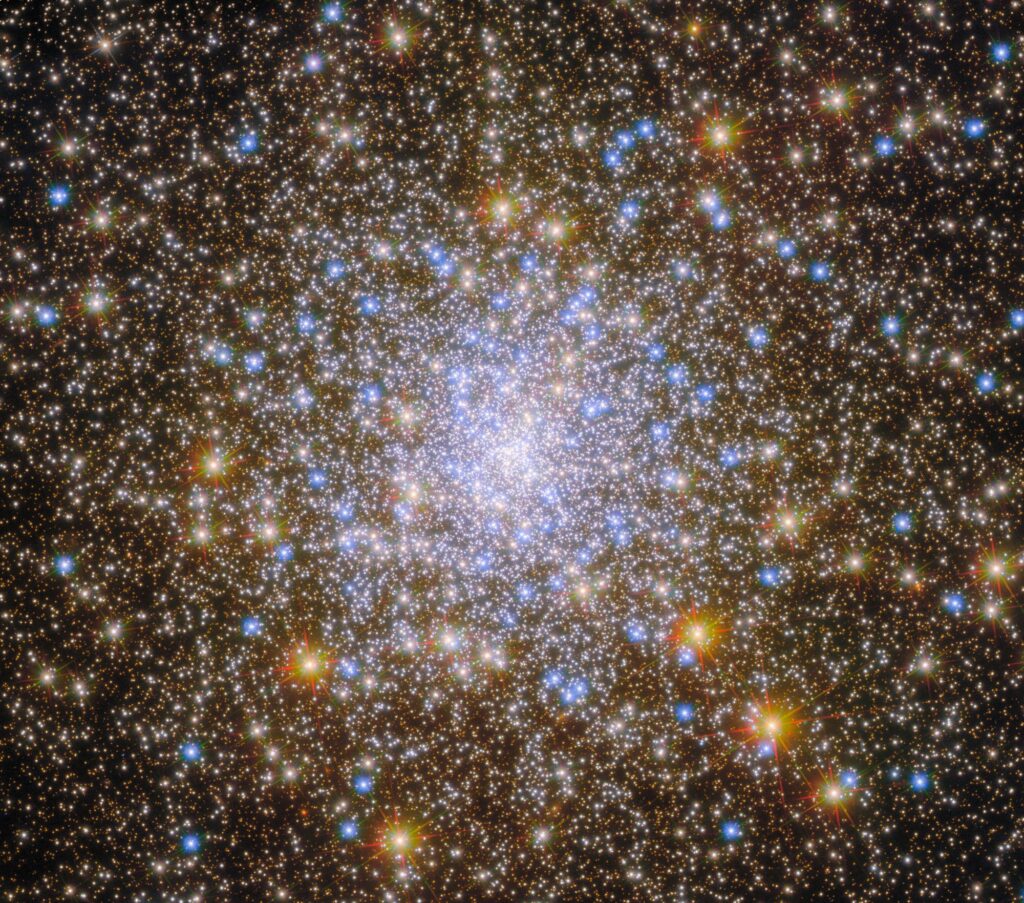
The new picture draws on data from three separate Hubble observing programs, and so covers ultraviolet, visible and near-infrared light. In the image, blue stars dominate the bright core, while yellow stars make up most of the cluster outside it. A few orange stars, closer to us, look noticeably larger.
NASA describes the three programs this way:

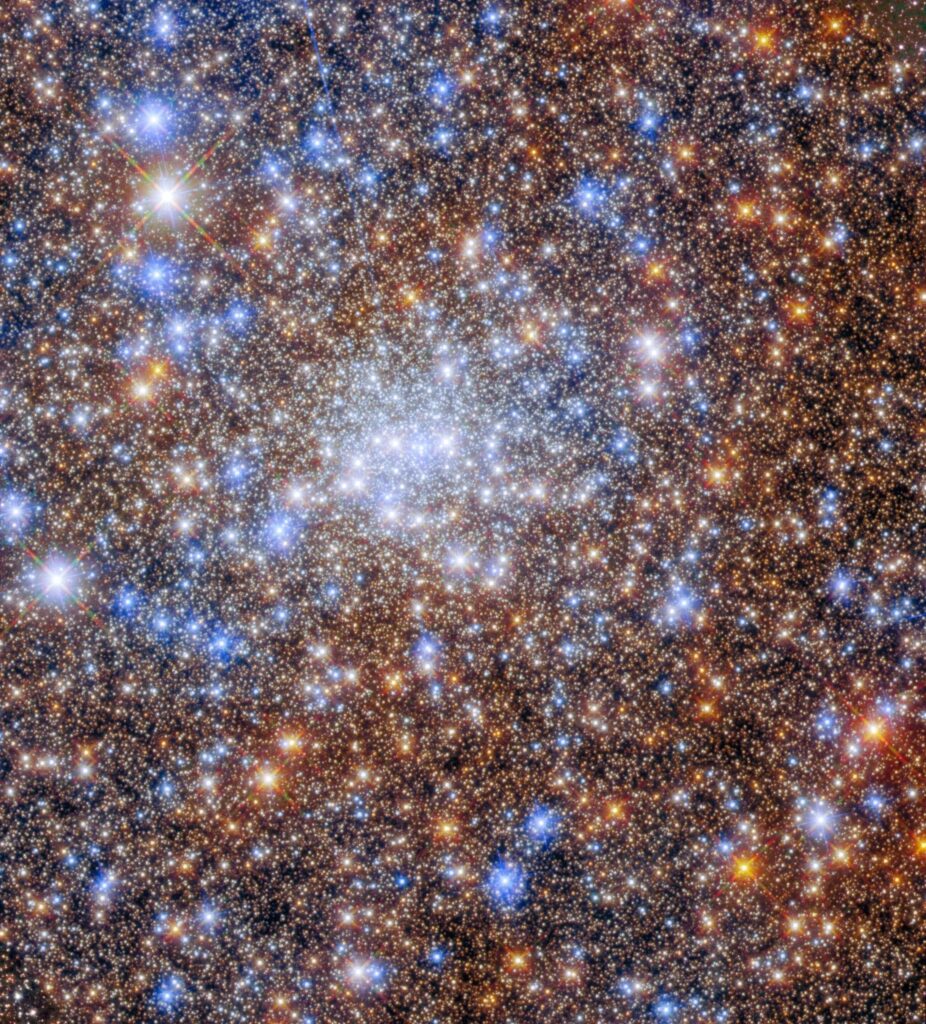
- Program 10775 (led by Ata Sarajedini) used the Advanced Camera for Surveys to study dozens of Milky Way globular clusters in red and near-infrared light, reaching stars down to 20% of the Sun’s mass.
- Program 13297 (led by Giampaolo Piotto) revisited M30 and other clusters with the Wide Field Camera 3 and three filters for bluer light. Its data were key to studying “blue straggler” stars and the multiple populations of stars that can live in one cluster.
- Program 16298 (led by Mattia Libralato) looked at how different star populations moved over the 15 years since Hubble first observed them.
A cluster that spins the wrong way
Globular clusters usually sit in the galaxy’s halo, the vast, diffuse region around its main disk. NASA compares them to moths swarming around a lightbulb. The Milky Way has at least 150, and the nearest is about 6,000 light-years away. Astronomers estimate their ages at 11.5 to 13.5 billion years, which makes some nearly as old as the universe.
That age is why they matter. A cluster born inside the Milky Way can act as a time capsule that preserves the chemistry of the young galaxy. But researchers have found that M30 and many other clusters orbit in the direction opposite to the way the galaxy rotates. According to NASA, this may mean they did not form here at all and were instead captured long ago.
The same clusters helped settle where we sit in the galaxy. More than a century ago, Harlow Shapley used a type of variable star to measure the positions of and distances to dozens of globular clusters. His work showed that the Sun is not at the center of the galaxy and that the center lies toward Sagittarius. NASA notes his distances were off, so he concluded the galaxy was about twice its real size.
Why combining old and new data pays off
The technical value of this image lies less in its beauty than in how the datasets stack. Using different cameras and filters is a way of sorting stars by what they are and how they behave. Ultraviolet and blue light help separate the cluster’s stellar groups, while red and near-infrared light reach the faint, low-mass stars.
Blue stragglers show why the blue data matter. According to NASA’s Hubble star cluster pages, these stars can pull matter off a neighboring star, gaining extra fuel and burning brighter than their age would suggest. Seeing them clearly in the crowded core requires the sharp ultraviolet and blue imaging that program 13297 delivered.
The multiple populations are a second puzzle. NASA’s Hubble pages say clusters can contain several generations of stars, which makes them more complex than scientists thought. Because cluster stars likely form from the same gas and dust, stars of different ages in one cluster could change how astronomers think about star formation.
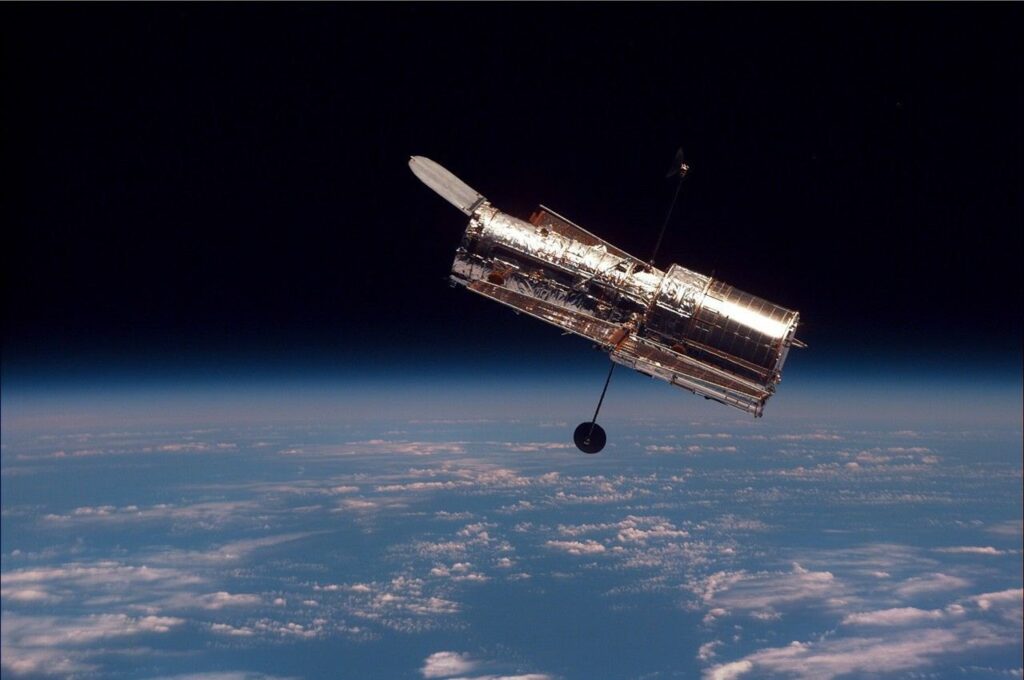
The 15-year comparison adds the dimension of time. Tracking tiny shifts in position over that span lets astronomers see how different populations move inside the cluster. NASA credits Hubble’s longevity and its ability to discern fantastically small details in distant objects for making that possible.
The scale of the problem is large. The Milky Way’s 150-plus clusters are only part of the picture: NASA says Andromeda, our neighbor galaxy, has over 400. M30 is one well-studied case in a much bigger family, and each cluster that proves to be an immigrant would carry the history of a different galaxy rather than our own.