Curiosity spots the first twilight clouds of a new Martian autumn
As Mars year 39 begins, Curiosity's cameras caught the first high, wispy twilight clouds of autumn over Gale Crater, while the team wrapped up drilling at "Basque Lakes".

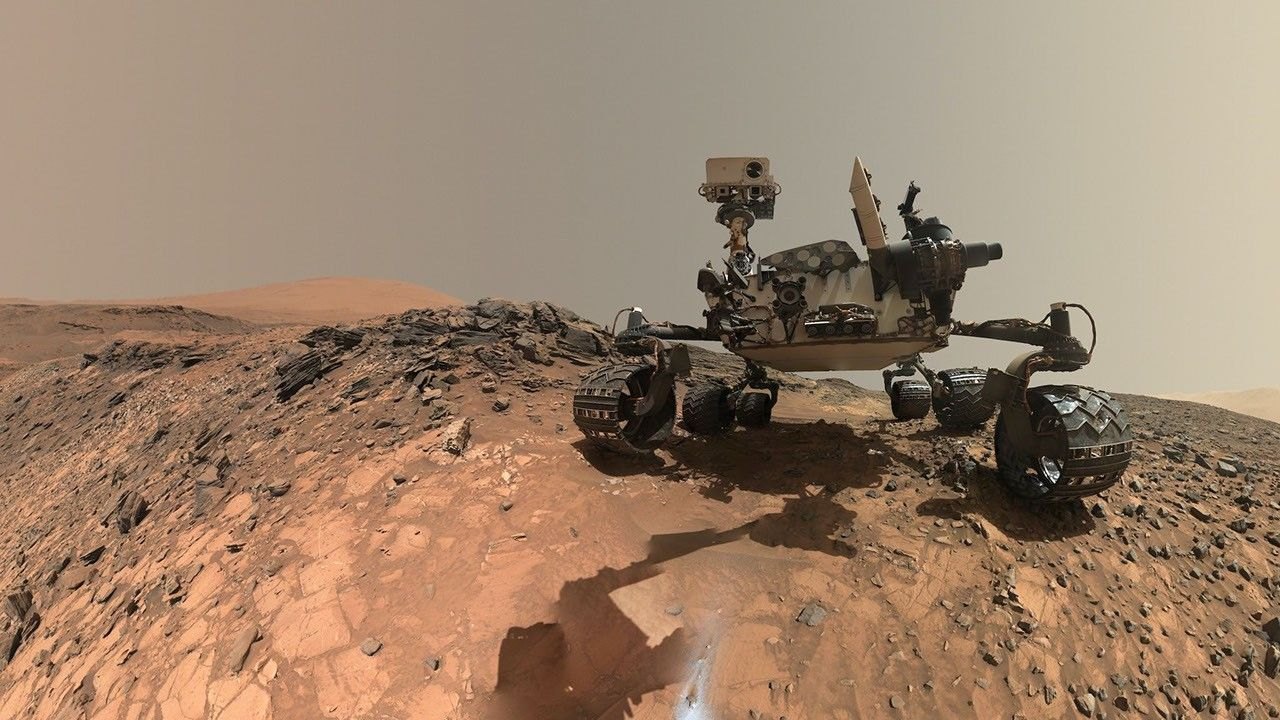
NASA’s Curiosity rover has photographed the first high-altitude clouds of the Martian autumn, shortly before sunset over Gale Crater, as the planet entered Mars year 39, according to a mission blog post by atmospheric scientist Alex Innanen.
A new Mars year and a change of season
Mars has no calendar month names, so scientists mark its year from the vernal equinox, the moment spring begins in the northern hemisphere. Seasons are then counted in degrees of “solar longitude”, the planet’s position along its orbit around the Sun. A full orbit is 360 degrees, so each season spans 90 degrees. Mars year 39 began at 0 degrees, which NASA says happened at the end of September on Earth.

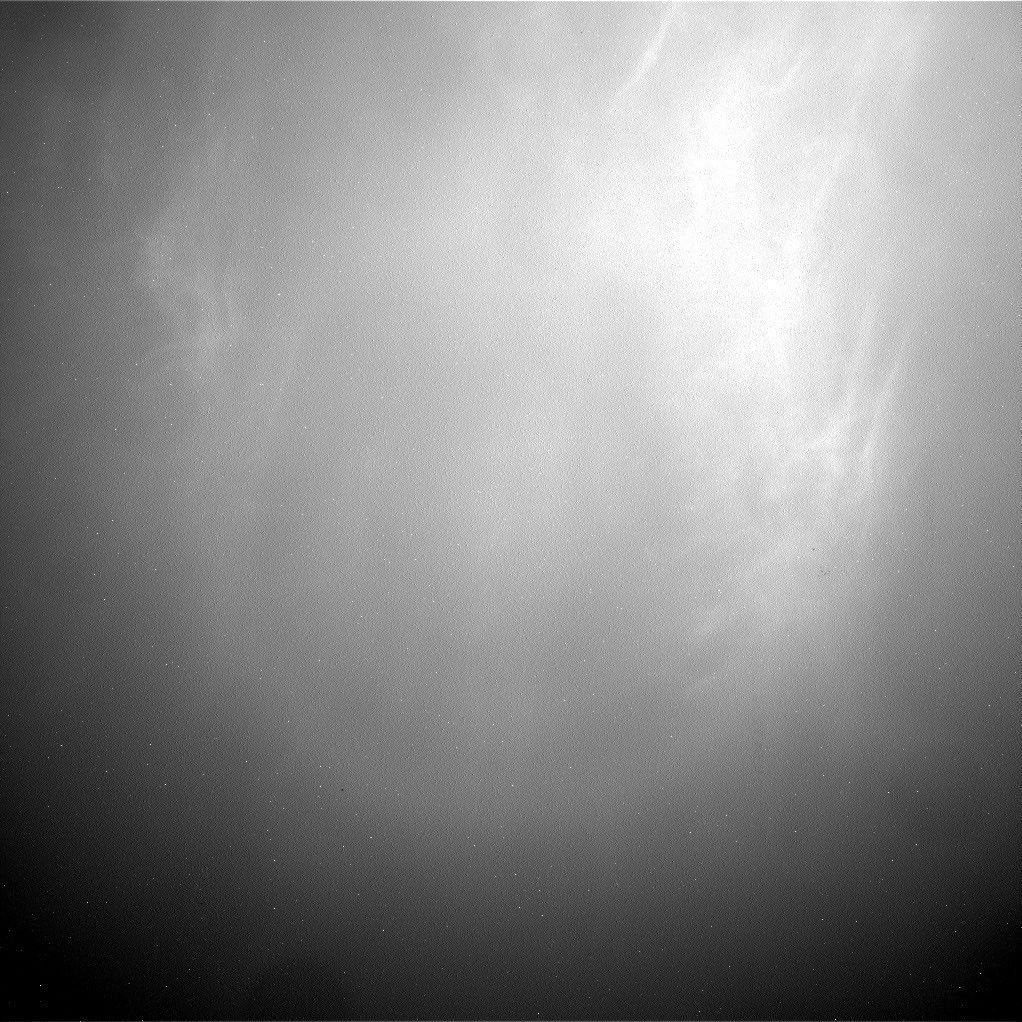
Gale Crater lies just south of the equator, so the same moment brought the start of autumn there. The rover’s team reached it with the rover busy: the previous week’s work was a drill campaign at a site called “Basque Lakes”.
Drilling at Basque Lakes ends, and a drive begins
The week covered sols 5036 to 5042. A sol is one Martian day, about 24 hours and 40 minutes long, and the mission counts them from Curiosity’s landing. The plan for Monday gave the team four sols to work with. The blog says the team of the SAM instrument, which analyzes gases from heated samples, chose one more run of its GCMS experiment. GCMS stands for gas chromatograph/mass spectrometry, a method that separates the gases released by a sample and identifies them. It uses a lot of energy, but the four-sol plan left room for Mastcam and ChemCam observations from a distance, and for close-up readings of the drill tailings, the leftover rock and mineral powder from the sample.

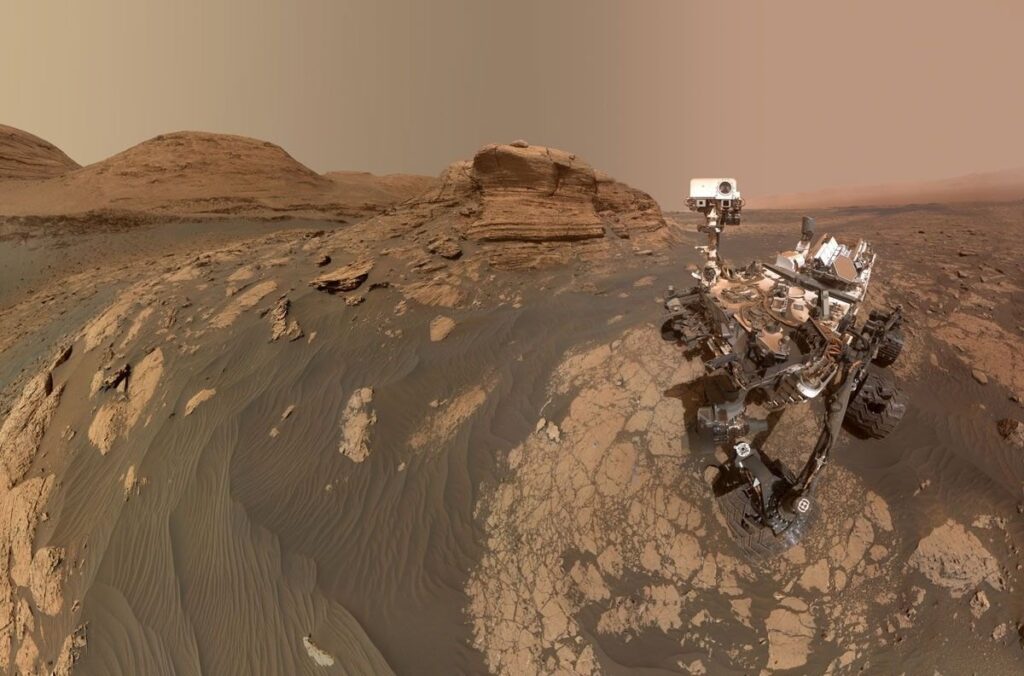
The weekend plan added a couple of sols to finish drilling and collect any last targets. After that, Curiosity is due to drive back toward the crystal shapes it saw in the “Chiu Chiu” region.
Clouds too faint for a camera, until sunset
Most clouds over Gale Crater are “suboptical”, NASA says, meaning too thin for human eyes or the rover’s cameras to see directly. Twilight clouds are an exception. At sunset the Sun sits low and lights them from below, so they stand out. They sit high in the sky and are bright enough to appear in the unprocessed images from the rover’s navigation cameras.
Curiosity’s late-afternoon “zenith movies”, which point the camera straight up, caught the first of them on Wednesday, Oct. 7, 2026 (sol 5037). The frame at 19:44:19 UTC, taken with the Right Navigation Camera, shows wispy, cirrus-like streaks. Innanen writes that twilight cloud activity will pick up as autumn goes on.
Two rovers, two very different odometers
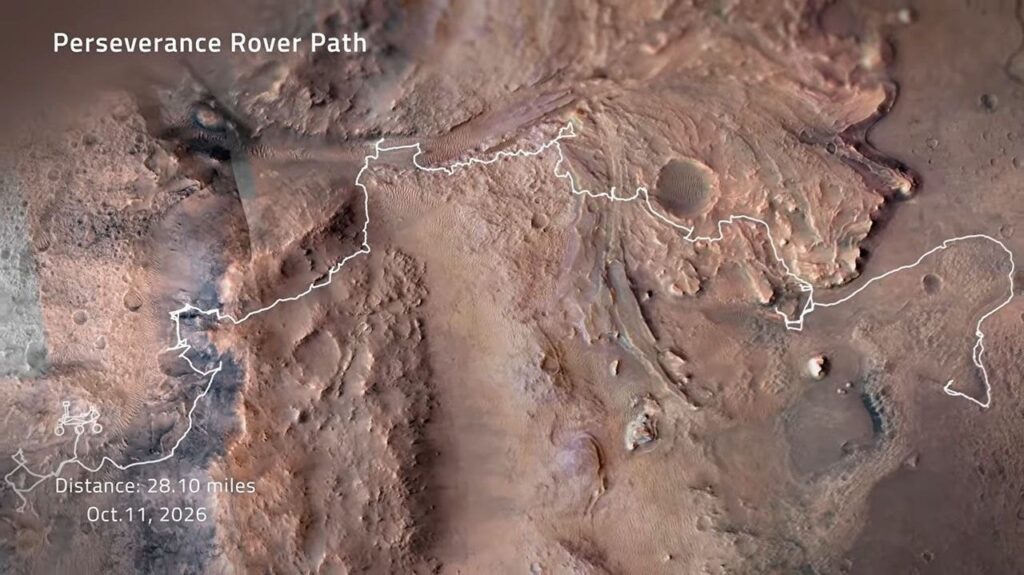
The blog does not compare Curiosity with its younger neighbor, but the numbers show how differently the two NASA rovers work. Curiosity landed in 2012 and, according to our report on Perseverance’s record, has logged more than 23.65 miles (38.07 km). Perseverance passed 28.10 miles (45.22 km) on its sol 2,006, beating Opportunity’s 28.06 miles. Curiosity is at sol 5,037, so it has spent roughly two and a half times as many Martian days as Perseverance to cover less ground.
That gap also reflects a different job. A Martian year lasts 687 Earth days, or 669.6 sols, according to NASA figures quoted in our Mars facts guide. Curiosity has now watched Mars year 39 begin. Its work at Mount Sharp is slow by design: it stops to drill, run chemistry experiments and watch the sky across seasons, and the weather record it builds spans many Martian years.
For atmospheric scientists, that long record is the point. Repeating the same cloud movies at the same time of year lets them tell a routine seasonal cycle from an unusual one.
The latest images from both rovers are collected in our Mars rovers pictures page.