Lightning, fishing fleets and Singapore: An astronaut’s night view over Borneo
NASA's Earth Observatory has published an astronaut photo of lightning-lit storm tops, Singapore and fishing boats over the South China Sea, taken from the space station on October 28.

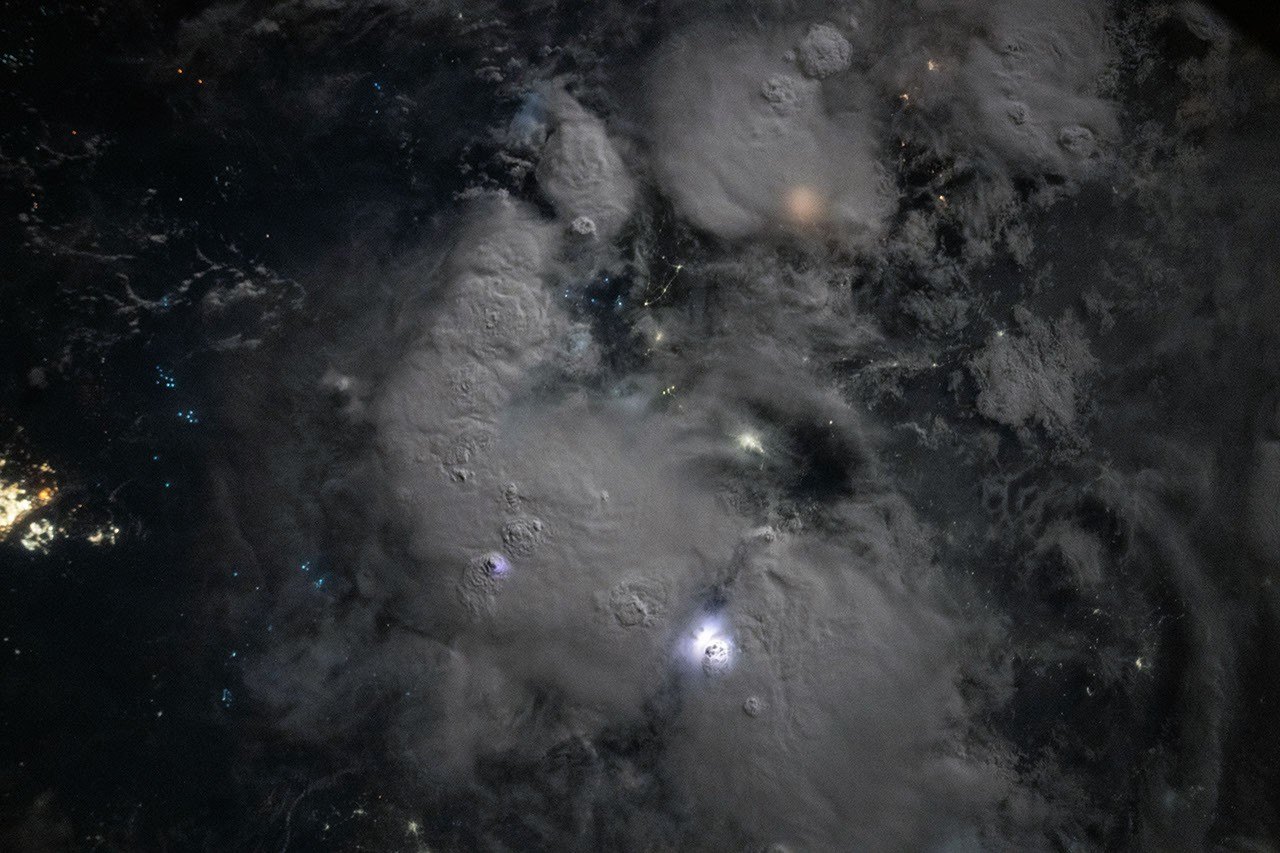
An astronaut aboard the International Space Station photographed lightning-lit thunderstorms, the glow of Singapore and a cluster of fishing-boat lights over the South China Sea on October 28, 2026, NASA’s Earth Observatory said in its Image of the Day for November 17.
Three kinds of light in one frame
The orbiting laboratory was above the South China Sea, close to Borneo, at 14:20 UTC on October 28, which was 9:20 p.m. local time in western Indonesia. A member of the Expedition 75 crew took the picture with a Nikon Z9 camera set to a 14-millimeter focal length. NASA says the image was cropped and enhanced for contrast, and lens artifacts were removed.

Several overshooting tops bubbled up from the storms, and two were lit by lightning flashes. An overshooting top is a tall, domelike bulge that rises above a thunderstorm’s flat anvil cloud and sometimes reaches into the stratosphere. NASA describes it as a sign of strong updrafts and intense storms.
Around the clouds, the frame shows three human-made sources of light:

- Singapore: the city-state of 6.2 million people appears on the left, with the curving Singapore Strait separating it from the islands of Batam and Bintan to the south.
- Fishing boats: a cluster of blue lights west of Singapore, which NASA says was likely produced by boats using bright lamps to attract squid or schooling fish such as sardines or anchovies.
- Gas flares: scattered orange points offshore to the northwest, likely from burning off gas.
Why astronauts keep writing about lightning
The story builds on accounts from earlier astronauts. Sally Ride, the first American woman in space, wrote in Air & Space magazine that “On Earth, people see lightning from below the clouds. In orbit, we see it from above.” She said storms spanning hundreds of miles can look as if a brigade is tossing fireworks from cloud to cloud, which gives the NASA piece its title.
NASA astronaut Anil Menon posted a video of Earth’s darkened limb, the thin edge of the planet against space, on X. He called lightning “my favorite sight from space”. He said it is hard to capture, and that the unedited, real-speed video shows the reach of storms and the rapid flashes along the horizon.
NASA scientists estimate that about 2,000 thunderstorms are active at any moment, producing nearly 60 flashes per second, or roughly 5 million a day.
A long record of looking down at night
The photo is part of a long run of crew photography. According to NASA’s station fact sheet, the station travels at about five miles per second and makes 16 orbits of Earth in 24 hours, circling roughly every 90 minutes. That pace means a crew member sees a new stretch of Earth’s night side every few minutes, and a storm like this one can be in view for only a short time before the station moves on.
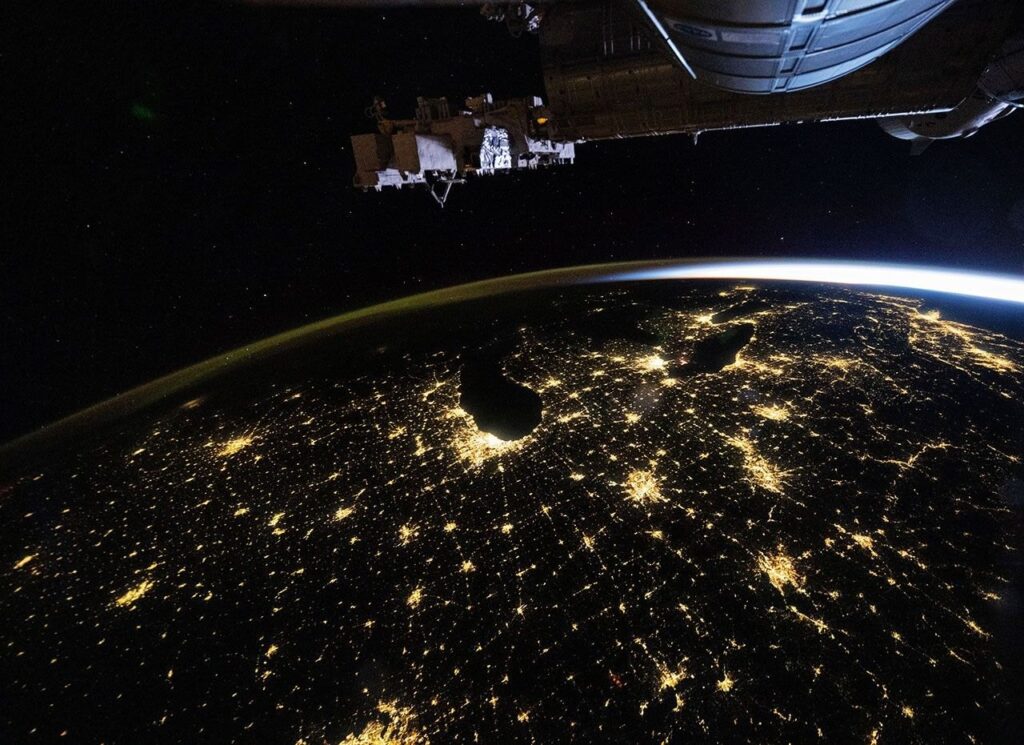
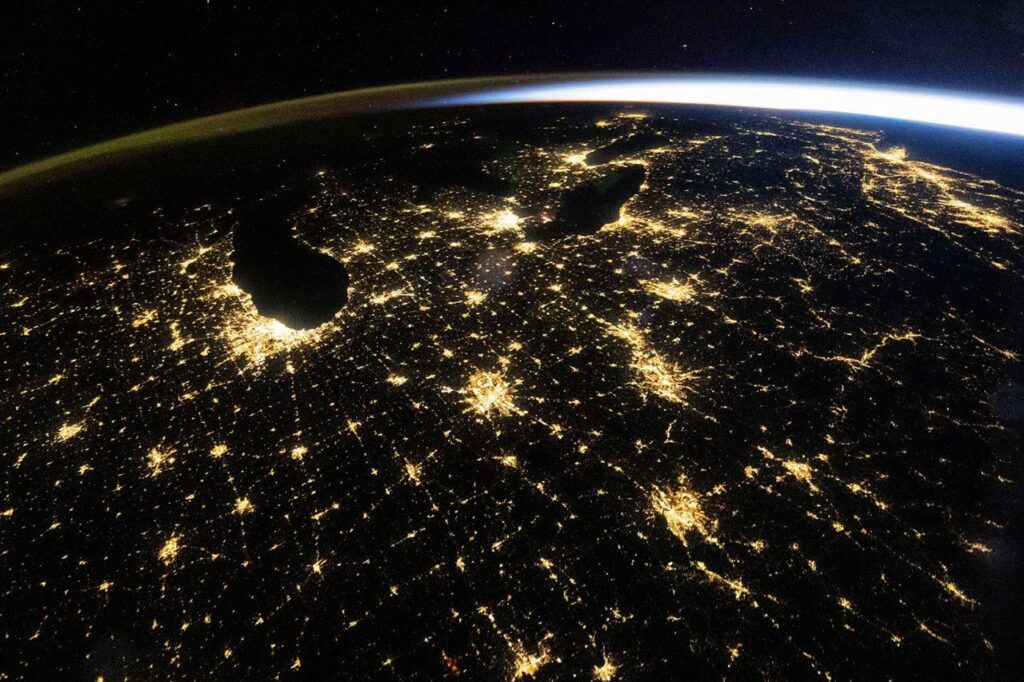
NASA notes that the station has been continuously occupied since November 2000. Crews have used that time to photograph the planet at night, and the images are made freely available. NASA’s Earth Observatory has recently run other station night views, including the U.S. Midwest before dawn and stadiums in cities hosting the 2026 FIFA World Cup, as seen from orbit.
Lightning is a harder subject than city lights. The flashes are brief and unpredictable, so a still frame depends on timing as much as skill. This image catches two storm tops in the act, along with the fishing fleet and city lights, in a single frame. For a look at what else the crew is doing, see our report on this week’s Expedition 75 work.
The frame, catalogued as ISS075-E-250951, comes from the station’s Earth photography program run out of NASA’s Johnson Space Center in Houston. More crew images can be browsed in NASA’s online gateway to astronaut photography of Earth.