

A-Carinid meteors flare again, with naked-eye rates near 10 an hour
CAMS observers report that the A-Carinid meteor shower, absent in most years, was active on Oct. 12-16, with a peak on Oct. 15 and naked-eye meteors.

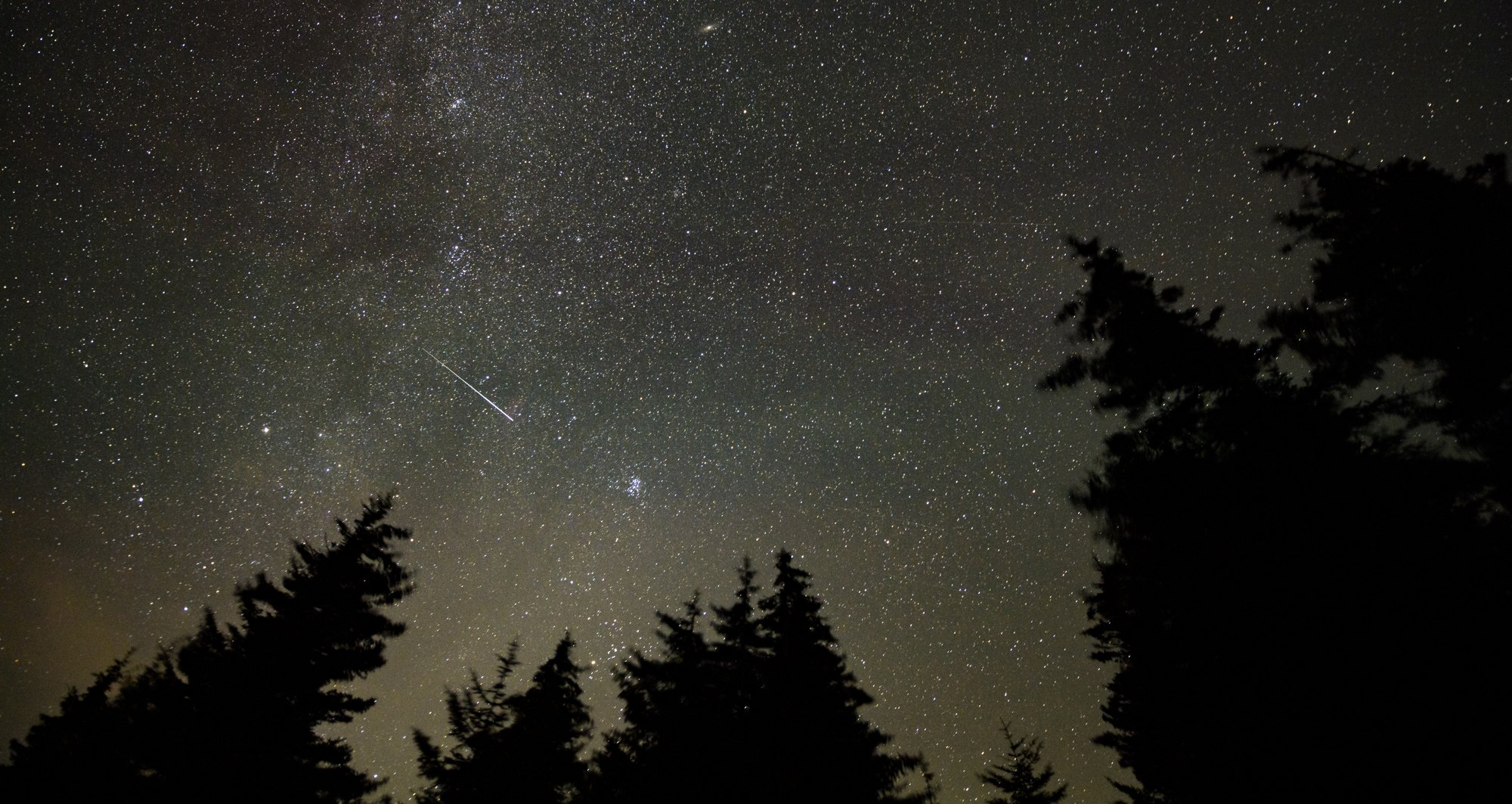
The A-Carinid meteor shower, which is missing in most years, is in outburst again, a sudden surge in meteor activity. Observers of the CAMS meteor survey report activity on Oct. 12-16, 2026, with a Zenith Hourly Rate of about 10 meteors an hour on Oct. 16 (the rate an observer would see under ideal dark skies with the shower’s source point overhead), according to a SETI Institute post of CBET 5758.
What the observers saw
The report comes from Peter Jenniskens of the SETI Institute and NASA Ames Research Center, together with colleagues from the Cameras for Allsky Meteor Surveillance (CAMS) low-light video network. The contributors operate CAMS stations in South Africa, New Zealand, Namibia, Australia and Chile, including observers at Cerro Tololo Interamerican Observatory and at ESO’s La Silla Observatory. The results for those dates are published on the CAMS website.

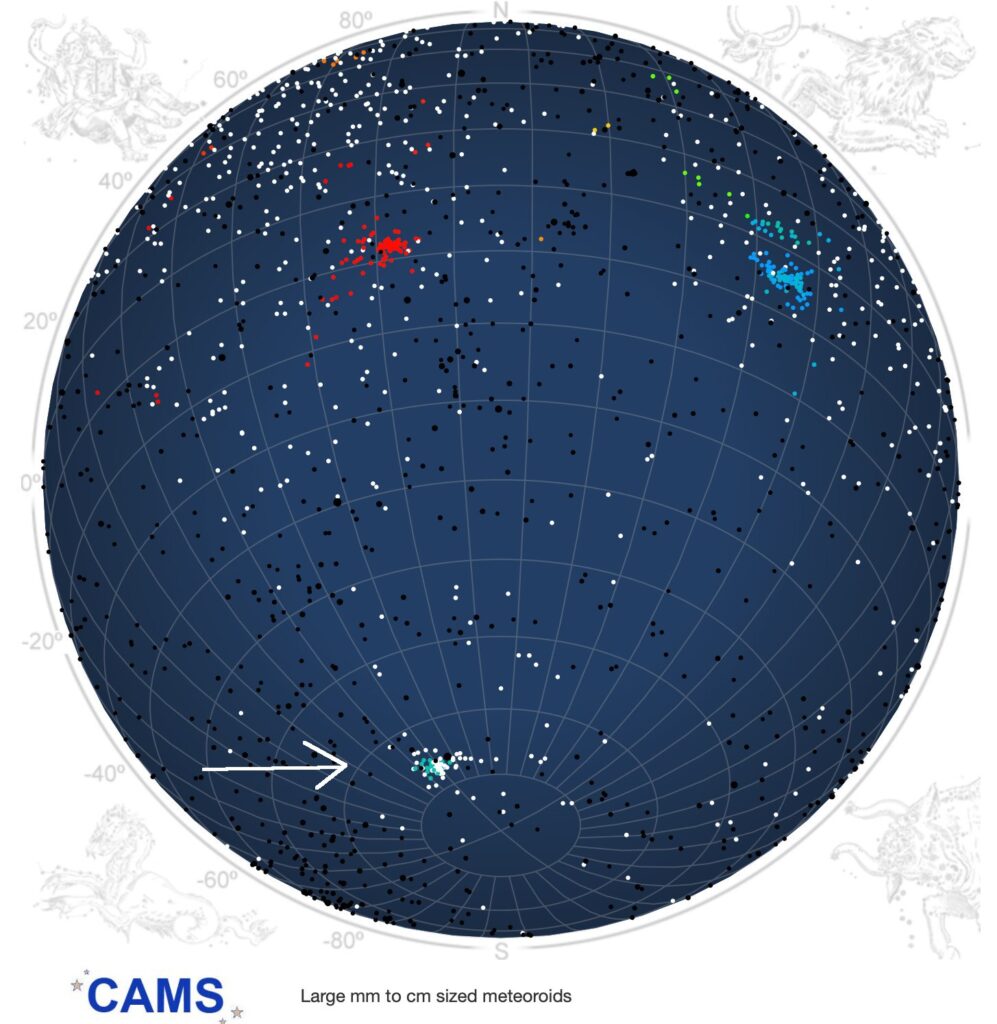
The telegram says the outburst was still going on when it was written. The meteors were visible to the naked eye. The rate of about 10 an hour was measured on Oct. 16 at 2h UTC. The peak appears to have come on Oct. 15, between 9h and 17h UTC.
The A-Carinids carry the IAU shower number 842. The report describes them as a Jupiter-family comet shower, meaning the dust comes from a comet whose orbit is shaped by Jupiter. Central Bureau electronic telegrams can be superseded by later text in the printed IAU Circulars, so the figures may be refined.

A pattern of returns
The telegram notes that the shower was in outburst before, in 2014 and in 2019/2020. The authors read this as a possible 6-year rhythm. They suggest the dust is a filament of meteoroids locked in a 2:1 mean-motion resonance with Jupiter, so the filament would complete two orbits for each orbit of the planet. Resonant filaments like this can bring Earth into dense dust at regular intervals.
A test of how well meteor outbursts can be predicted
The A-Carinids are a useful test of how well resonant meteoroid streams can be predicted, and the record around them is still growing. Reports on the 2020 outburst, collected by the e-Meteor News site, say CAMS networks in Namibia, South Africa and Chile recorded it, with a peak at 1h51m UTC on Oct. 14, 2020. The same account gives the orbit as that of a Jupiter-family comet inclined by 54 degrees, and says the parent body has not yet been found. Finding it would be a first step toward tying the dust to a specific comet.
Independent data show that the 2020 event was real and brief. A Planetary Science Journal paper on observations from the SAAMER-OS radar reports a peak on Oct. 14, 2020 and an estimated peak Zenith Hourly Rate (ZHR) of 5.7, with activity lasting about a week. This year’s naked-eye rate of about 10 an hour is within the same range of modest outbursts.
The 6-year idea also has to be reconciled with newer reports. A Global Meteor Network report published by e-Meteor News describes an outburst on Oct. 13-14, 2025 with 171 member meteors, only a year before the present one. Whether that fits the resonance model is a question the new data may help answer.
The shower radiates from the far south of the sky, so the best views are from southern latitudes, which fits the placement of the CAMS stations that reported it.