NASA’s first Moon reactor shrinks to 20 kilowatts as the agency opens bidding
NASA has opened bidding for Lunar Reactor-1, a 20-kilowatt fission system meant to run on the Moon for at least five years, with proposals due Dec. 21.
NASA is asking industry to design and test Lunar Reactor-1 (LR-1), a small nuclear fission power system for the Moon that would produce 20 kilowatts of electricity. The agency published the request for proposals on Nov. 23, and bids are due Dec. 21.
What NASA is buying
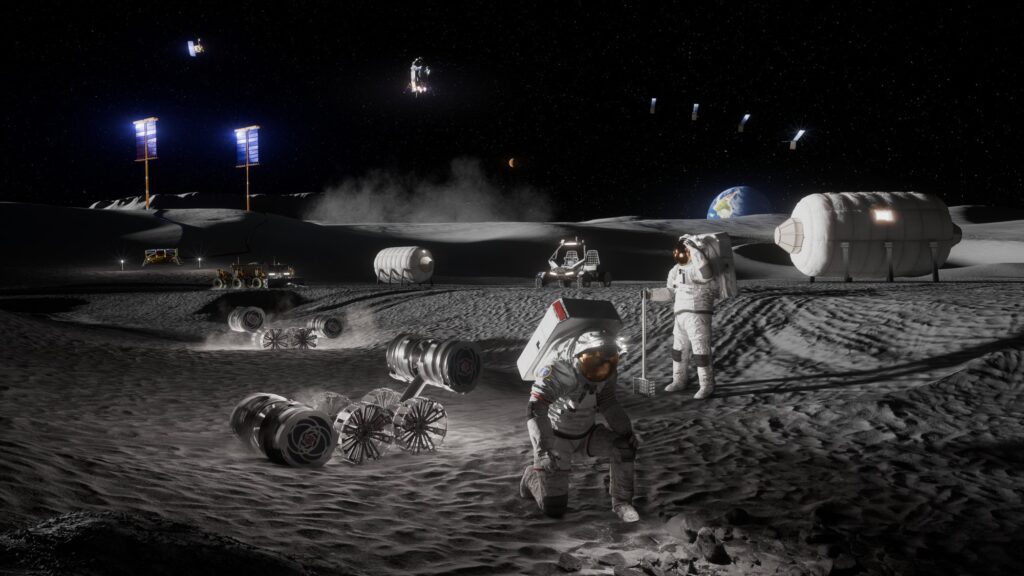
A fission power system is a compact reactor that splits atoms to make heat, then turns that heat into electricity. NASA says LR-1 would generate 20 kilowatts, which it compares to the yearly electricity use of about 16 average U.S. households. That is modest by Earth standards, but the agency says it could supply habitats, communications, rovers and science instruments for its planned Moon Base.
The target is a launch-ready system by 2030, then at least five years of operation on the lunar surface after deployment. The solicitation is called the Space Power and Reactor Capabilities Request for Proposals. It requires the reactor to meet Department of Energy safety standards for nuclear operations. Its main purpose is the technology, testing and flight design of LR-1, but NASA may also issue extra task orders for other space nuclear power systems.
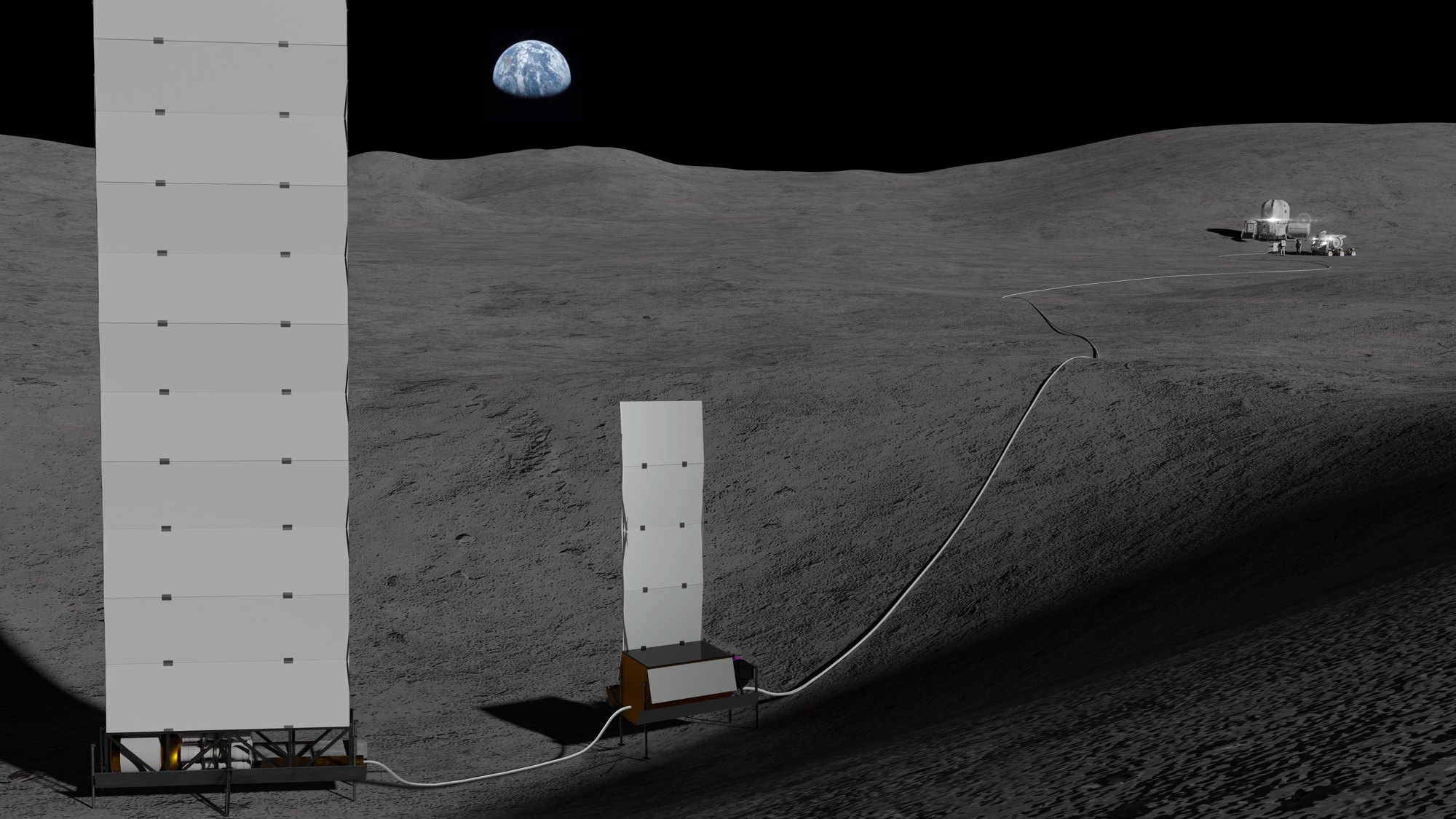
NASA’s artist’s concept shows two radiators, which shed waste heat into space, linked by cables across a cratered landscape to a habitat and a rover, with Earth above the horizon.
NASA says the draft version of the solicitation came out in August and was followed by an industry day in September at the Ohio Aerospace Institute in Cleveland. The final text incorporates the feedback from those steps.
Power through a two-week night
The case for a reactor is the lunar night, which lasts about 14 Earth days. Solar panels produce nothing in that time, while a reactor keeps running. NASA also points to Mars, where dust storms can block sunlight for months, and to the outer solar system, where sunlight is weaker. Brian Giblin, NASA’s LR-1 program manager, said in the announcement that space nuclear systems “will provide continuous power to NASA assets in any environment without dependency on sunlight.”
LR-1 is run by NASA’s Space Reactors Division together with the Department of Energy. The same division is responsible for Space Reactor-1 (SR-1) Freedom, scheduled to launch in 2028. NASA says Freedom will deliver three SkyFall helicopters to Mars and demonstrate nuclear electric propulsion, in which a reactor’s electricity drives the spacecraft’s engines.
A smaller target than the 2025 draft, and a political deadline behind it
The 20-kilowatt figure is a notable step down from where the program started. According to our earlier coverage of the lunar reactor plan, NASA’s 2025 draft partnership call asked for at least 100 kilowatts, and the final requirement was not settled at the time. Cutting the size by a factor of five should make a 2030 launch easier to reach, though NASA’s announcement does not say why the number changed.
The schedule also reflects policy pressure. NASA and the Department of Energy signed an agreement in January 2026 to develop a lunar surface reactor by 2030, as we reported. A White House space nuclear power directive dated April 14, 2026 set the same 2030 goal for a lunar variant. Our earlier report also says the Department of Defense was told to pursue its own mid-power in-space reactor by 2031, pending funding. The 2030 date is therefore a national target rather than only a NASA one.
The closing line of NASA’s announcement frames the work as securing “America’s leadership in space for decades to come.” That is a statement of intent, not a measured outcome. The competitive context is that the Moon base plans of other space powers also lean on lunar-night power, and a working reactor would be a first for any country on the surface.
NASA has not said how many awards it expects, their value, or when it will choose partners. Those details would normally follow after the Dec. 21 deadline. For readers following NASA’s lunar plans, the next concrete signal will be which companies bid and how the agency splits the work between LR-1 and any additional task orders.