Webb watched two stars merge in Andromeda, and the star grew 7 times heavier than the Sun
Astronomers followed a binary star in Andromeda from quiet orbit to eruption. Webb's data showed the smaller star was swallowed, a result that took only about seven years.

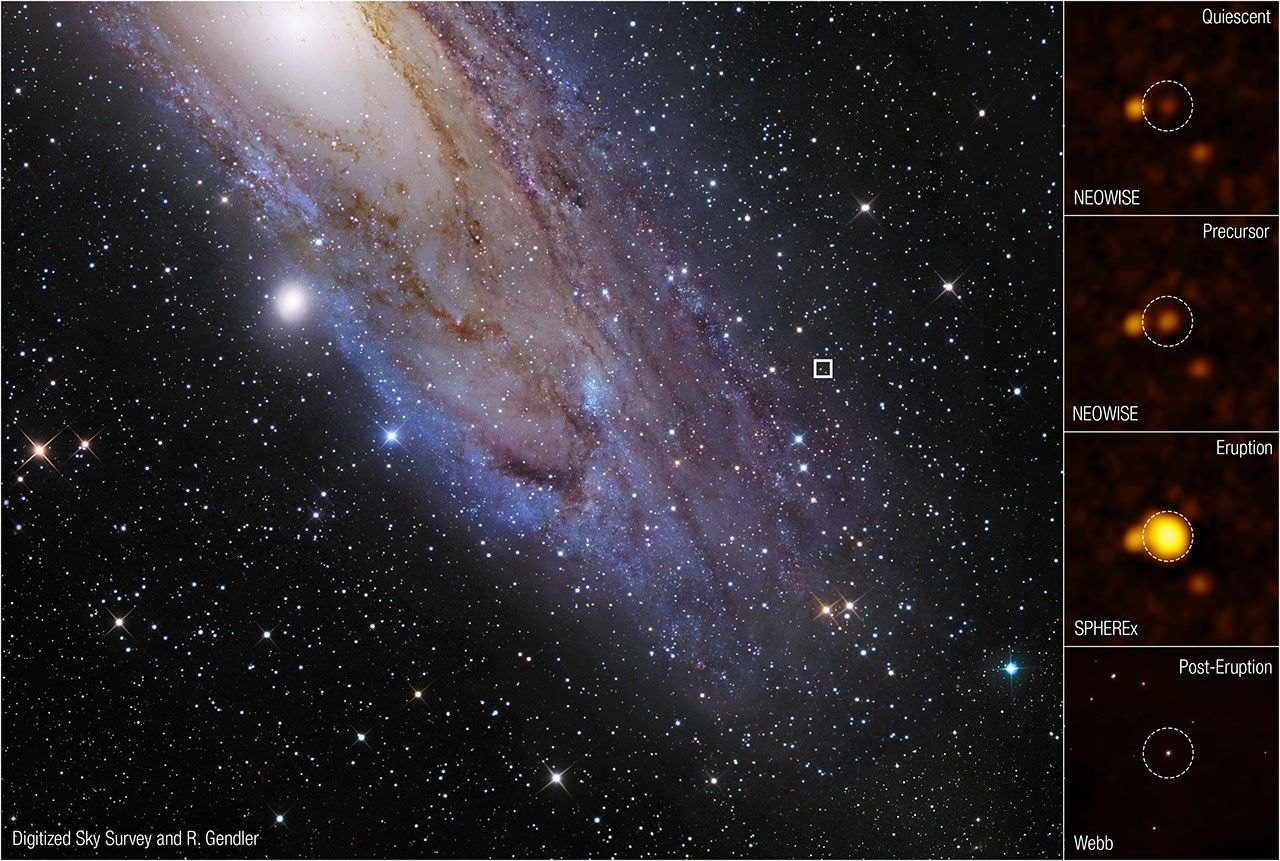
Astronomers using NASA’s James Webb Space Telescope have confirmed that a star slightly lighter than the Sun spiraled into a supergiant in the Andromeda galaxy and merged with it, NASA reported. The merged star is nicknamed Bao.
A merger caught almost as it happened
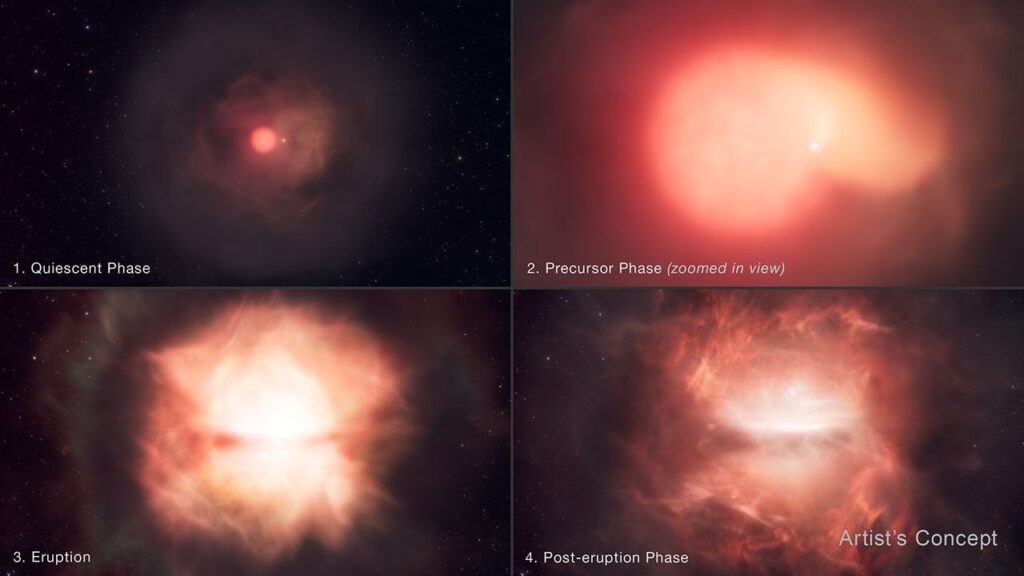
Two stars that orbit each other are called a binary. Sometimes one grows so large that its outer layers reach its partner, and the pair can end up sharing a gas envelope. In some systems both stars survive this stage. In others they merge into one. Webb’s data showed that this one merged.

The team, led by Viraj Karambelkar of Columbia University, reported the result in a paper in Nature. Webb observed the system only 47 days after the eruption peaked, which NASA says is the earliest follow-up of an event like this. Karambelkar said: “Stellar mergers are very, very difficult to observe in real time because they are hard to predict.”
The pair, formally named AT 2025abao, spent a very long time in a calm orbit. Once the smaller star touched the surface of the giant, the merger took only about seven orbits, or roughly seven years. NASA notes that other known mergers of two smaller stars happened after thousands of orbits.
How a supergiant swallowed its companion
Modeling of Webb’s mid-infrared observations, which traced dust the larger star had shed over centuries, gave the team the masses of both stars for the first time. Before the merger, the primary star was seven times as massive as the Sun, 350 times its radius and 18,000 times brighter, so the team called it “Big Bao”. It outshone its companion in the data.
“Little Bao” was likely about 0.7 solar masses, with a slightly smaller radius than the Sun and fainter. At first the model suggested there might be enough leftover energy for the small star to escape. Further analysis showed it was dragged into the giant’s core. Co-author Kishalay De, of Columbia University, described the encounter as “almost like a bomb exploding inside a living star”.
As the companion circled inside the envelope, drag robbed it of orbital energy and it spiraled inward. NASA says the newly single star is potentially “rejuvenated”, but only future observations will show how its mass settles.
The trail of telescopes that tracked Bao
The first hint came in February 2023, when the team spotted an unusual variable star in archived data from NASA’s retired NEOWISE infrared mission. The star had held a steady brightness before 2018. The Wide-field Infrared Transient Explorer (WINTER) saw it brightening and shedding dust in September 2024. In July 2025, NASA’s SPHEREx survey telescope saw it fade in visible light and brighten in infrared, a sign of unusual activity.
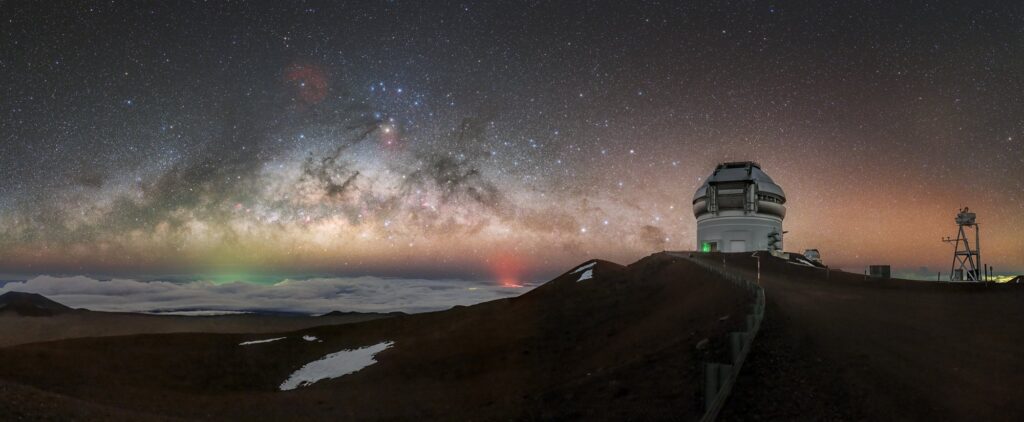
The Zwicky Transient Facility detected the eruption on Oct. 17, 2025. In November 2025 the team added observations from NASA’s Neil Gehrels Swift Observatory and the Gemini North telescope in Hawaii. Webb observed on Dec. 24, 2025, in a Director’s Discretionary Time program, which reserves telescope time for unexpected events.
Co-author Nadia Blagorodnova, of the University of Barcelona, said the team expected an outburst from such an extended star to take years. Instead, she said, brightness began rising and peaked within a week.
What Bao adds to a long-running puzzle
Astronomers have usually studied common envelope evolution, the shared-gas stage described above, by working backward from systems that merged long ago. Bao was analyzed as it unfolded, which let the team measure how much mass was ejected and how efficient the process was. NASA says that efficiency is a key unknown in how binaries turn into other objects. Systems that survive the stage can become neutron stars and black holes, supernovae, gravitational-wave sources and millisecond pulsars.
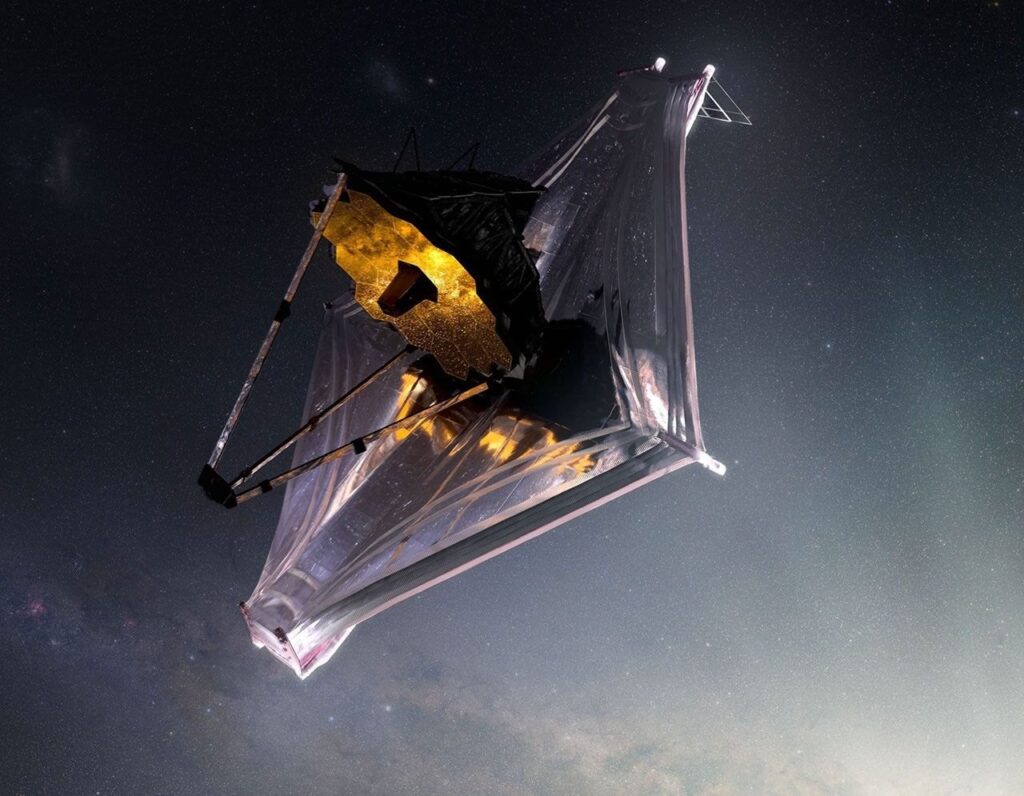
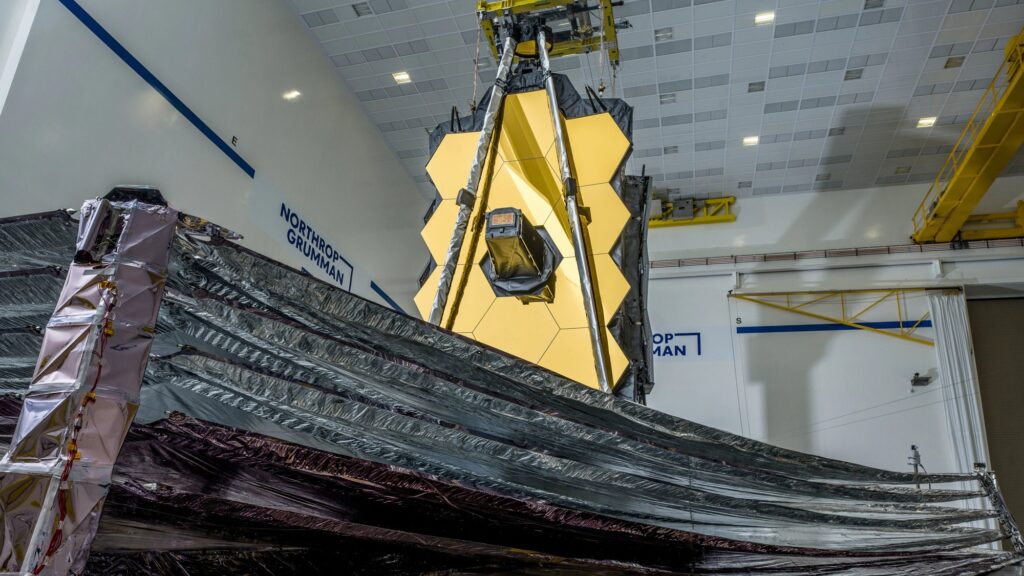
Webb itself, launched on Dec. 25, 2021, is a natural tool for this kind of work. Its infrared sensitivity picks out the dust that the stars blow out, and Andromeda, about 2.5 million light-years away according to NASA, is close enough to resolve a single star there. The Bao campaign also leaned on two NASA survey missions, NEOWISE and SPHEREx, rather than on a dedicated search.
More such events may be coming. NASA says its recently launched Nancy Grace Roman Space Telescope is about to run large public surveys, including a Galactic Bulge Time-Domain Survey that should find many new transients. Karambelkar said: “There’s going to be a large influx of similar discoveries just ahead.”
The work was funded in part by a grant from NASA’s Astrophysics Data Analysis Program.