Curiosity tests doing two jobs at once to save power as its output slowly falls
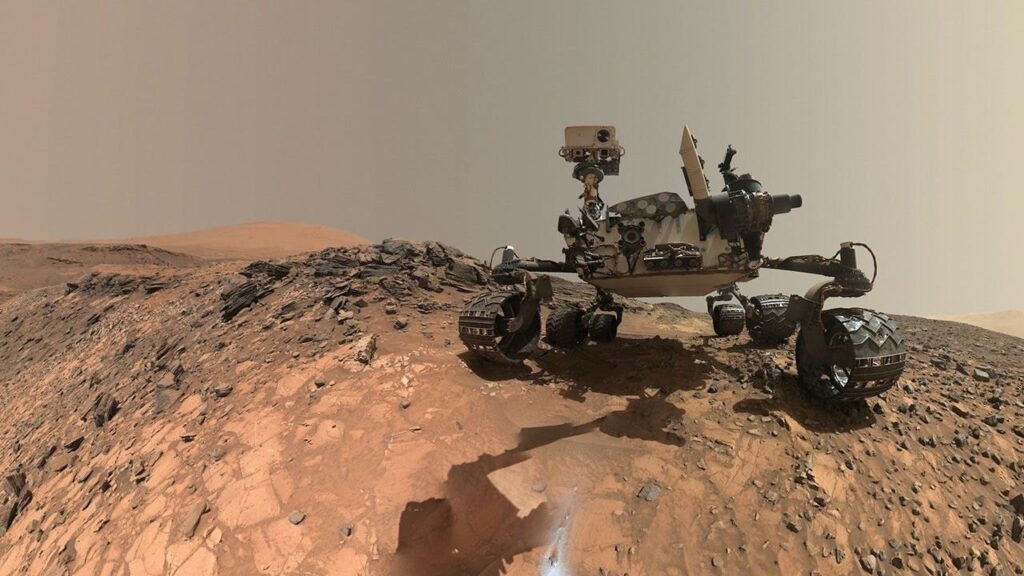
During a short recharge break in its Nazca drilling campaign, Curiosity tested running two tasks at once so the rover can stay awake for less time and use less power.


NASA’s Curiosity rover tested a new way to save power on Mars: doing two jobs at the same time. According to the mission team’s latest blog post, the test ran on Sol 5061, during a short recharge break in the rover’s drilling campaign.
Two tasks at once, so the rover sleeps sooner
A sol is one Martian day, about 40 minutes longer than an Earth day. The plan written on Earth on Oct. 30, 2026 covered Sols 5060, 5061 and 5062. Remington Free, an operations systems engineer at NASA’s Jet Propulsion Laboratory, wrote that the rover’s power output is slowly falling as the mission ages, so engineers keep looking for ways to do the same work with less energy.

One strategy is parallelism: running two activities together, so the rover is awake for less time. The catch is that each pair of activities has to be checked in advance to make sure they can run safely together.
The pair tested on Sol 5061 combined two things. One was the “Get Data” step of CheMin, the instrument inside the rover that identifies minerals in rock samples. That step moves science data from the instrument to the rover’s flight computers and uses a lot of processing power. The other was a transmission of data to one of the orbiters that relay Curiosity’s messages to Earth.

The team said the test seems to have gone well, but the engineering team still has to analyze the results before the pair can be cleared for routine use.
A deliberately quiet plan in the middle of a drill campaign
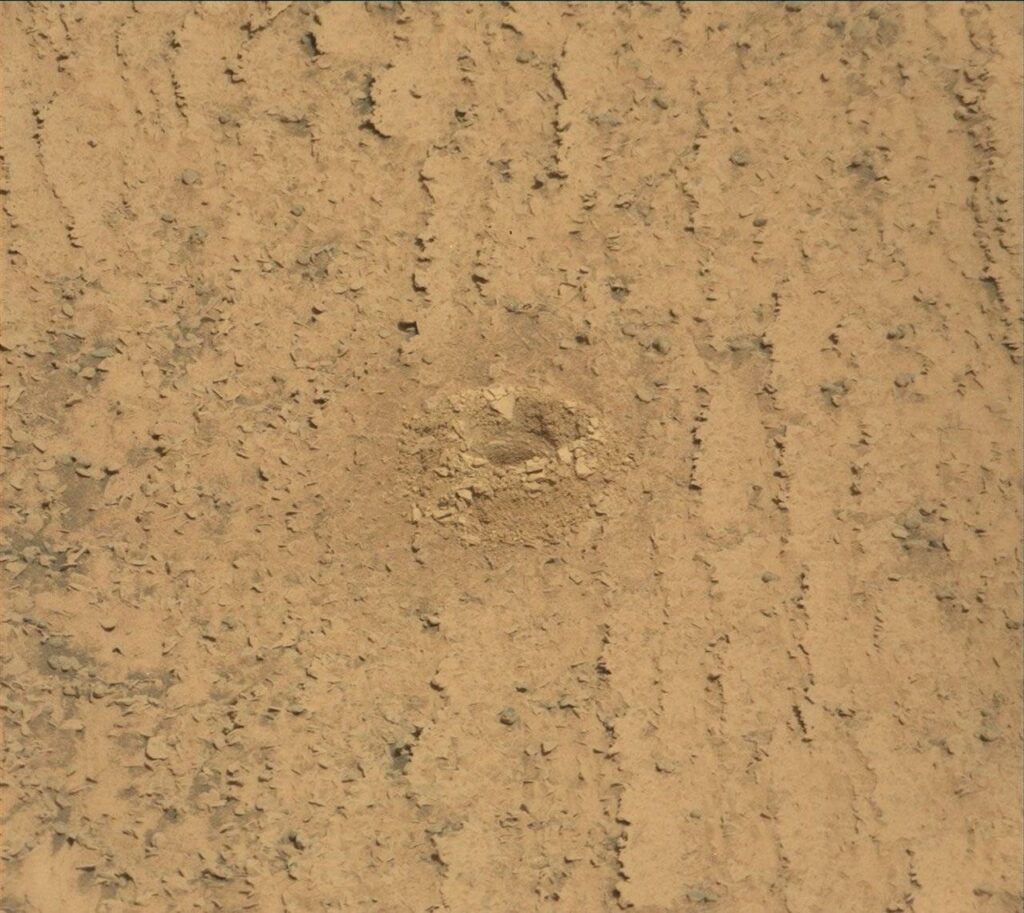
The test was tucked into a plan that was light on purpose. Curiosity is partway through a campaign at a rock called “Nazca,” and the remaining steps use a great deal of power. According to the post, the drill hole has been made and the tailings (the powder left around the hole) have been examined with the ChemCam laser instrument. Samples have already been delivered to both SAM and CheMin, the two chemistry labs inside the rover.
Still to come are another delivery to SAM for a different kind of analysis and cleanup work. One cleanup step is called RAGE, short for Rotate to Agitate for Granule Expulsion, in which the drill is shaken to get out any leftover sample. The team will also take more pictures of the hole and tailings. Three low-activity sols let the rover’s batteries charge before that work.
Even so, the rover kept observing. Each sol had a morning science block. ChemCam and Remote Micro-Imager mosaics covered targets named “Titicaca,” “Pampas” and “Salta.” Mastcam imaged the calibration target and the drill target, and Navcam looked for dust devils. Mastcam also measured tau, a gauge of how much dust hangs in the air, and the rover took twilight pictures. NASA said the aim was to keep studying the crystal formations at Nazca and the layered bedrock nearby.
Why power now limits what Curiosity can do
Curiosity is climbing the slopes of Mount Sharp, and its falling power output shapes how the team works. The Nazca hole is the rover’s 49th drill hole, according to NASA’s blog post for Sols 5050 to 5055. The rock was chosen because it carries many disc-shaped forms that look like crystals.
As we reported when the rover lined up this drill hole, those forms may record the temperature and the salt and fluid conditions when they grew. For that observation the team planned a ChemCam depth profile of 150 laser shots at one spot on a nearby crystal-rich rock, which NASA said should reach about five times deeper than a normal 30-shot point.
Each of those steps, from drilling to laser profiling, draws on the same limited supply of electricity. That is why a test like Sol 5061’s matters beyond one rover day. If more pairs of activities are cleared to run side by side, the team could fit more science into each sol or leave more margin for recharging. NASA has not said which other pairs are being considered, or when the results of this test will be ready.
For now the rover waits out its recharge, then returns to the Nazca campaign. The team said it will report on how the rest of the work went in later posts. Readers following the wider Mars fleet can see where both NASA rovers are in our guide to the Mars rovers today.