Curiosity lines up its next drill hole on a rock packed with crystal-shaped discs
NASA's Curiosity rover has picked a rock called "Nazca" for its next drill hole, and the team is using a 150-shot laser test to look inside one of its disc-shaped lumps.

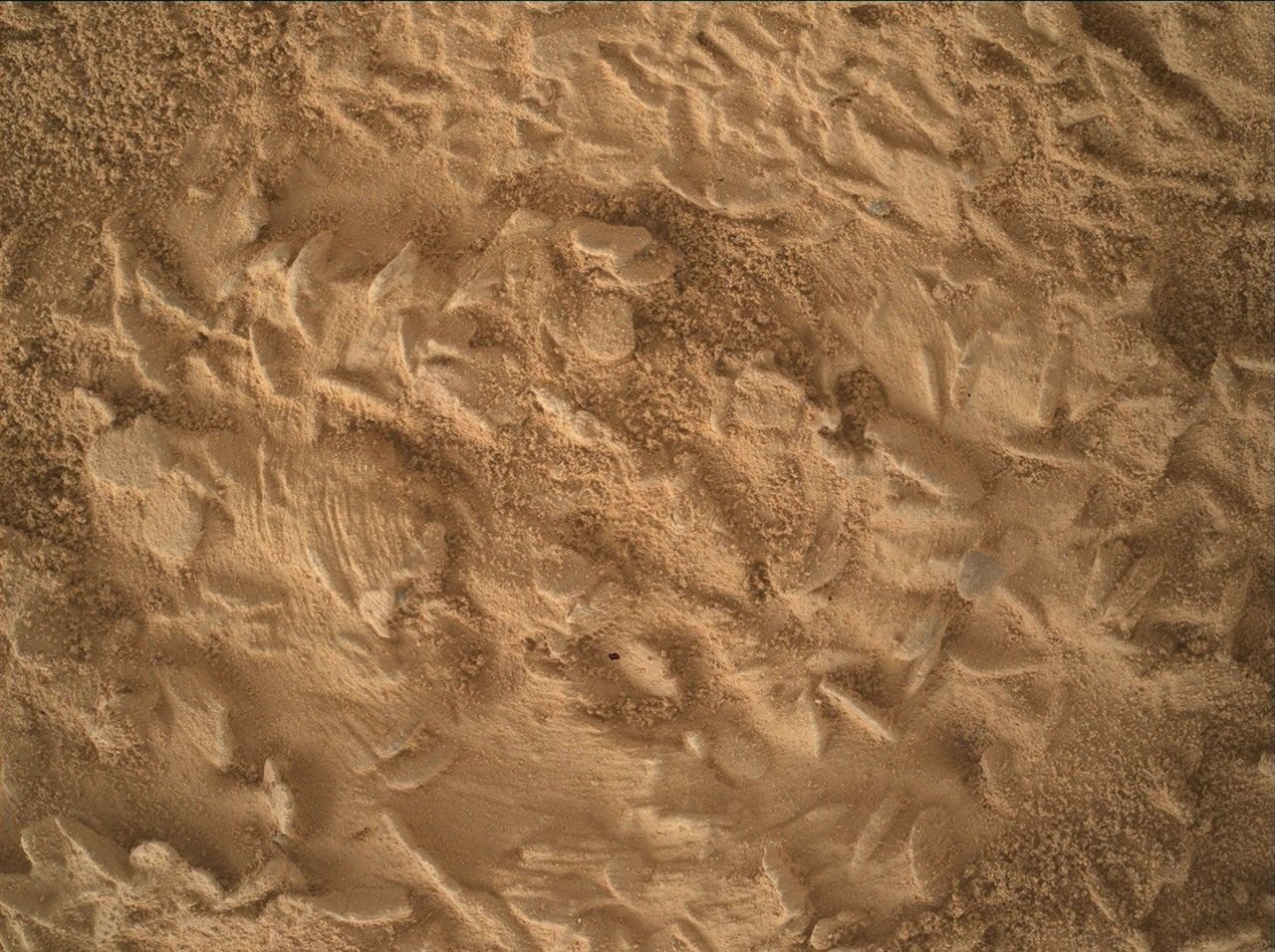
NASA’s Curiosity rover has chosen a rock informally named “Nazca” for its next drill hole. The surface is covered in disc-shaped lumps that may be crystals, and the rover is running extra tests on them first, NASA reported.
A second block with the same strange texture
Curiosity has just finished drilling at a site called “Basque Lakes” and has driven back to a spot a few meters from a block named “Chiu Chiu.” That block was not a good candidate for drilling, but the one just beyond it looked better, so it became the drive target. Close-up pictures taken after the drive showed it was, in the words of planetary scientist Lucy Lim, “jam-packed” with the same “disc- and needle-” shaped lumps seen on “Chiu Chiu.” The science team approved drilling and named the spot “Nazca.”

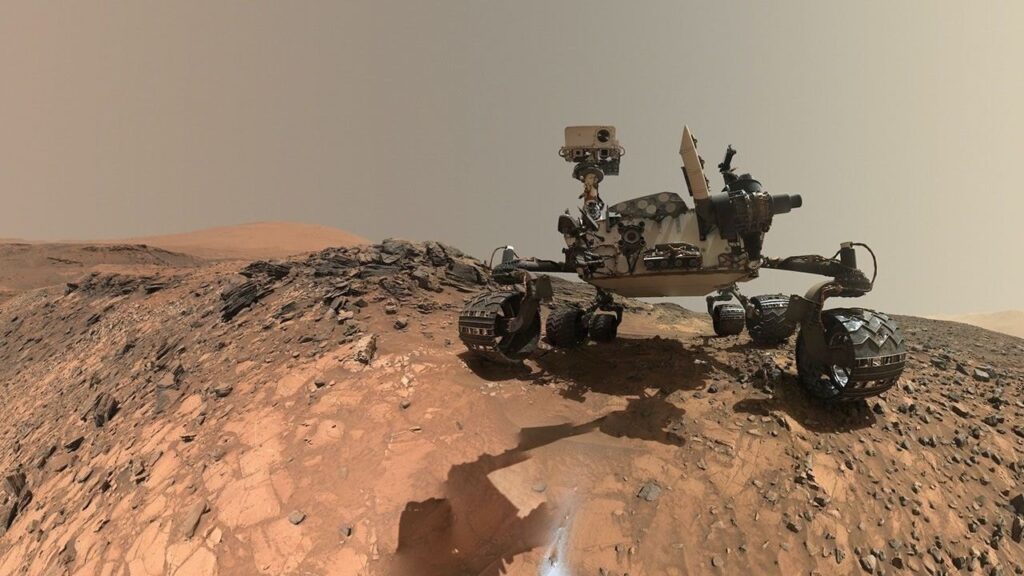
The leading idea is that these shapes are “crystal forms,” meaning the outlines minerals take as they grow, much as salt crystals do in a kitchen experiment. Their fairly large size gives clues to the temperature when they grew and to how much salt and fluid was available. There is a catch: the minerals now in the rock may not be the original ones. Sometimes a mineral is replaced later by another, which keeps the old shape but has a different composition. These replacements are called pseudomorphs.
Three-dimensional close-ups and a laser that digs deeper
Before the drill preload test, which checks how the drill presses on the rock, the team planned several special observations. The rover’s hand-lens camera, MAHLI, will take five overlapping images at slightly different angles, called a Quantitative Relief Model, so scientists can build a detailed 3D model of the crystal forms. MAHLI will also double the number of focus steps in its sharpest imaging, adding frames and resolution.

The ChemCam instrument fires a laser at rock and analyzes the glowing plasma to learn its composition (the technique is called LIBS). Each day’s observation normally uses 150 shots, spread over five points at 30 shots each. This time all 150 shots go onto one spot on a nearby crystal-form-rich target named “Toucan.” Because each shot vaporizes a tiny amount of rock, NASA says the profile should reach about five times deeper than a normal 30-shot point. Scientists can then check whether the inside of a crystal form differs from its surface, which has been exposed to the modern Martian environment.
LIBS, the rover’s brush (DRT) and its X-ray spectrometer (APXS) will also examine the “Nazca” surface before the preload test. A third LIBS observation goes to “Condor,” a nearby block with finely layered rock.

Why a deeper laser profile is worth the trouble
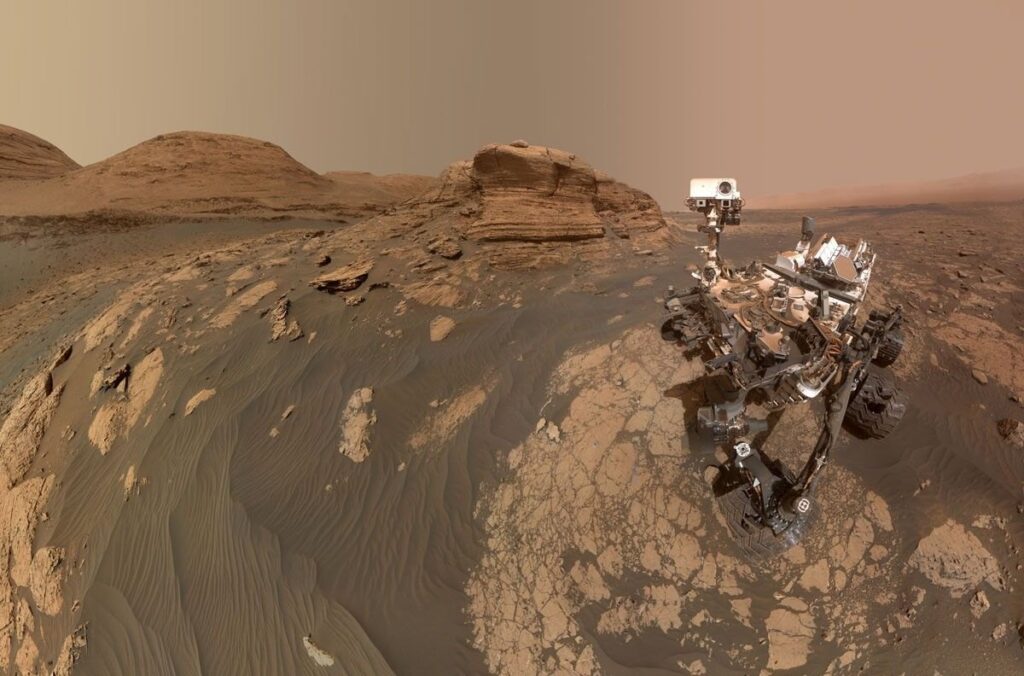
The analysis here is about science payoff. Surface readings on Mars can mislead, because the outer skin of a rock is altered by air, dust and radiation, and a drill sample is the only way to reach unaltered material. Curiosity’s drill campaigns are slow and few: the rover has been working in Gale Crater, where it is now autumn in Mars Year 39, and the Basque Lakes sample was followed within a week by this next campaign. A laser depth profile costs far less than a drill hole and could show, before committing to one, whether the crystal forms differ inside. A difference would hint at replacement by other minerals or at changes since the shapes formed.
NASA’s previous Curiosity update, for sols 5036-5042, adds that the Basque Lakes drill campaign included an extra gas chromatograph mass spectrometer experiment by the SAM instrument team, added after the team reviewed lab results from the previous week. A sol is a Martian day, about 40 minutes longer than an Earth day. Those results and the crystal-form data from “Nazca” should help show how salty fluids once moved through the rock layers of Mount Sharp.
Phobos at night, as twilight cloud season starts
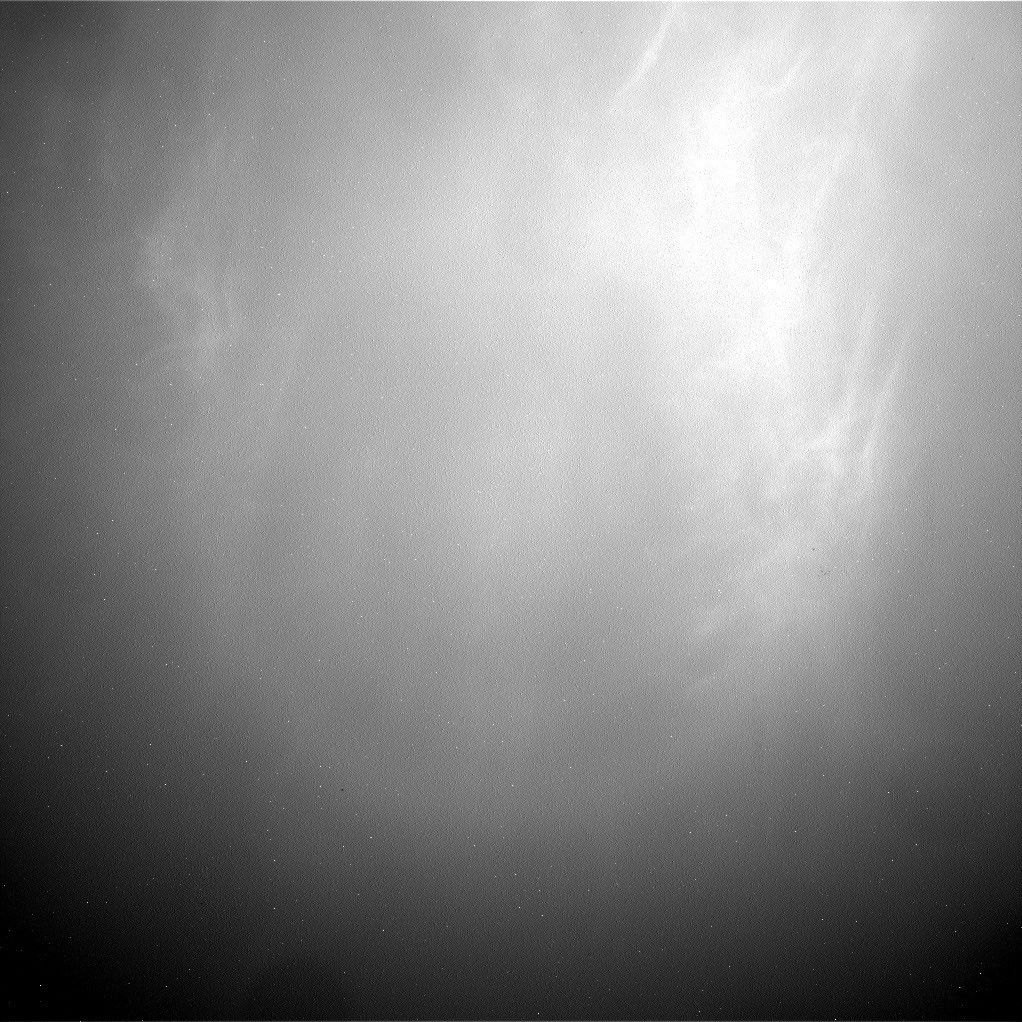
Curiosity is also watching the sky. Twilight clouds, high-altitude clouds lit by the low Sun at sunset, return each autumn. In the previous blog post, NASA said most clouds over Gale Crater are too thin to see with Curiosity’s cameras, but twilight clouds show up in its raw navigation camera images.
This week’s plan adds nighttime imaging of Phobos, the larger and brighter of Mars’ two moons. When Phobos is full, sunlight reflecting off it scatters in the atmosphere, which lets scientists estimate the size of particles in the clouds, and at later hours of the night than solar observations allow. The team expects to be measuring high-altitude carbon dioxide clouds. Phobos is also the target of JAXA’s planned sample-return mission, covered in our report on NASA’s role in the Martian Moons eXploration mission.