NASA’s COSI gamma-ray payload reaches Northrop Grumman for spacecraft integration
The finished science instrument for NASA's COSI gamma-ray mission has been trucked from Berkeley to Virginia, where it will be mounted on its spacecraft and shaken and heated before launch.

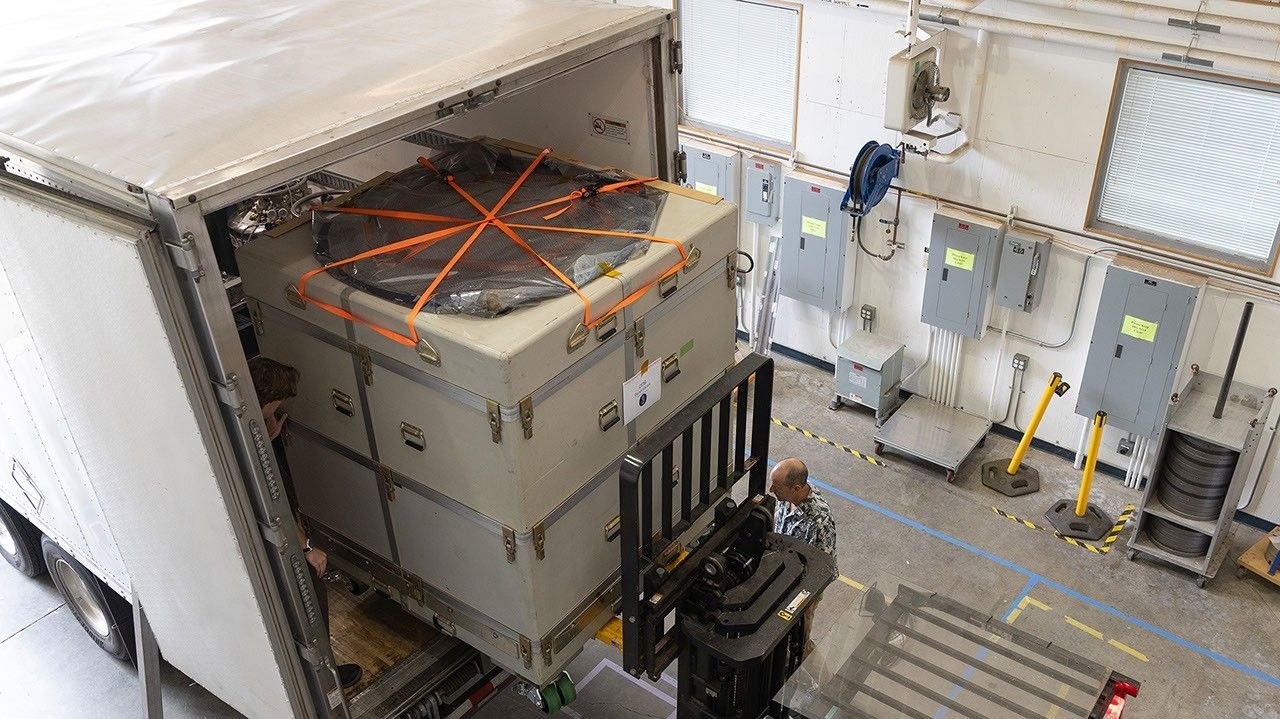
The science instrument for NASA’s COSI gamma-ray mission has arrived at Northrop Grumman’s satellite factory in Sterling, Virginia, NASA said. Launch is slated for August 2027.
From a Berkeley lab to a Virginia clean room
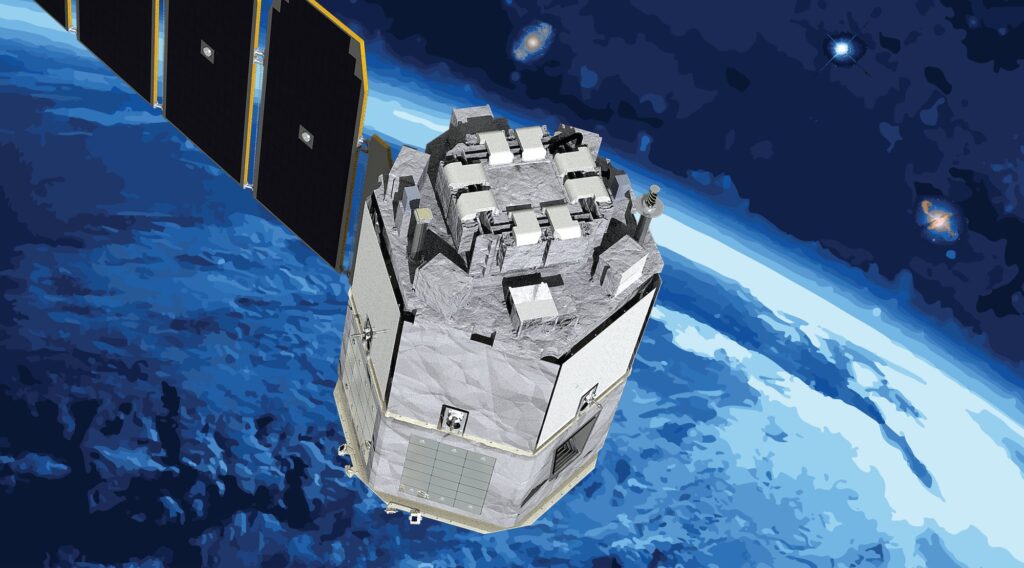
COSI stands for Compton Spectrometer and Imager. It is a space telescope built to look at the sky in gamma rays, the most energetic form of light, over a wide field of view. Most telescopes see a small patch of sky at a time. A wide view lets COSI watch large areas at once, which suits sources that flare up unpredictably.

Team members assembled the instrument over the summer at the University of California, Berkeley’s Space Sciences Laboratory. On Nov. 2, 2026, Matthew Rubly and Greg Dalton of the COSI team loaded the packed detector assembly onto a truck there. NASA says it reached Northrop Grumman earlier this month.
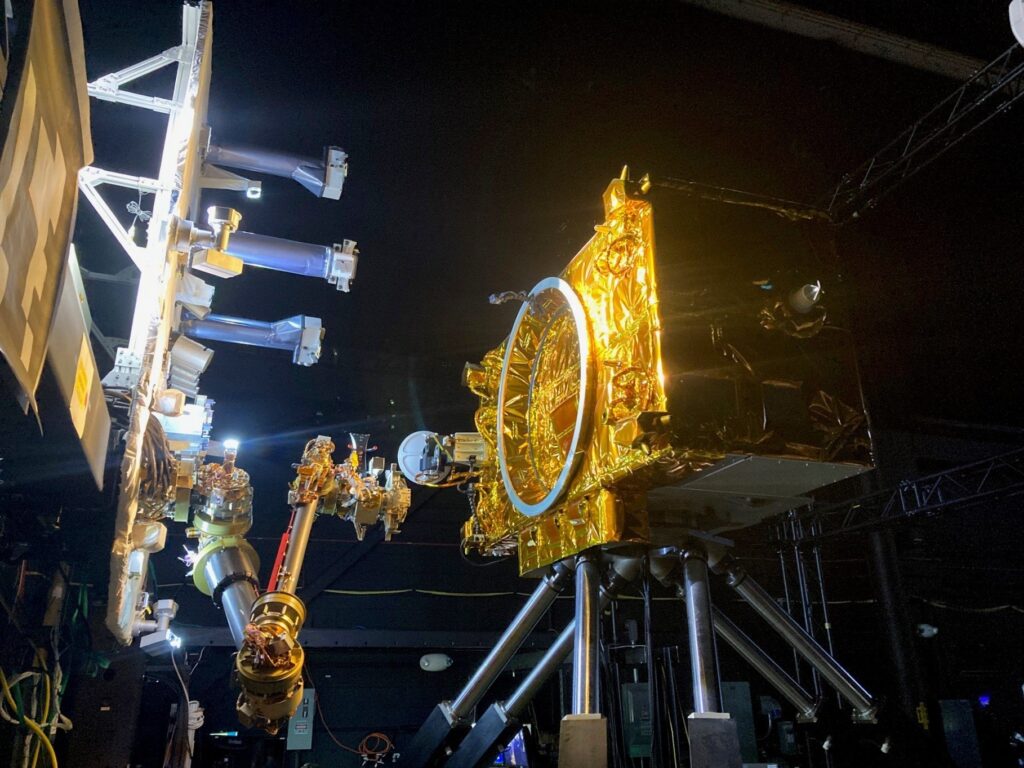
Northrop Grumman engineers will now install the payload on a LEOStar-2 spacecraft, the satellite platform that carries the instrument and supplies power, pointing and communications. They will then run vibration and thermal testing. Vibration tests mimic the shaking of a rocket launch, and thermal tests check that the hardware works through the hot and cold swings of space.

What COSI is meant to find
NASA lists the science goals as studying energetic phenomena in the Milky Way and beyond. They include how matter and antimatter are created and destroyed, and the final stages of the lives of stars. Antimatter is made of particles that annihilate ordinary matter on contact, and the gamma rays that result are one way astronomers find where it is produced.
The mission belongs to NASA’s Astrophysics Explorers program. Its partners are UC Berkeley, the University of California, San Diego, the Naval Research Laboratory, NASA’s Goddard Space Flight Center in Greenbelt, Maryland, Northrop Grumman, Space Dynamics Laboratory and the Italian Space Agency, along with other research institutions.
A hard slice of the spectrum to see
Gamma rays are difficult to catch. They pass straight through ordinary mirrors and lenses, and Earth’s atmosphere absorbs them, so they must be observed from space. NASA’s mission page says COSI works at energies between 0.2 and 5 MeV (million electron volts, a measure of the energy of a single light particle). NASA describes it as a soft gamma-ray telescope using new technology.
That range is a known gap. NASA’s mission page shows an all-sky map at 1.8 MeV made by COMPTEL, an instrument on the Compton Gamma-ray Observatory that flew in the 1990s. COSI is meant to look at the same kind of sky with far more modern detectors. The name refers to the Compton effect, in which a gamma ray bounces off an electron and loses energy. Tracking that bounce helps reconstruct where the ray came from.
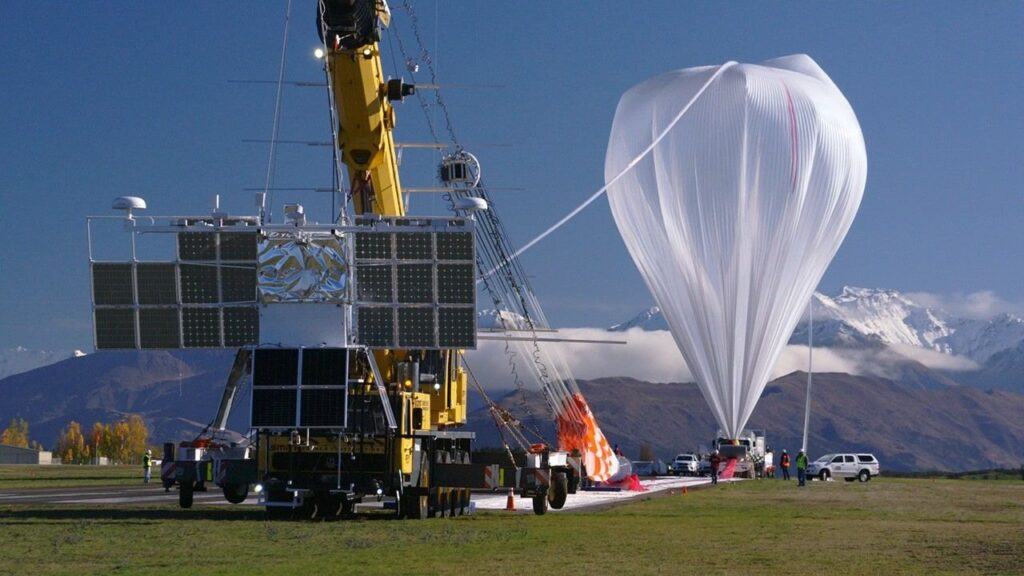
COSI also has a flight history. A balloon-borne version of the payload flew on a NASA super pressure balloon launched from Wanaka Airport in New Zealand on May 17, 2016, according to NASA. The balloon flight proved the idea. The satellite version is built for longer observations above the atmosphere.
Putting the payload on its spacecraft is the point at which a mission becomes one object rather than two. Vibration and thermal tests are where faults most often show up while there is still time to fix them on the ground. If they go to plan, the schedule leaves the team about nine months from now to the planned August 2027 launch.