Ariane 6 reaches 136 Amazon Leo satellites with its tenth straight successful delivery
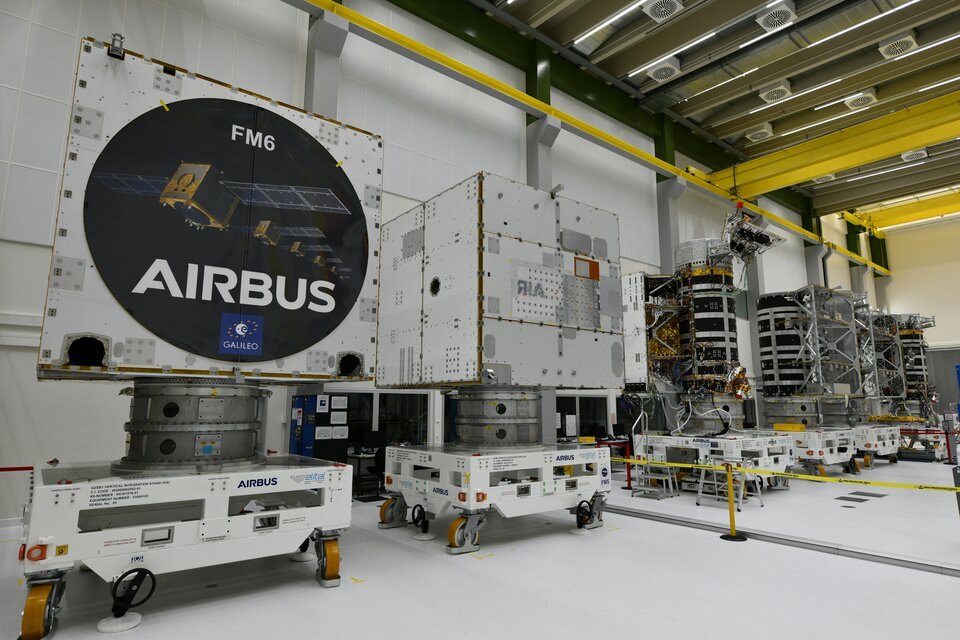
ESA says Ariane 6 flight VA271 delivered 36 Amazon Leo satellites to orbit after a 11:14 UTC liftoff, using the four-booster version of the rocket for the fourth time.

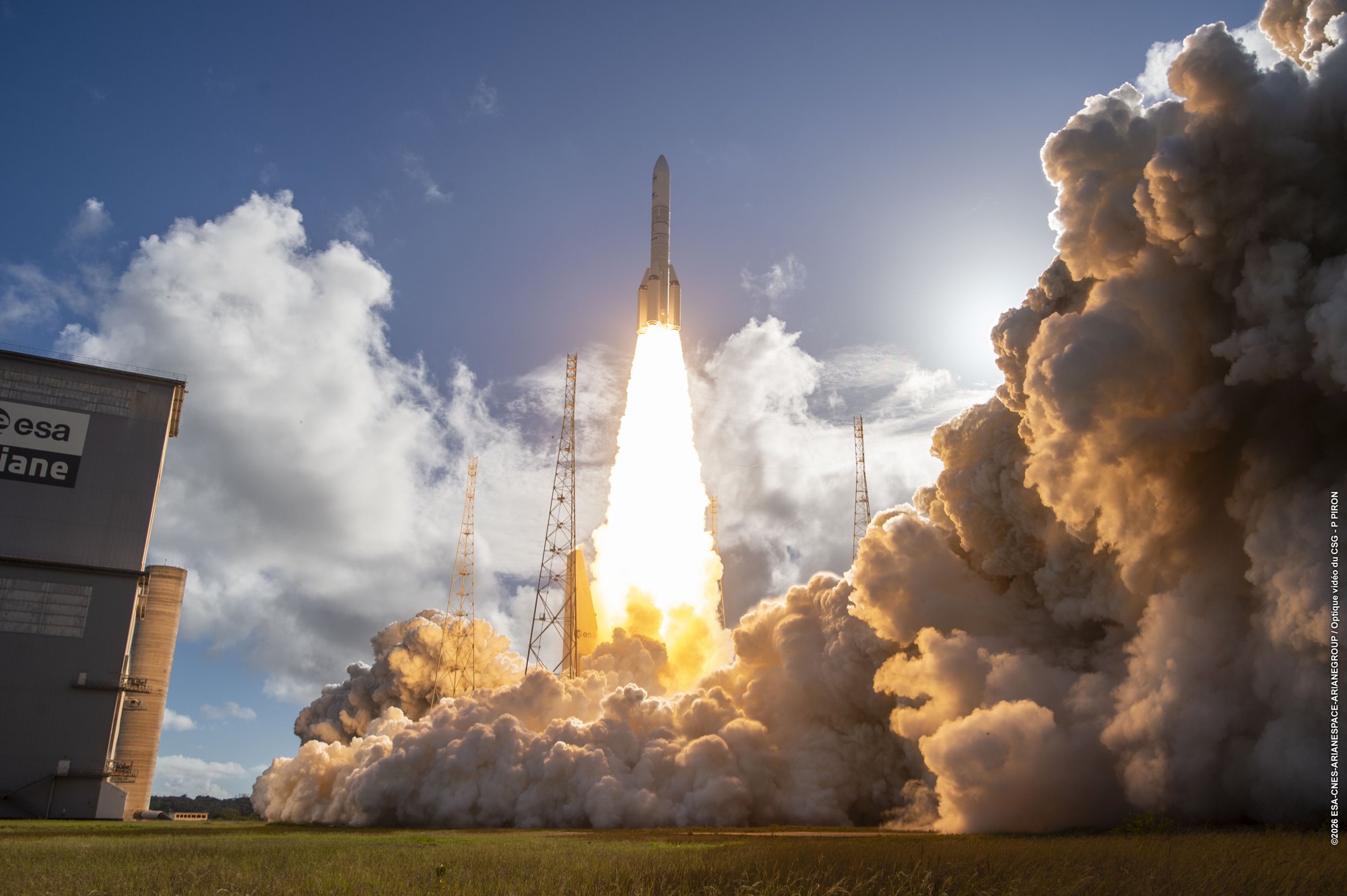
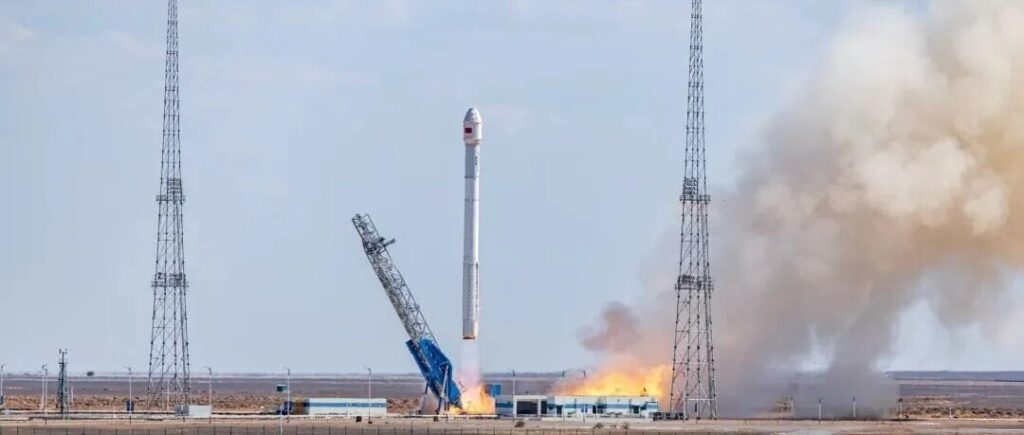
Ariane 6 flight VA271 lifted off from Europe’s Spaceport in French Guiana on 24 November at 11:14 UTC (08:14 local time) carrying 36 satellites for Amazon’s Leo internet constellation, ESA reported. It flew with four boosters, the rocket’s most powerful setup.
Two hours from liftoff to deployment
According to ESA, the satellites were placed in orbit just over two hours after launch. ESA counts it as the tenth successful mission insertion in a row for Ariane 6, meaning the rocket has put its payload into the planned orbit on each of those flights. Deployment of the Amazon Leo satellites began 1 hour 39 minutes after liftoff, ESA’s flight timeline shows.

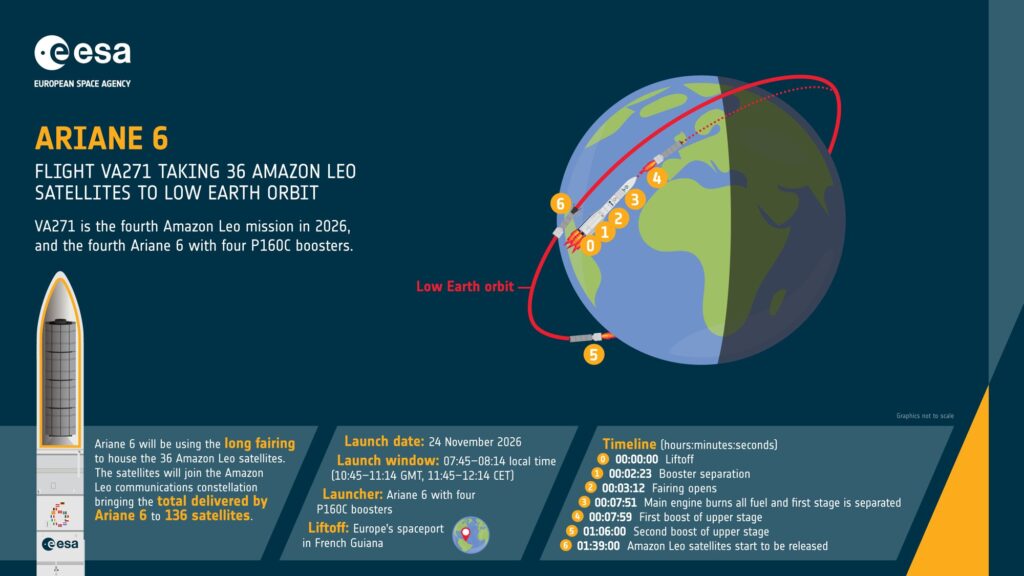
The flight followed a standard sequence for a rocket with a restartable upper stage. The side boosters separated 2 minutes 23 seconds after liftoff, and the fairing, the nose shell that protects the payload, came off at 3 minutes 12 seconds. The core stage shut down and separated at about 7 minutes 50 seconds, and the upper stage’s Vinci engine then fired twice: first for about 10 minutes, then again for under a minute, which set up the final orbit before the satellites were released.
VA271 was the tenth Ariane 6 flight overall and the fourth with four boosters. ESA’s page describes it as the fourth Ariane 6 mission for the Amazon constellation in 2026, and says the rocket has now delivered 136 satellites for Amazon Leo.

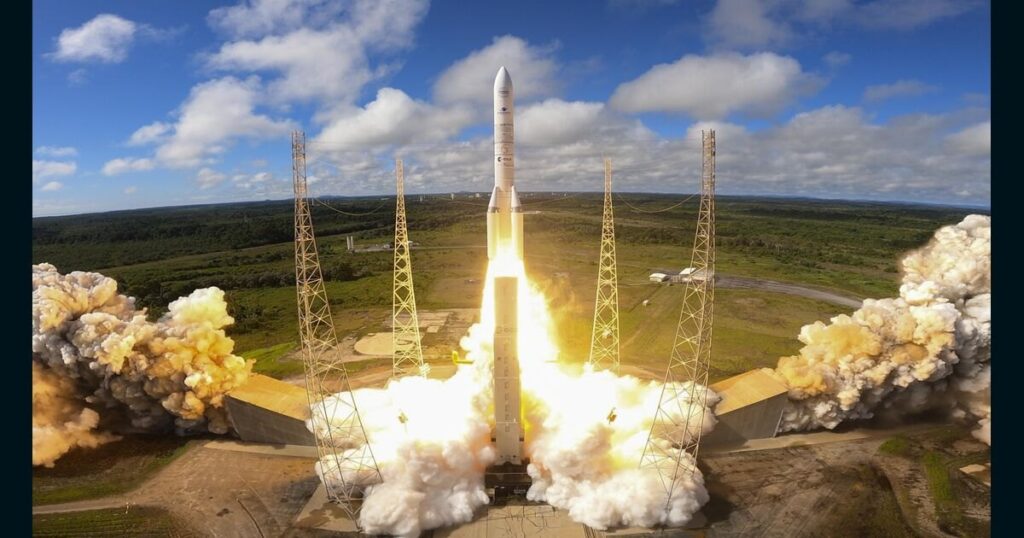
a powerful demonstration of the capabilities Europe now has at its disposal
That is how ESA Director of Space Transportation Géraldine Naja described Ariane 6 flying in its four-booster configuration, according to ESA.
What the bigger boosters add to each launch
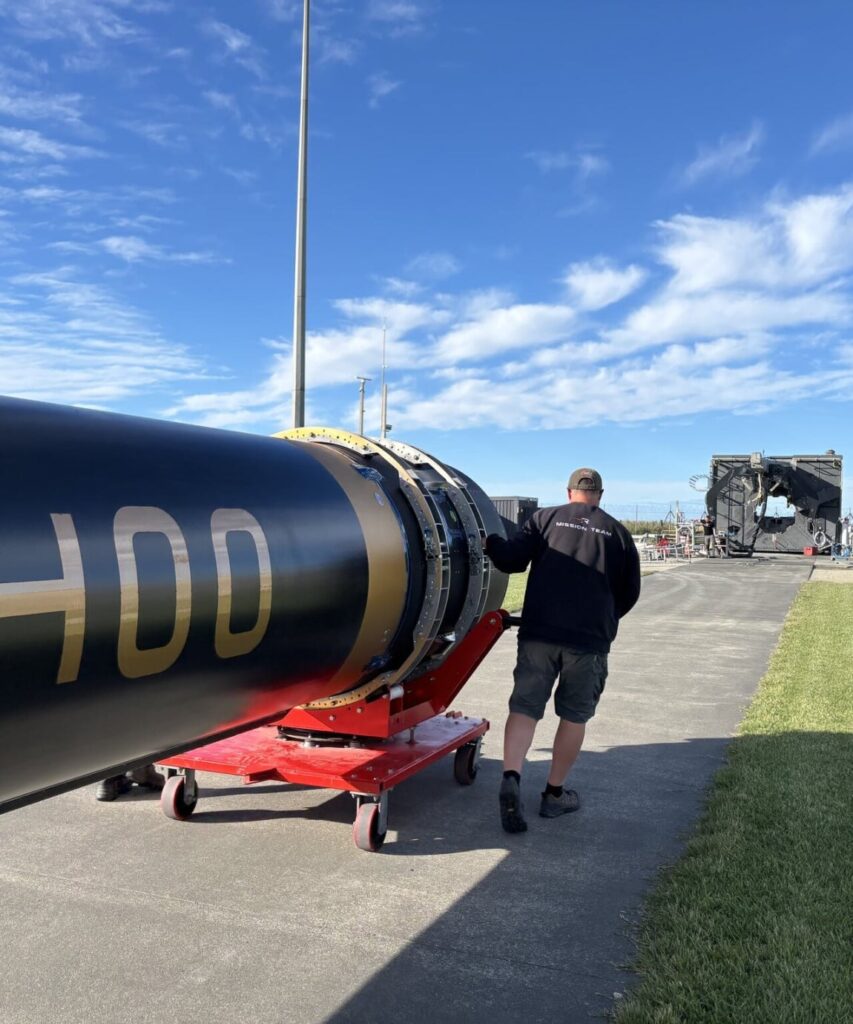
The four-booster rocket uses P160C solid-fuel boosters, the newer version of the strap-on motors. Each carries 14 tonnes more propellant than the earlier P120C, for a total of 156 tonnes, and stands 14.5 meters tall, one meter taller than before. ESA says this raises performance by up to 10 to 15 percent depending on the target low orbit, roughly 2 extra tonnes to low Earth orbit. ESA’s Ariane 6 page lists the rocket’s overall capacity to that orbit as 21.6 tonnes with four boosters.
Europropulsion, a 50/50 joint venture of ArianeGroup and Avio, developed the P160C. Its structure is made in Italy, the nozzle in France and the igniter in Norway.
Why a heavier lift matters to the business
For a constellation, the economics come down to how many satellites fit on each flight. Thirty-six satellites per launch means the extra tonnes from the new boosters translate directly into payload that a customer does not have to book on another rocket. ESA’s figures put the gain at about 2 tonnes, though the agency does not publish a price per launch.
The cadence matters too. Four Amazon missions in one year is a steady commercial workload for a rocket that only first flew on 9 July 2024, according to ESA. Arianespace was the launch service provider for Amazon on this flight, while ESA works with an industrial network across 13 European countries led by ArianeGroup, and CNES manages range operations.
Amazon has other rockets in its plan, and they have not all been reliable. Our report on the Vulcan launch of Amazon Leo satellites on 17 November described a booster that lost power just after liftoff. A clean Ariane 6 delivery a week later shows why a customer wants more than one launch provider.
The next Ariane 6 flight is a weather satellite
ESA lists the next Ariane 6 launch as flight VA272 on 17 December 2026 from French Guiana, carrying the MetOp-SG-B1 weather satellite. We covered that spacecraft’s preparations in Europe’s second MetOp-SG weather satellite is woken up for a year-end launch. For the schedule of other flights, see the rocket launch schedule.