Two black holes already feeding on a grand scale, only 900 million years after the Big Bang
Astronomers using Gemini North and Webb have found the oldest compact quasar pair known, two giant black holes whose early growth current theory cannot explain.

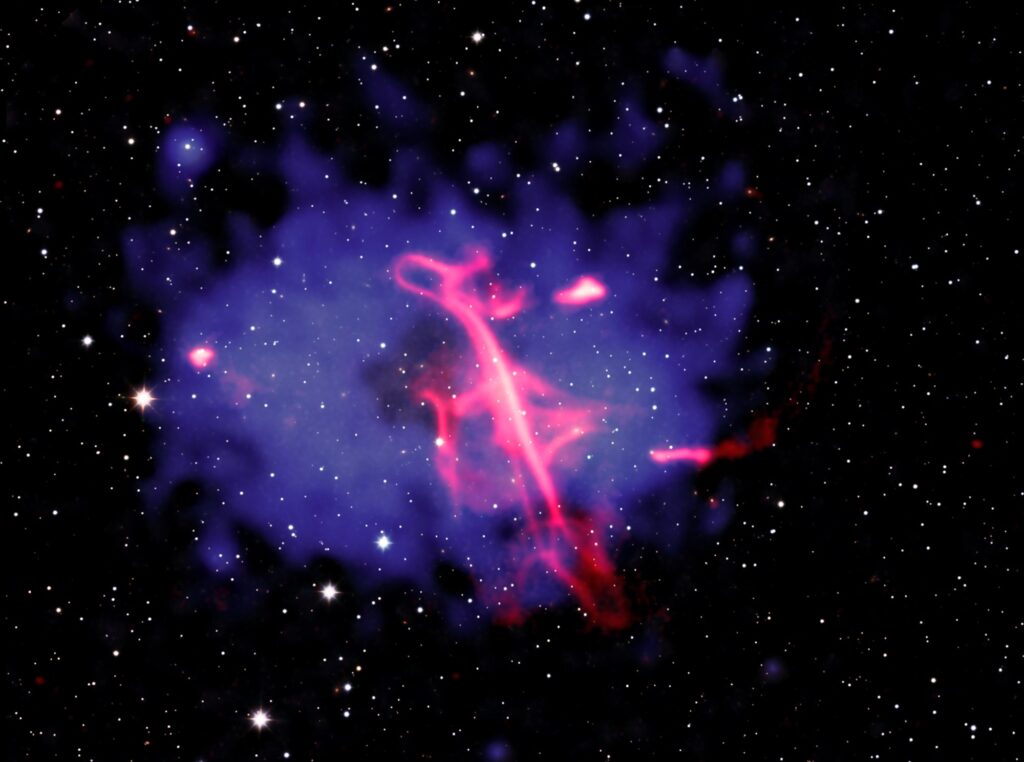
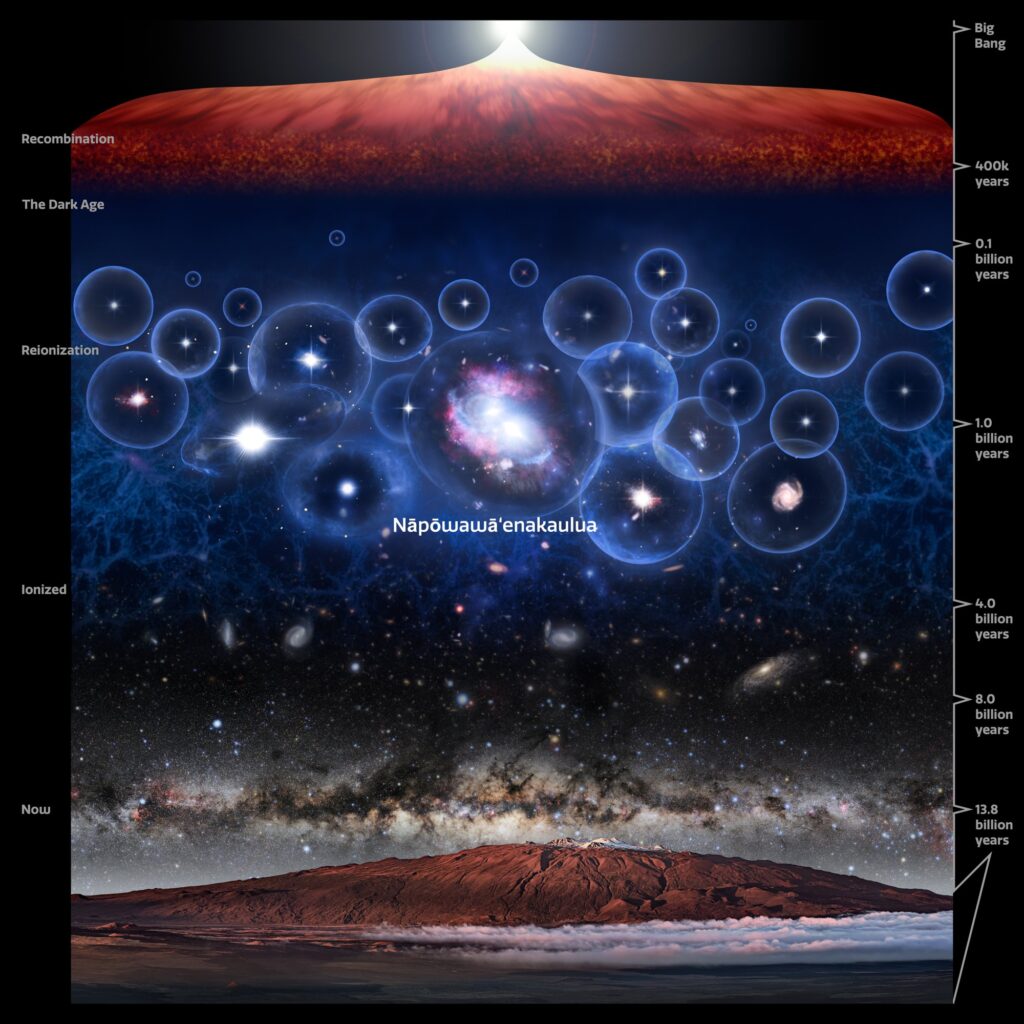
An international team has found the oldest compact pair of quasars known, seen only 900 million years after the Big Bang. The two black holes, nicknamed Nāpōwawāʻenakaulua, are already huge, and NOIRLab says no theory explains how they grew so fast.
Two quasars found in a Webb survey of 200
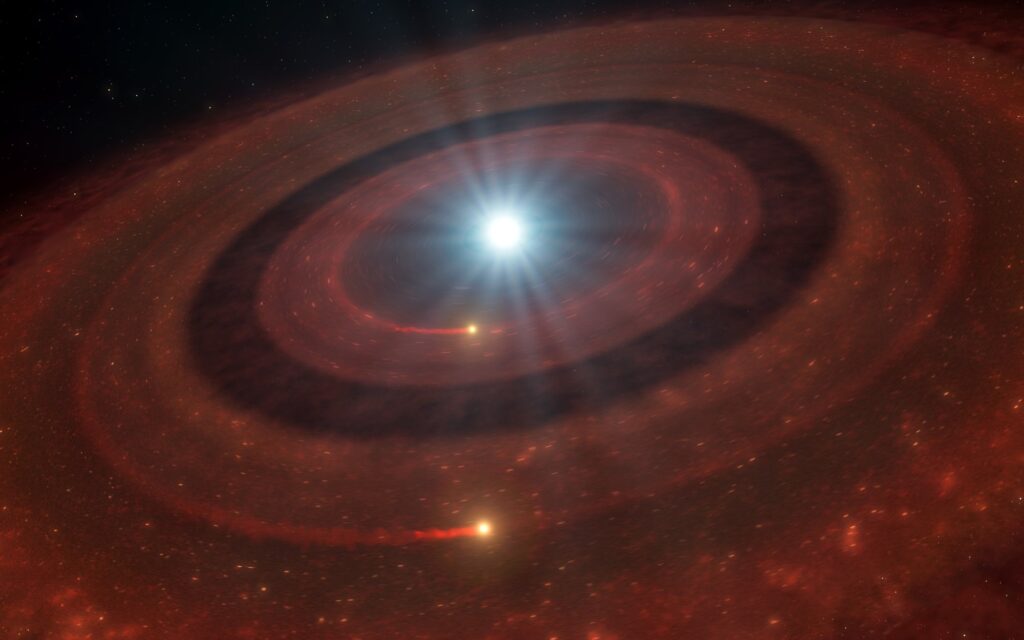
A quasar is a supermassive black hole that is swallowing gas so fast that it shines brighter than all the stars of its host galaxy combined. The pair, catalogued as J1602+4228AB, is the most distant and most compact quasar pair found in the era astronomers call cosmic dawn, the first billion years of cosmic history.

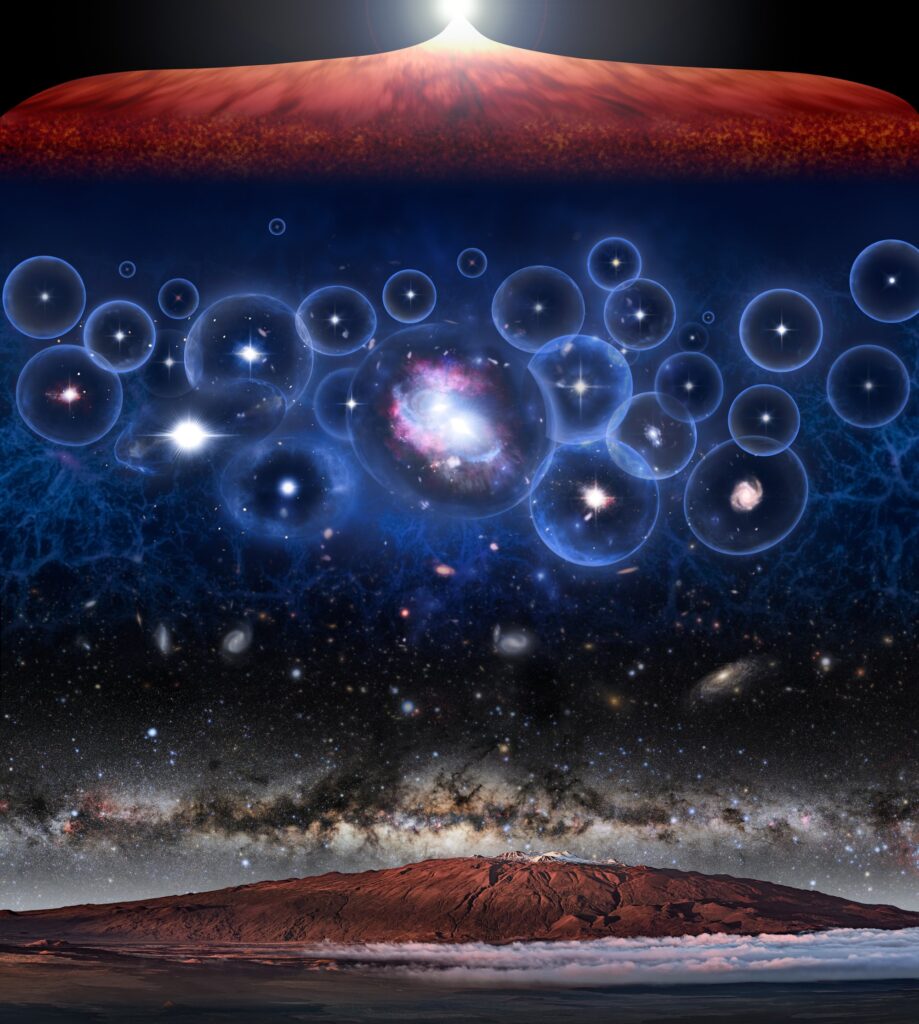
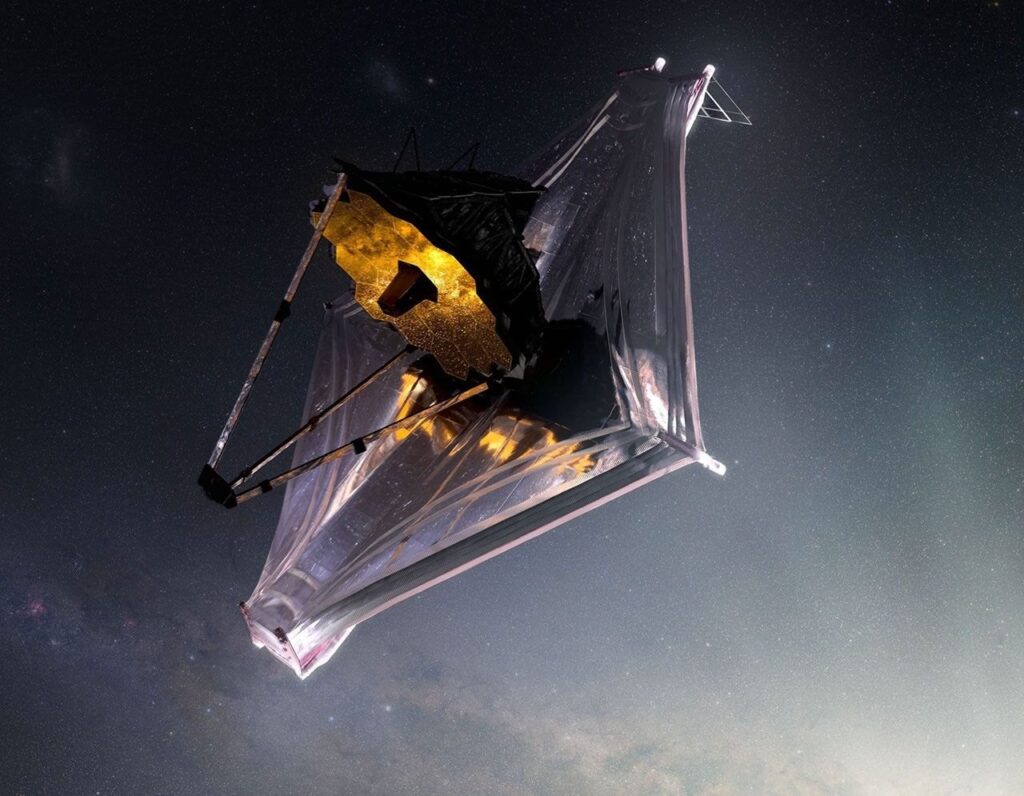
It was not a targeted search. The James Webb Space Telescope’s Aether survey, led by Emanuele Paolo Farina of NSF NOIRLab/Gemini, used the Near-Infrared Spectrograph’s integral field unit to observe 200 quasars. NOIRLab says that is 43% of all quasars known at this stage of cosmic history. While inspecting the data by eye, the team noticed that quasar J1602+4228A had a companion.
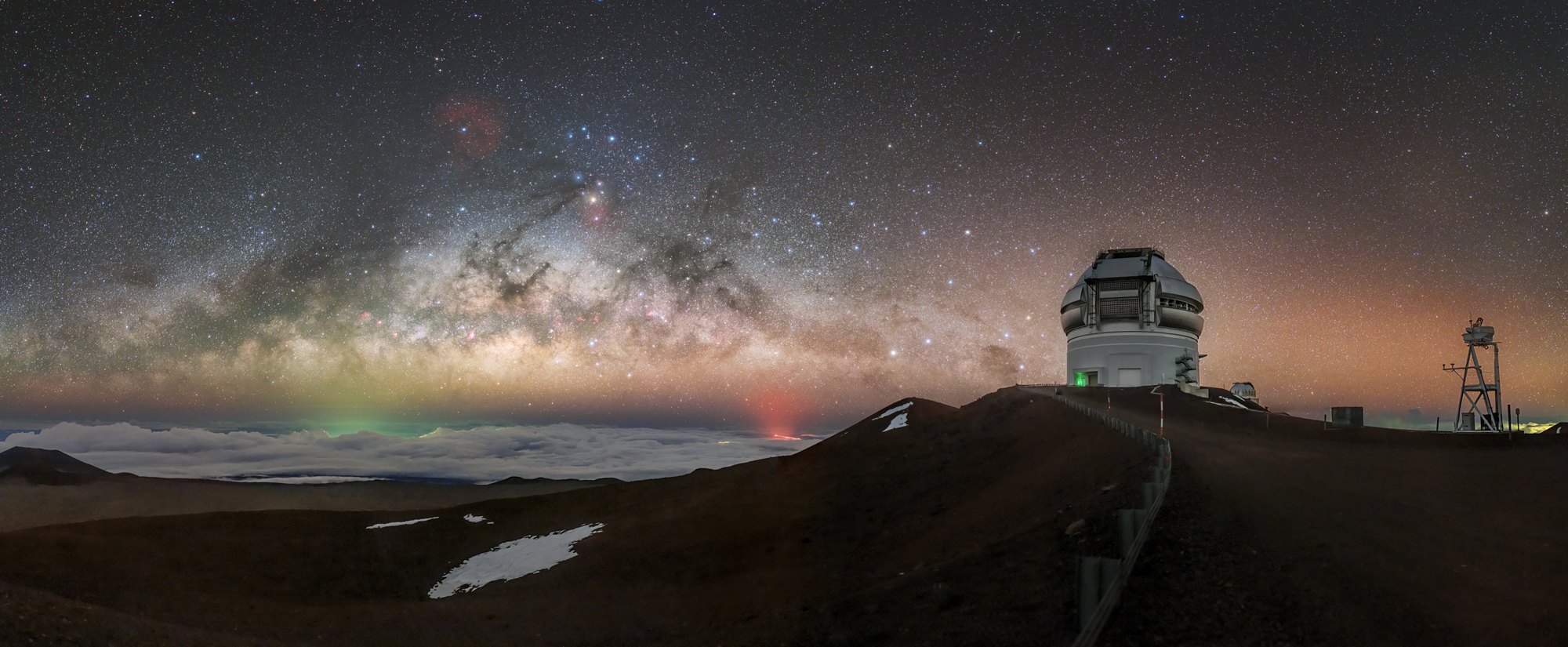
Webb could see the companion, but separating the two objects and studying each one needed the Gemini North telescope on Maunakea in Hawai‘i. Its Gemini Near-Infrared Spectrograph resolved the two quasars as individuals. Silvia Onorato, the NSF NOIRLab postdoctoral researcher who led the study, said the sky was so clean and sharp that the data came in just two nights. Seeing the fainter member from the ground should have been nearly impossible, according to NOIRLab. Results appear in The Astrophysical Journal Letters.

Masses that should not exist this early
The two black holes are about 18,100 light-years apart, roughly one-fifth the diameter of the Milky Way. Their masses are 1.5 billion and 400 million times that of the Sun. Light from them left when the Universe was about a thirteenth of its present age.
That is the puzzle. The first stars, galaxies and black holes were still young, yet these black holes are as massive as those seen today. Onorato said:
“There is no definitive theoretical explanation for how a single one of these giant quasars exists so early in the age of our Universe, much less two.”
It is only the third quasar pair found at cosmic dawn. Pairs should be common, since galaxy collisions are, but a quasar phase is short, the objects are faint at this distance, and at such small separations the two blur together.
The name was created by Larry Kimura through the A Hua He Inoa program, with the ʻImiloa Astronomy Center of Hawaiʻi and the University of Hawai‘i’s Hawaiian Language College. It translates to “Two celestial bodies of fathomless powerful darkness in the brilliance of heat reincarnating energy into the Universe.” It also echoes Pōwehi, the first black hole image, and Pōniuāʻena, a record-distance quasar when found in 2020.
What the pair can teach about the first giants
The team proposes that the pair marks an extreme peak in the density of matter in the early Universe, where galaxy interactions fed both star formation and black hole growth at once. Onorato calls it a laboratory for how the first massive galaxies and their central black holes assembled through direct interactions.
The preprint of the paper, posted on arXiv, adds numbers that the press release does not give. The two quasars differ in velocity along our line of sight by only about 15 kilometers per second, which fits two objects in the same structure rather than a chance alignment. Both are estimated to be feeding near the Eddington limit, the rate at which radiation pressure should start to push infalling gas away: about 1.23 and 1.07 times that rate. Growing that quickly is part of why the masses are hard to explain.
The authors also compared the pair with what clustering models for this era predict. They find the pair is two to three orders of magnitude more common than that extrapolation suggests, according to the preprint. That could mean merger-triggered quasar pairs are a real population at cosmic dawn, or that this one sits in an unusually crowded corner of space.
One caveat remains. A galaxy in front of the pair could act as a gravitational lens and create a false second image of one quasar. Gemini’s GMOS spectrograph showed the two quasars’ spectra have different shapes, which leads the team to favor a real physical pair, but NOIRLab says a lens model is still needed to rule lensing out definitively.
The result adds to a growing list of surprises from the earliest galaxies Webb is finding, which keep appearing more mature than models expected.