Orionid meteor shower 2026: Peak night of October 21-22 and how the Moon affects it
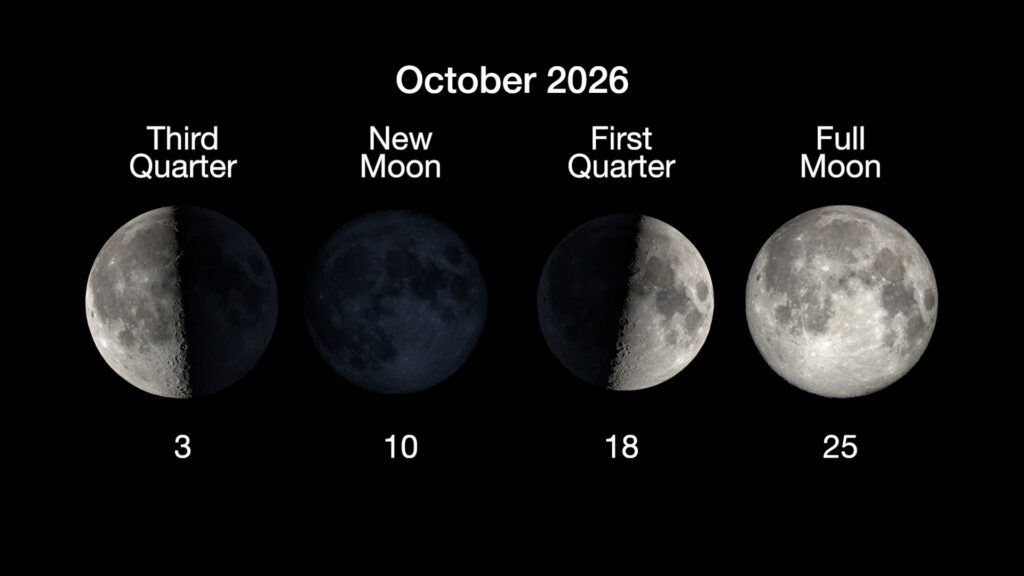
The Orionids peak overnight October 21-22, 2026, but a bright waxing gibbous Moon hides the fainter meteors until it sets around 3 a.m. local time.
Dates and facts checked on the official pages on October 20, 2026.
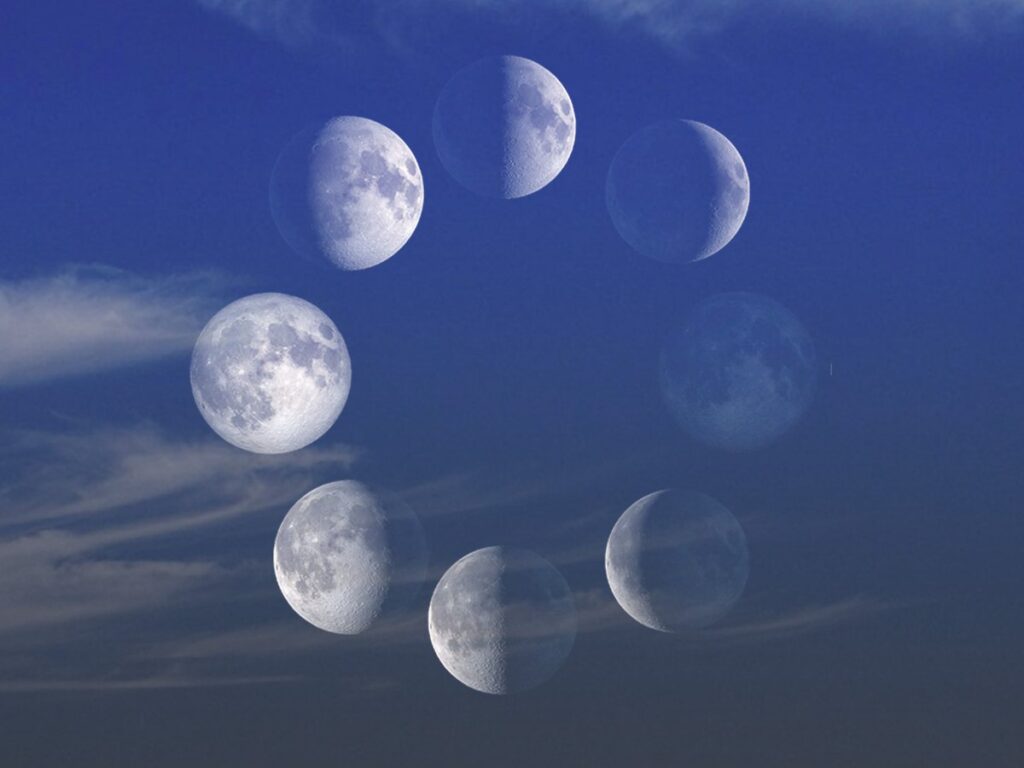
The Orionid meteor shower peaks on the night of October 21 into the morning of October 22, 2026, according to NASA. A bright, waxing gibbous Moon (more than half lit and growing toward full) will wash out the fainter meteors, so the best viewing comes in the few hours before dawn, after the Moon sets at about 3 a.m. local time.
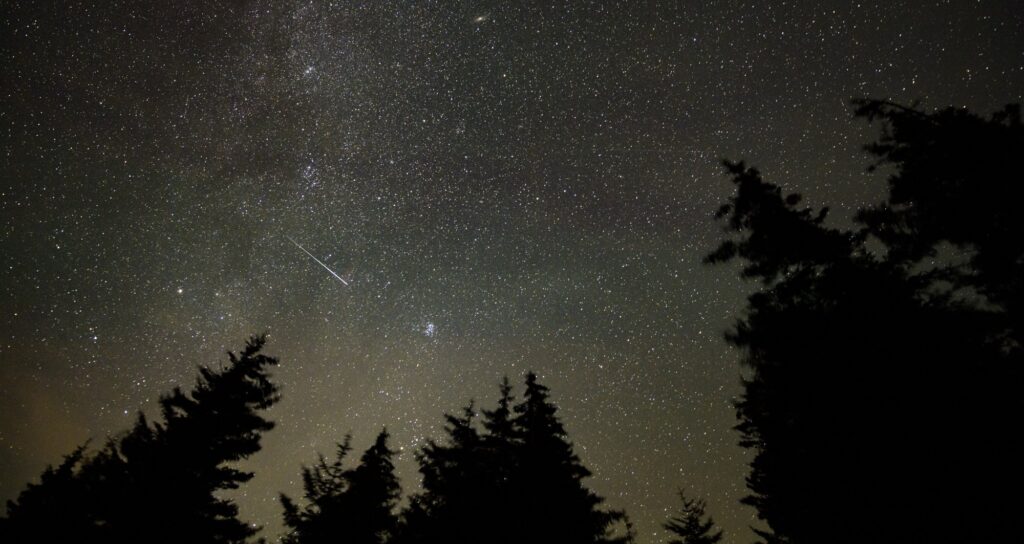
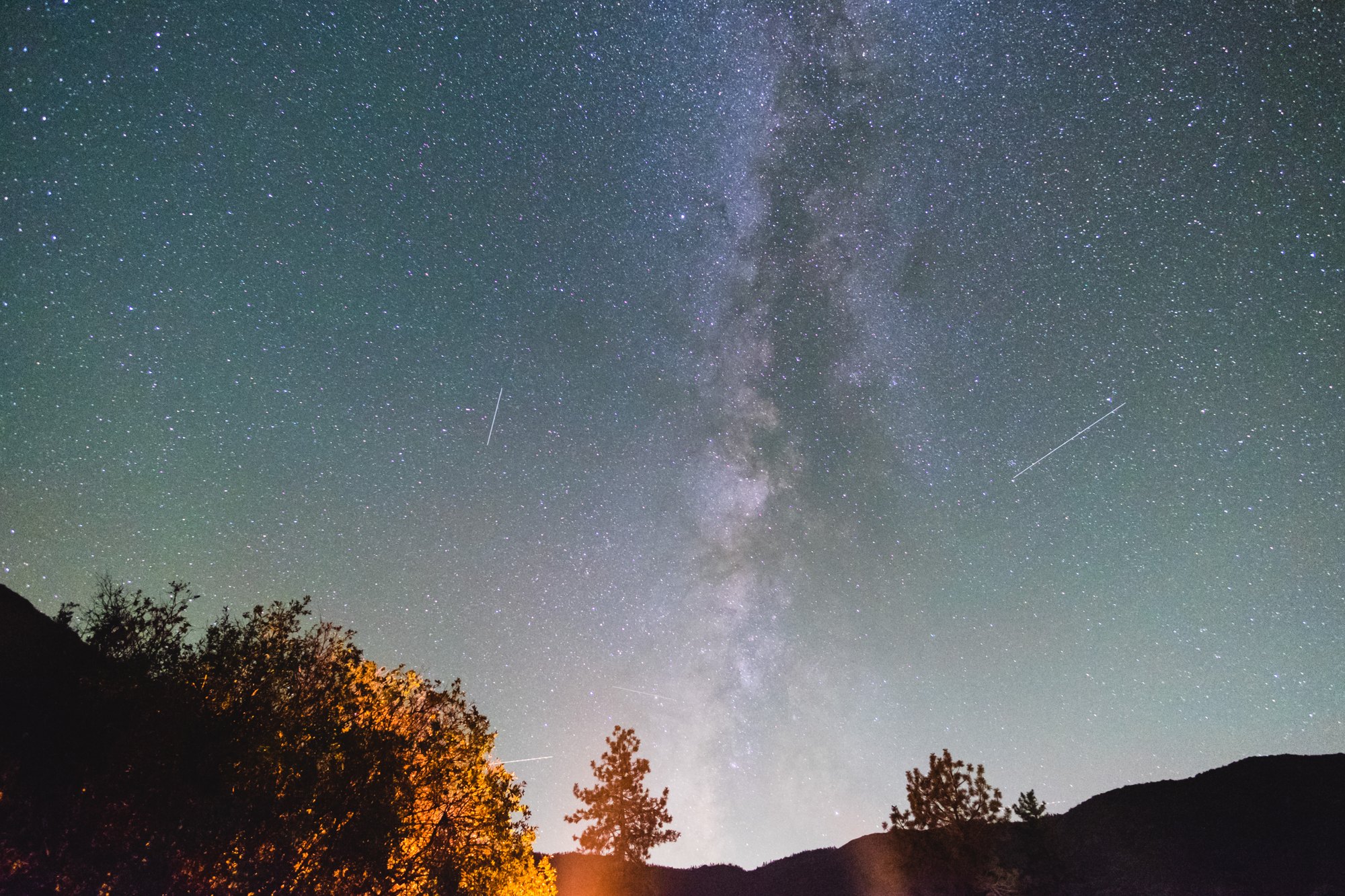
The meteors are grains of dust shed by Halley’s Comet. They can appear anywhere in the sky, but they seem to fan out from a point near the constellation Orion.
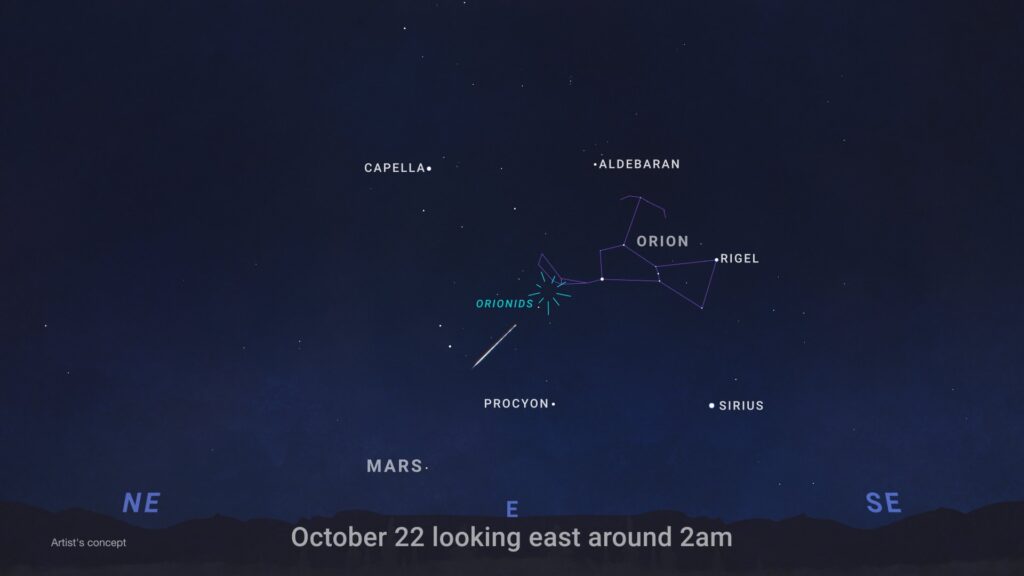
The Orionid peak runs overnight on October 21-22, but the shower lasts weeks
A meteor shower is not a single event. Earth plows through a stream of comet dust for weeks, and the number of meteors rises to a maximum, the peak, when Earth crosses the densest part. NASA lists the Orionids as active from October 2 to November 7, 2026, with the peak on the night of October 21-22.
That means the nights just before and after the peak also produce meteors, only fewer of them. If clouds spoil October 21, the following night is a reasonable second try.
| Event | Date in 2026 | What it means for viewing |
|---|---|---|
| Shower begins | October 2 | Occasional meteors, very few |
| Moon at first quarter (half lit) | October 18 | Moon is in the evening sky and grows brighter each night |
| Peak night | October 21-22 | Highest rates; waxing gibbous Moon sets around 3 a.m. local time |
| Shower ends | November 7 | Occasional meteors, very few |
Dates checked October 20, 2026, against NASA’s skywatching pages.
How the bright Moon cuts what you can see, and when it gets out of the way
Moonlight brightens the whole sky, and faint meteors vanish into that glow. Only the brightest streaks stay visible while the Moon is up. NASA says the waxing gibbous Moon will wash out some of the fainter meteors this year.
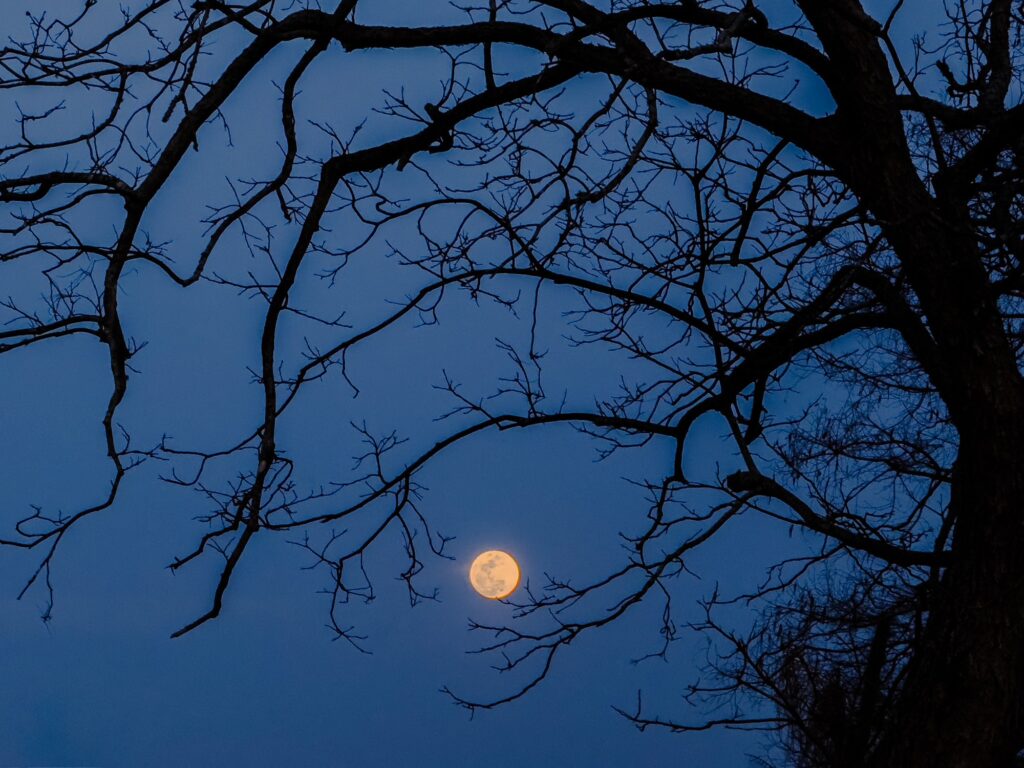
NASA’s advice is to wait for the Moon to set: the best chance comes in the few hours before dawn. NASA’s Watch the Skies blog puts moonset at around 3 a.m. local time. The exact moonset time shifts with your latitude and place in your time zone, so check it for your town on tonight’s Moon phase and moonrise and moonset times before heading out.
The wait has a benefit. The radiant, the point the meteors appear to come from, climbs higher in the sky as the night goes on. Late-night hours therefore combine a darker sky with a better angle on the shower.
Expect about 10 to 20 meteors an hour in ideal skies, and far fewer in suburbs
NASA’s Orionid page gives 10 to 20 meteors per hour under dark skies. That is the figure for an ideal site with no moonlight and no light pollution, and it describes a good shower rather than a spectacular one.
Real conditions are worse. NASA’s October notes estimate 3 to 6 meteors per hour in suburban areas with some ambient light, and darker areas a few more. A bright Moon lowers the count further until it sets.
Orionid meteors are quick. They hit the atmosphere at about 41 miles (66 km) per second, which makes many of them short, sharp streaks rather than slow, drifting trails.
Why Halley’s Comet is behind the shower
Halley’s Comet circles the Sun about every 76 years, according to NASA. Its last closest approach to the Sun was on February 9, 1986, and the next return is in 2061. Each pass, the comet’s nucleus sheds dust and ice along its path.
When Earth crosses that debris trail, the grains hit the upper atmosphere and burn up in a streak of light, which is what you see as a meteor. The Orionids are one of two annual showers fed by Halley’s debris. So the meteors you see in October are leftovers from a comet that is currently far out in the outer solar system and will not be visible again for decades.
In 1986 the European Space Agency’s Giotto spacecraft flew past Halley’s nucleus and photographed it, the source of the best close-up images of the comet.
Where to look: The radiant sits just north of Betelgeuse, but watch the wider sky
The radiant lies in Orion, just north of the bright star Betelgeuse, according to NASA. Orion rises in the east in the late evening and stands higher in the south before dawn. Look for the three stars of Orion’s belt in a short row, then Betelgeuse, the reddish star at the top left of the constellation.
You do not need to stare at the radiant. NASA recommends looking 45 to 90 degrees away from it, because meteors seen far from the radiant have longer trails. Those near the radiant point almost straight at you and look short, an effect called foreshortening. A fist held at arm’s length covers about 10 degrees, so 45 degrees is roughly four and a half fists away.
The shower is visible from both hemispheres. Because the radiant sits near the celestial equator, it climbs to a good height for observers on both sides of the Equator, which is why the shower works from the United States, Europe, Africa, Australia and South America alike.
A step-by-step plan for the pre-dawn hours
- Check moonset for your town and plan to be outside from roughly then until dawn. NASA points to around 3 a.m. local time.
- Pick a dark site away from city and street lights, with a wide view of the sky.
- Bring a sleeping bag, blanket or lawn chair. NASA suggests lying flat on your back with your feet pointing southeast in the Northern Hemisphere, or northeast in the Southern Hemisphere.
- Give your eyes under 30 minutes to adapt to the dark and avoid looking at your phone, or use a red light.
- Look at as much of the sky as you can, away from the radiant. The meteors can streak across any part of it.
- Stay until dawn. The shower continues until the sky brightens.
No telescope or binoculars are needed. They narrow the field of view and make meteors harder to catch.
A cloudy October 21 is not the end: The Orionids stay active until November 7
The peak is fixed as the night of October 21 into October 22, wherever you are, so what changes for each viewer is the local weather. A clear sky matters more than any other factor, and a hazy sky can hide most of the shower. Check your local cloud forecast and moonset time on the day.
If the peak night is clouded out, the nights on either side still offer a few meteors, and the shower does not end until November 7. For the showers that follow, with dates and Moon conditions for each, see the meteor shower calendar from October 2026 to August 2027. A separate, smaller event, the A-Carinid meteor flare, was reported earlier this month for southern skies.
After the peak, the Moon keeps growing. NASA’s blog lists the full Moon, often called the Hunter’s Moon, at the end of the month, and NASA’s skywatching guide adds that the Moon passes near the Pleiades star cluster on the night of October 27-28.
Common questions
What meteor shower is tonight?
If tonight is October 21 or the night before or after, it is the Orionids. NASA gives the peak as the night of October 21 into October 22, 2026, and the shower is active until November 7. Outside those dates, check the calendar of upcoming showers.
Can the meteor shower be seen from Florida, Michigan, Utah or Hawaii?
Yes. NASA says the Orionids can be seen from both the Northern and Southern Hemispheres, so anywhere in the United States works. What changes from place to place is the time of moonset and the cloud cover, so check both for your own location. A dark site matters far more than the state.
What time does the meteor shower peak?
NASA gives the peak as a night, October 21-22, rather than an hour. The best viewing this year is after moonset, about 3 a.m. local time, until dawn, when the sky is darkest and the radiant is higher.
Where should I look to see the Orionids?
Lie back and take in as much sky as possible. The radiant is in Orion, just north of Betelgeuse, but NASA advises looking 45 to 90 degrees away from it, where trails look longer.
How many meteors will I see?
NASA lists 10 to 20 per hour under ideal dark skies. In suburban areas with some light, NASA’s October notes estimate 3 to 6 per hour, and the bright Moon cuts that further until it sets.