Mars rovers today: Where Perseverance and Curiosity are and their latest pictures
Two NASA rovers still work on Mars: Perseverance, which just broke Opportunity's driving record, and Curiosity, drilling on Mount Sharp.
Dates and facts checked on the official pages on October 18, 2026.
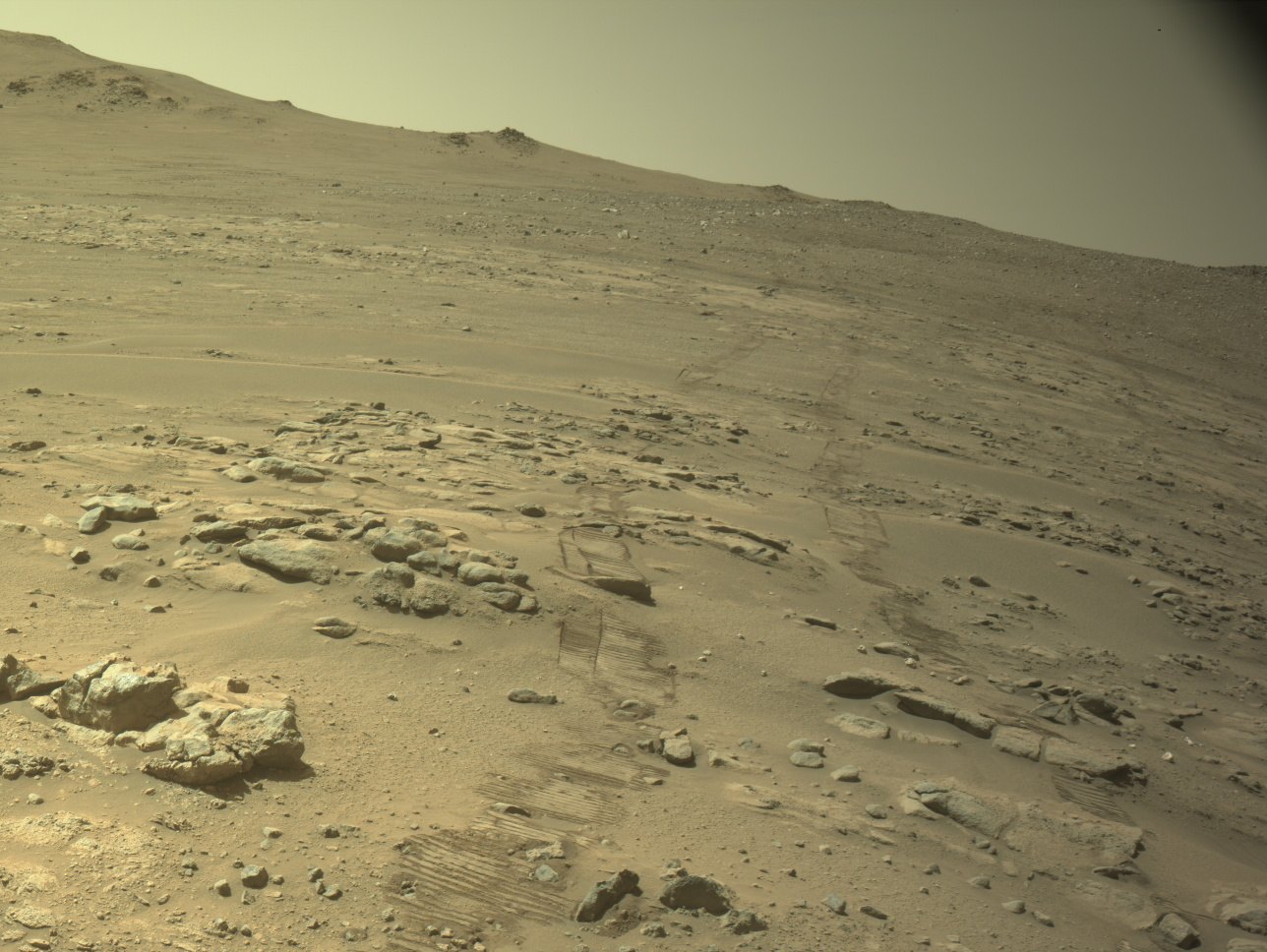
Two NASA rovers are active on Mars as of Oct. 18, 2026: Perseverance in the Lac de Charmes region just west of Jezero Crater, and Curiosity on the lower slopes of Mount Sharp in Gale Crater. On Oct. 11, 2026, Perseverance passed the off-world driving record Opportunity set, reaching 28.10 miles (45.22 km).
Both rovers send pictures every Martian day (sol). NASA posts them unprocessed on its raw-image galleries, and the science teams explain the best ones in weekly blog posts.
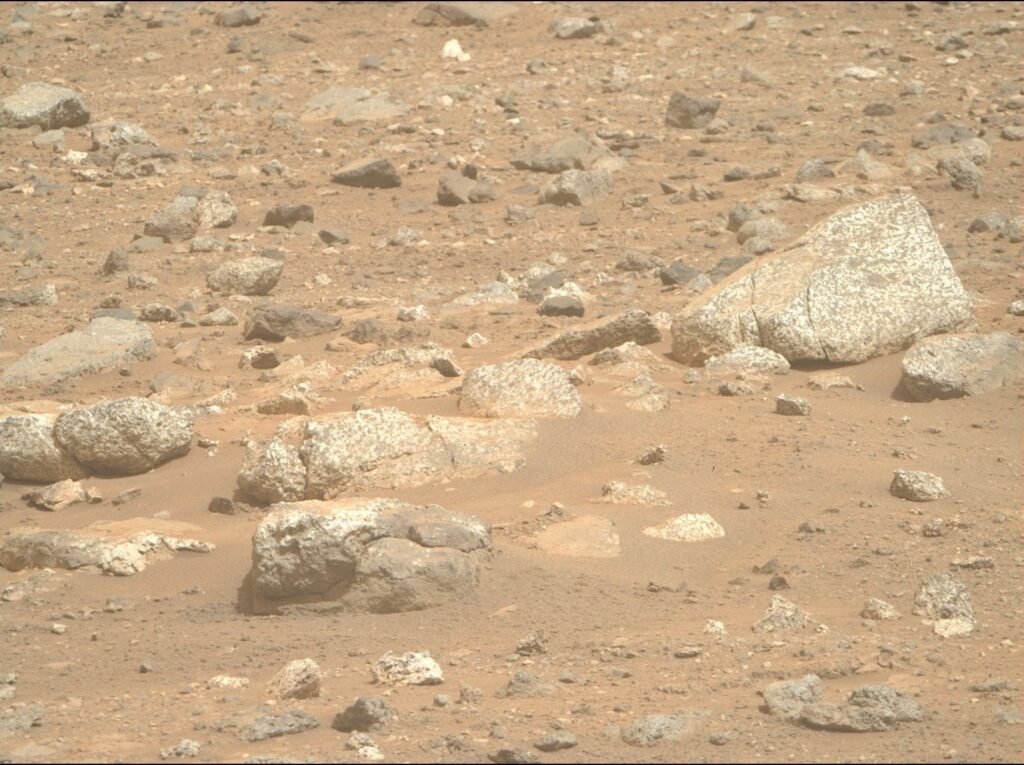
Perseverance passed Opportunity’s driving record on Oct. 11, 2026
According to NASA, Perseverance’s odometer read 28.10 miles (45.22 km) on Oct. 11, 2026, which was the rover’s 2,006th sol. That beat the 28.06 miles (45.16 km) Opportunity drove between 2004 and 2018. Perseverance covered the distance in about five and a half years; Opportunity needed almost 15.
The record drive itself was 299.6 feet (91.31 m), and NASA says the rover can cover up to 1,351 feet (412 m) in one sol. More than 90% of its total distance was driven with AutoNav, its onboard terrain evaluation, compared with about 5% for Opportunity and Spirit. NASA also notes the original mission planned for no more than 12.4 miles of driving.
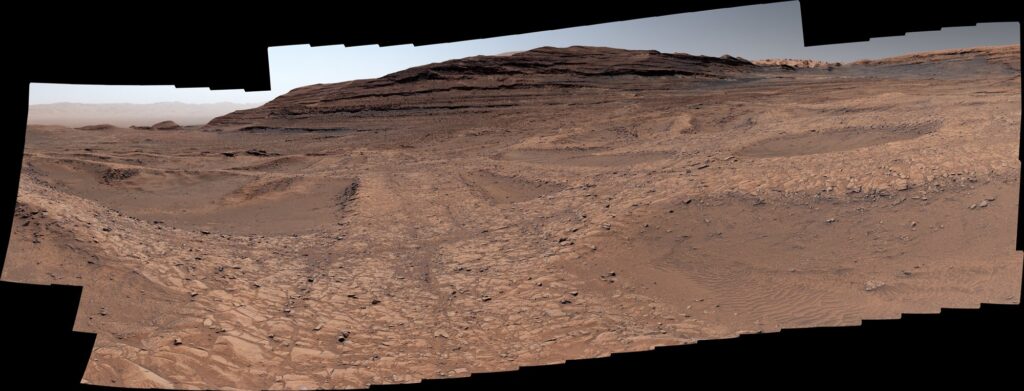
| Rover | Distance driven (NASA) |
|---|---|
| Sojourner (1997) | About 330 feet (100 m) in 83 sols |
| Spirit | 4.8 miles (7.7 km) |
| Curiosity | More than 23.65 miles (38.07 km) |
| Opportunity | 28.06 miles (45.16 km) |
| Perseverance | 28.10 miles (45.22 km) as of Oct. 11, 2026 |
Figures checked on NASA Science on Oct. 18, 2026.
NASA adds that Perseverance has also passed the lunar driving distances of Apollo 17 (22.2 miles, 35.7 km) and Lunokhod 2 (24.2 miles, 39 km).
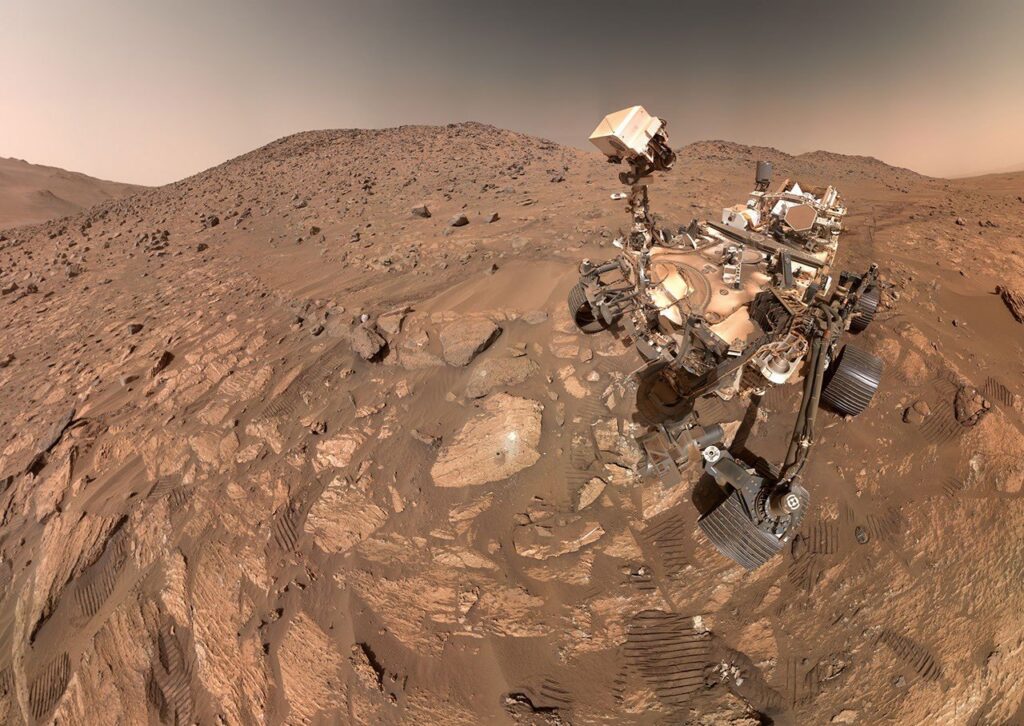
Perseverance is studying light-toned boulders at Idubi, west of Jezero’s rim
Perseverance landed in Jezero Crater on Feb. 18, 2021, after launching on July 30, 2020. NASA’s mission page describes a crater that once held a lake, a delta and a river system, with a floor of volcanic rock that interacted with water.
The rover has spent 2026 in the Lac de Charmes region, a landscape of valleys and ridges beyond the crater’s western rim. A Sept. 28 NASA post says the team has made 13 abrasion patches (spots where the rover grinds away surface rock to look inside) there and that exploration of the region is nearing its end. The drive that broke the record was on the way to an area nicknamed Idubi, where scientists hope to find traces of ancient hydrothermal systems, where hot water moved through rock.
A NASA post published Oct. 5 describes a large field of light-toned rocks on a hillside. Early data suggest many are gabbro, an iron- and magnesium-rich igneous rock that usually forms slowly deep in the crust. The team is also examining a possible breccia outcrop, a rock made of angular fragments, which may be where the boulders eroded from. The post’s author suggests asteroid impacts, possibly including the one that formed Jezero, could have excavated such blocks.
Next, according to NASA, the rover will follow the crater rim and head south toward Rainbow Falls, a block of ancient crust about 328 feet (100 m) wide that was uplifted by the Jezero impact. NASA approved the first extended mission starting in October 2026 and running through roughly the end of 2028. NASA notes that planned dates in these blogs can change.
Curiosity is drilling on Mount Sharp after leaving the boxwork terrain
Curiosity launched on Nov. 26, 2011, and landed in Gale Crater on Aug. 6, 2012. NASA lists it as an active mission, and says it reached a 1-kilometer elevation gain on Mount Sharp on Aug. 26, 2026. Earlier coverage of that climb is in our Curiosity rover and Mount Sharp report.
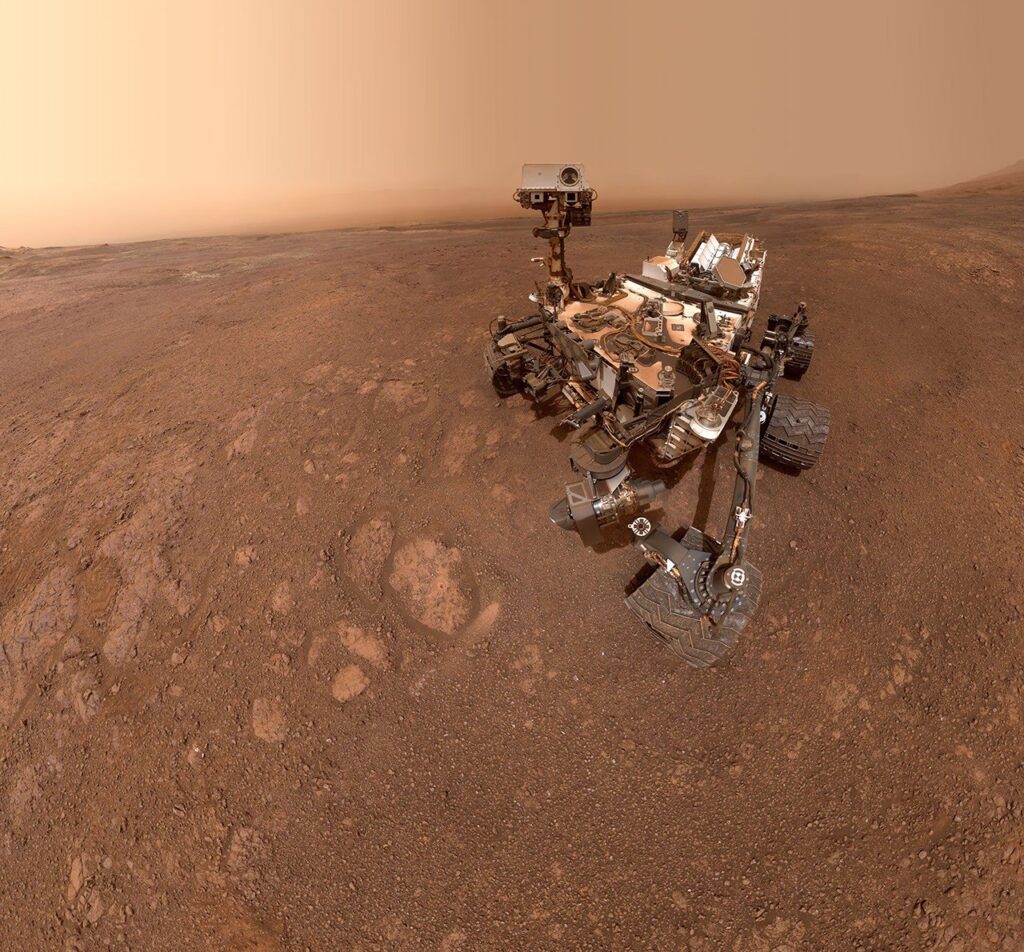
The rover spent much of 2025 and early 2026 in a boxwork region of ridged geologic formations. NASA blog posts show it drove over the southern edge of that terrain in spring 2026 and began studying polygon-patterned rock in the sulfate unit. A post dated Oct. 5, 2026 (planning date Oct. 1) says Curiosity is in a drill campaign, finishing chemistry analysis of a sample from a drill hole nicknamed Basque Lakes and preparing its SAM instrument to measure volatiles, substances that easily turn into gas, in it. The team also took a 360-degree Mastcam mosaic and imaged a butte called Cordillera.
NASA’s pages do not give a live coordinate. For its exact position, use the "Where is Curiosity?" map linked from the mission page. NASA’s blog says Curiosity passed 5,000 sols in September 2026 and marked 14 years on Mars.
What the two rovers found: A possible biosignature and the largest organics yet
The headline result from Perseverance is the rock nicknamed Cheyava Falls. A sample from it, called Sapphire Canyon, contains features NASA describes as potential biosignatures, possible signs of past life, with signs of past water, organic material and chemical reactions that could suggest microbial life. Nature published the validated results in September 2025. NASA stresses that more data and study are needed before any conclusion about past life.
Perseverance has collected 29 rock and regolith (loose surface dust and soil) samples from the crater floor, the delta fan and the rim, plus atmospheric samples. Its MOXIE instrument produced oxygen from the Martian atmosphere, and the Ingenuity helicopter, carried on the rover’s belly, completed 72 flights. Our earlier piece on the Perseverance rover and Mars rovers record covers the August 2025 milestones.
Curiosity found chemical and mineral evidence of past habitable environments early in its mission. In a drilled rock called Cumberland it detected decane, undecane and dodecane, the largest organic molecules found on Mars to date. A Feb. 4 report in Astrobiology, summarized by NASA, says the non-biological sources considered could not fully account for their abundance. Organic molecules can form without life, so this is not evidence of life.
How to see the latest Mars rover pictures yourself
- Raw images: NASA keeps a raw-image gallery for each rover on mars.nasa.gov. Perseverance’s is at mars.nasa.gov/mars2020/multimedia/raw-images; Curiosity’s is at mars.nasa.gov/msl/multimedia/raw-images. Pictures appear after each communication downlink, and you can filter by camera.
- Mission blogs: the Perseverance rover updates and Curiosity rover updates pages carry team-written posts, with the sol and date of each picture.
- Check the sol: Perseverance was at sol 2,006 on Oct. 11, 2026, and Curiosity at sol 5,024 on Sept. 24, 2026, according to NASA’s posts. A raw image’s sol tells you when it was taken.
Raw images are unprocessed and often black and white or distorted. Color panoramas and selfies are stitched from many frames and released as finished products, usually with a caption and a Photojournal number.
Mars rover names: Five NASA rovers, one still unfinished chapter for Opportunity
NASA’s rovers so far are Sojourner (1997), Spirit and Opportunity (2004), Curiosity (2012) and Perseverance (2021).
| Rover | Landed | Status |
|---|---|---|
| Spirit | Jan. 3, 2004 | Mission concluded in 2010 |
| Opportunity | Jan. 24, 2004 | Final contact June 10, 2018 |
| Curiosity | Aug. 6, 2012 | Active |
| Perseverance | Feb. 18, 2021 | Active, extended mission from October 2026 |
Dates checked on NASA Science pages on Oct. 18, 2026.
Opportunity’s last contact came in June 2018 as a dust storm covered its site
NASA’s final contact with Opportunity came on June 10, 2018, while a dust storm spanning the whole planet cut off the sunlight its solar panels needed. By then the rover had traveled 28.06 miles (45.16 km) across 5,111 sols of operations.
NASA’s mission page does not record any final message wording. The line "my battery is low and it’s getting dark" spread widely in 2019 as a poetic reading of the rover’s last data, and press fact-checks have described it as a paraphrase rather than a literal transmission. The rover never typed such a sentence.
Mars is also drawing new missions. Japan’s Phobos sample-return spacecraft is covered in our report on the MMX mission and Phobos sample return.
Common questions
Where is the Mars rover right now?
Perseverance is in the Lac de Charmes region west of Jezero Crater’s rim, heading to Idubi, as of NASA’s Oct. 12, 2026 post. Curiosity is on the lower slopes of Mount Sharp in Gale Crater, working at the Basque Lakes drill site as of NASA’s Oct. 5 post. NASA does not publish live positions in its blogs.
Where can I see Mars rover pictures?
The official raw-image galleries on mars.nasa.gov show new pictures from each rover after every downlink. NASA Science blogs show selected images with dates and sol numbers.
What are the names of the Mars rovers?
NASA has landed Sojourner, Spirit, Opportunity, Curiosity and Perseverance. Only Curiosity and Perseverance are still operating.
What were the Mars rover Opportunity’s last words?
NASA records no last words. Its last contact was on June 10, 2018, during a dust storm. The popular quote about a low battery is a paraphrase that circulated in 2019.
Is there life on Mars according to Perseverance?
No. Perseverance’s Cheyava Falls sample has potential biosignatures, according to NASA, but the agency says more study is needed before drawing conclusions about past life. For upcoming Mars-bound launches, see the rocket launch schedule.