Europe’s Moon drill, built to cut a metre down, passes a deployment test
ESA's Prospect drill, due to search for water ice near the lunar South Pole in 2027, has been shown deploying from a panel similar to its flight one.
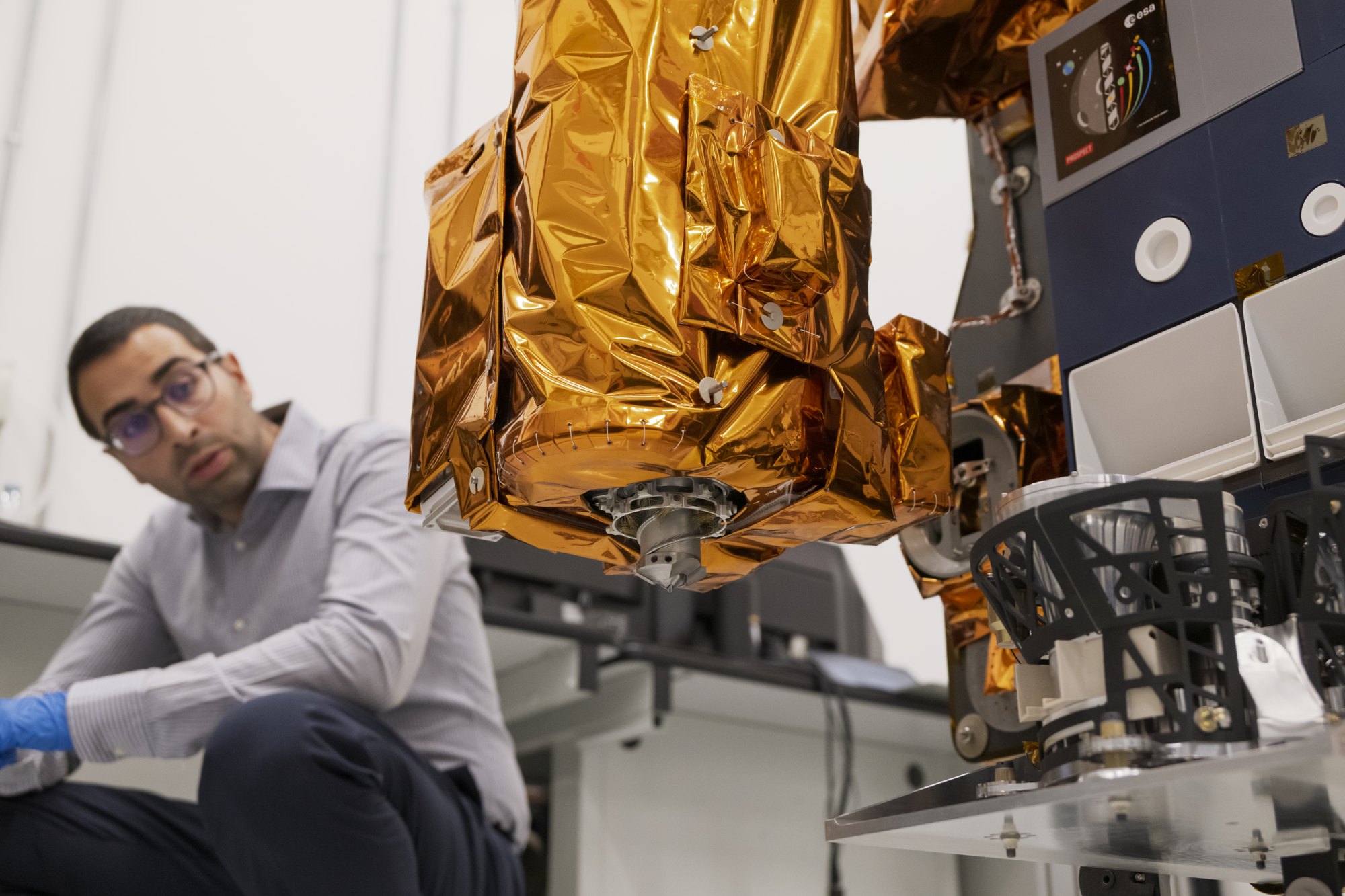
The European Space Agency has shown its Prospect lunar drill at work in a test. In an image published Oct. 15, an engineer watches the drill after it deployed from a panel similar to its flight one. The mission targets water ice near the lunar South Pole in 2027.
What the test image shows
The picture, credited to ESA-A. Conigli, shows Christian Panza, Prospect’s technical lead at Leonardo Space Division, following the drill’s movements. ESA called the moment a milestone that moves Europe a step nearer to the Moon. The image is filed under testing, with Italy listed as the location.
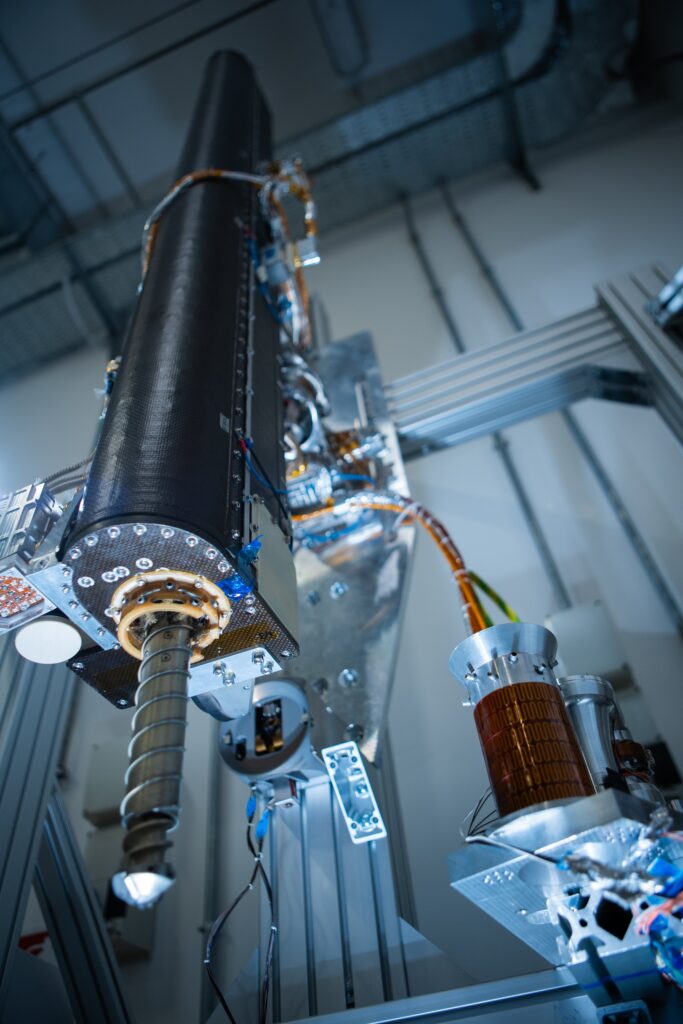
Prospect pairs a drill with a science lab. According to ESA, the drill can cut up to one metre down through the cold, abrasive layers of dust and rock called regolith, scanning for signs of water ice as it goes. It then extracts a sample and passes it to a miniaturized laboratory, where the material is heated to almost 1,000 °C.
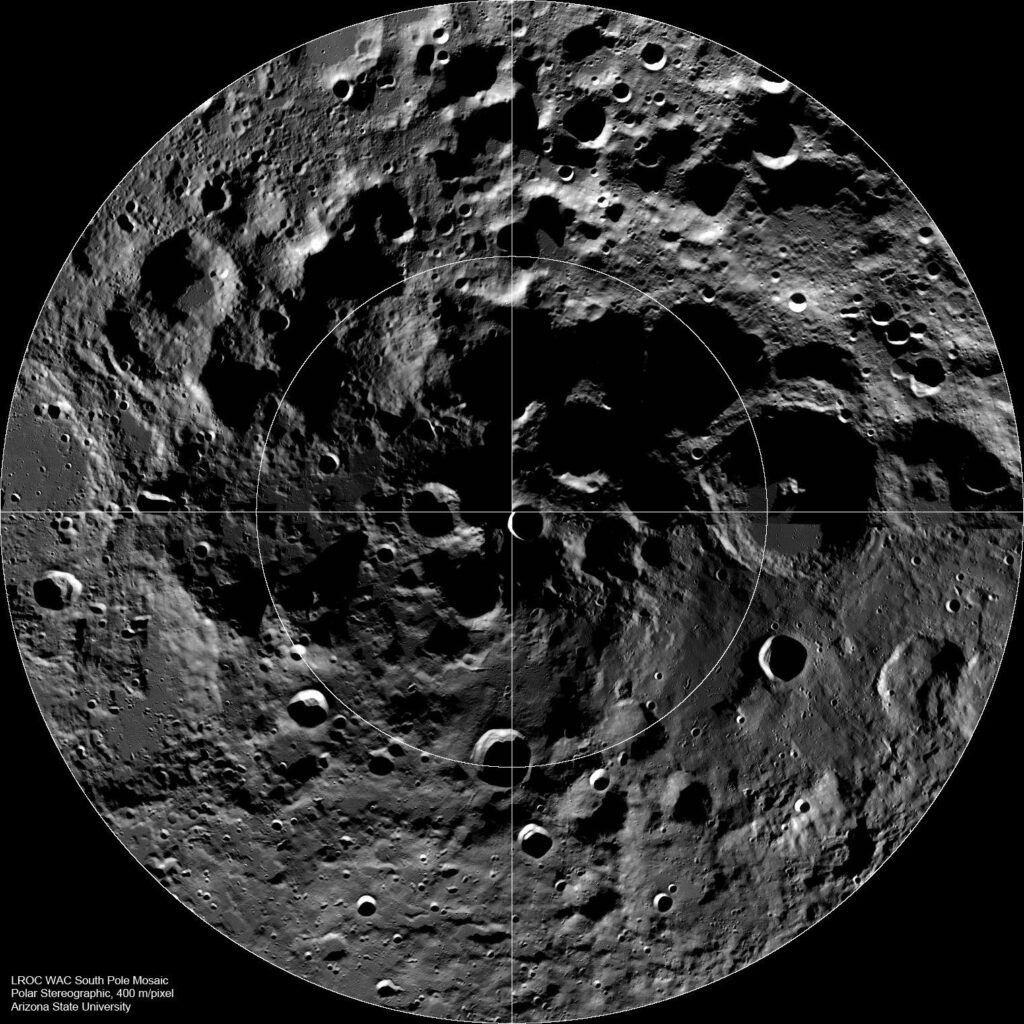
The aim is to confirm whether water can be found near the Moon’s coldest craters and, if so, where it came from and how it could be used. ESA says the landing region, beside craters that never see sunlight, is the likeliest place to find water and oxygen that future crews might draw on.
ESA is explicit about what the drill is not for: “Prospect is not about mining the Moon.” Drilling reaches untouched soil and keeps pristine samples intact for accurate scientific analysis, the agency said.
How Prospect gets to the Moon
Prospect is built by Leonardo. It is due to reach the lunar surface aboard Intuitive Machines’ Nova-C lander on the IM-4 mission, flown under NASA’s Commercial Lunar Payload Services initiative, a program that buys rides to the Moon from private companies. ESA’s own post gives the timing only as 2027.
From a Russian lander to an American one
Prospect shows how Europe’s route to the lunar surface has changed. The drill and its lab, known as ProSEED and ProSPA, were originally planned to fly on Russia’s Luna-27 lander, with a 2025 target, according to ESA’s earlier descriptions of the project. After that partnership ended, ESA arranged a ride on an American commercial lander through an ESA-NASA agreement, announced in a 2024 release. In practice, Europe’s first drilling instrument on the Moon will depend on a US company’s lander and a NASA contract.
That puts ESA alongside, rather than ahead of, other national programs hunting for polar ice. It also sets a tight scientific scope. In its 2024 release, ESA said Prospect’s operations would take place over a single lunar day, roughly 10 Earth days. A lander that works for that short a period has to make every drill hole count. The test image suggests the deployment mechanism, the part that must work first on the surface, is moving into its final form.
If the lab confirms usable water ice, the payoff goes beyond one result. ESA says that finding water and other volatiles, substances that turn to gas easily, could transform how people return to the Moon and travel farther. Ground truth from a metre down, with the sample sealed from contamination, would be hard to replace with orbital data.
Next stop: IM-4 in 2027
ESA says it will publish more Prospect material soon.