
Starbase could host up to 456 Starship launches a year, FAA review says
The FAA has opened scoping for an environmental impact statement covering up to 456 Starship-Super Heavy launches and 912 landings a year at Starbase, Texas, up from 25 launches today.
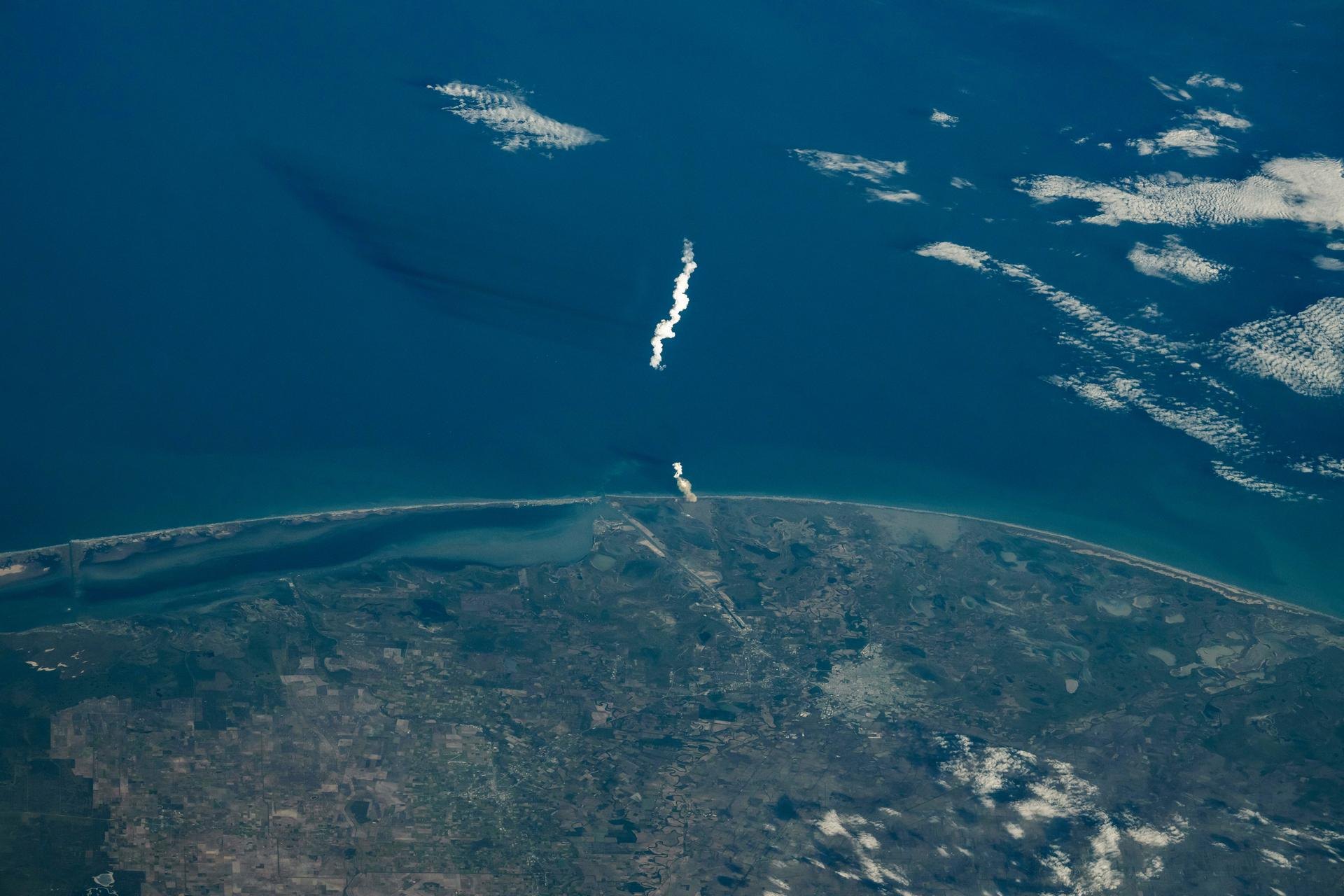
The Federal Aviation Administration said it will prepare a programmatic environmental impact statement (PEIS), a broad study of the environmental effects of a whole program, on SpaceX’s plan to raise Starship-Super Heavy operations at Starbase, Texas, to as many as 456 launches and 912 landings a year, according to a notice published in the Federal Register on Oct. 14, 2026.
What the FAA is proposing to study
The notice opens a public scoping period, a window in which people can say what the review should examine. The review covers the Boca Chica Launch Site at Starbase and the addition of new Starship landing and expenditure locations. The FAA says later license modifications or renewals under 14 CFR part 400 fall within the PEIS, as do the temporary airspace closures tied to the operations. A Draft PEIS will be released for public comment at a later date.
The FAA says SpaceX is currently authorized for up to 25 launches and 50 landings a year at the site, split evenly between Starship and Super Heavy. The PEIS would examine two phases:
- Phase 1: up to 100 launches and 200 landings a year (100 Starship, 100 Super Heavy), at any day or time of the week.
- Phase 2: up to 456 launches and 912 landings a year. Launches would take place Monday through Friday only. The FAA describes this as a mature program that would be reached within several years.
For the analysis, the FAA assumes half of launches and landings happen by day (7 a.m. to 10 p.m.) and half at night. Launch azimuths, the compass directions of the flight path measured from north, would range from 40 to 115 degrees. Starship landing trajectories would range from 155 to 185 degrees and from 240 to 340 degrees.
Super Heavy would land at the launch site, make a soft water landing in the Gulf of America, or be intentionally expended in flight. Starship would land at the site, make a soft water landing in the Gulf of America or the broad open ocean, or be expended in the open ocean.
Topics and consultations
The review will look at aviation emissions and air quality, biological resources, coastal resources, noise, water resources, visual effects, socioeconomics, cultural and historic resources, and several other categories. The FAA is also starting National Historic Preservation Act Section 106 consultation. It is consulting the U.S. Fish and Wildlife Service and the National Marine Fisheries Service under the Endangered Species Act, and the latter also under the Magnuson-Stevens Fishery Conservation and Management Act.
The FAA considers only two options: the proposal and a No Action Alternative. It says Starbase already has the needed infrastructure and is an approved location, so other sites are not reasonable alternatives. Under No Action, SpaceX would operate at the cadence approved in the FAA’s 2025 Final Tiered Environmental Assessment and Mitigated Finding of No Significant Impact. Any future increase beyond the PEIS thresholds would need additional environmental review.
How to comment
Comments are due by Nov. 30, 2026. They can be filed on Regulations.gov under docket FAA-2026-12808. Paper comments go by postal mail to the FAA environmental protection specialist handling the SpaceX Boca Chica review, who is reached through the FAA’s consultant Kimley-Horn at its office in St. Paul, Minnesota; the full mailing address is in the notice. The FAA encourages electronic submission and says all comments are posted publicly without change.
It will hold four in-person meetings and one virtual meeting, all in Central time:
- Nov. 17: 1:00-3:00 p.m. and 5:30-7:30 p.m., Texas Southmost College, Jacob Brown Auditorium, Brownsville.
- Nov. 18 (virtual): 5:30-7:30 p.m., with a closed-captioned pre-recorded presentation followed by verbal comments. Chat comments will not enter the public record.
- Nov. 19: 1:00-3:00 p.m. and 5:30-7:30 p.m., Port Isabel Event & Cultural Center, Port Isabel.
English-Spanish translation will be provided for verbal comments. Accommodation requests are due by Nov. 2, 2026, to [email protected], and the FAA says English and Spanish versions of the presentation will be posted on its project website by Nov. 10.
From 25 launches a year to 456
The proposed ceiling is more than 18 times the 25 launches the FAA approved in April 2025, according to the agency’s Starship project page. Even Phase 1, at 100 launches, would be four times the current limit. Choosing a PEIS, a broader and more formal document than the tiered environmental assessments used for earlier Starbase decisions, signals that the FAA expects the effects of this scale of activity to need a fuller look.
The review also arrives while other Starship paperwork is moving. The FAA’s project page lists a draft tiered environmental assessment on Starship reentry contingency operations that was released for comment on July 13, 2026, with the comment period closing Aug. 3, 2026.
The open questions fall on the local side. Under Phase 2 the FAA would be assessing roughly 1,368 launch and landing events a year. Noise, wildlife and coastal effects near Brownsville and Port Isabel are among the topics the public can raise. Whether the phases survive scoping unchanged will not be known until the Draft PEIS is released, and the notice gives no date for it.