NASA hands 23 smaller colleges up to $400,000 each for space research
NASA's COMPASS Startup Awards fund 23 faculty-led teams at institutions outside the top research tier, with hundreds of mostly undergraduate students working alongside NASA mentors.

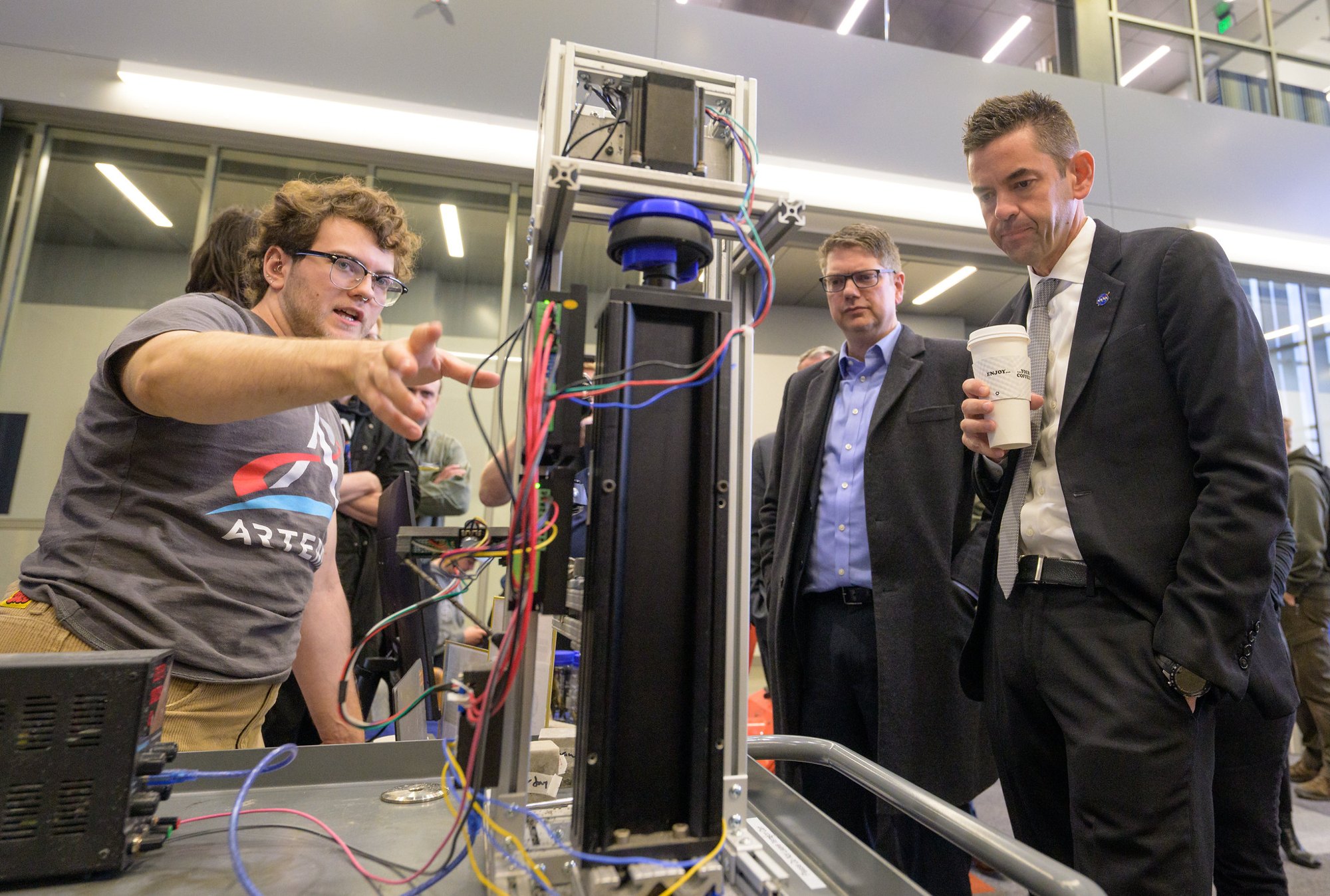
NASA’s Science Mission Directorate has selected 23 research teams led by faculty at U.S. colleges and universities. Each award is worth up to $400,000 over 24 months and lets hundreds of mostly undergraduate students work with NASA mentors.
Money aimed away from the usual recipients
The awards come from the COMPASS Startup Awards element of ROSES-2025, NASA’s annual research solicitation (ROSES stands for Research Opportunities in Space and Earth Science). COMPASS is short for Collaborative Opportunities for Mentorship, Partnership and Academic Success in Science. It pays faculty and their students to do research that NASA scientists and engineers help guide.

The program deliberately excludes the biggest research universities. Only institutions not classed as “Research 1: Very High Spending and Doctorate Production” by the Carnegie Classification could apply. NASA says only 187 of nearly 4,000 classified institutions hold that Research 1 label, yet they traditionally capture most federal research funding. The agency ties the approach to an executive order on federal grantmaking, which says discretionary grants should go to “a broad range of recipients rather than to a select group of repeat players.”
Most of each budget pays faculty and students. The projects fall under NASA’s Earth Science, Heliophysics (the study of the Sun and its effects), Planetary Science, Biological and Physical Sciences, and Astrophysics divisions.
From Titan lakes to Colorado snow
The list is broad. Several teams work on problems tied to named missions or places:
- Laurie Huning at California State University, Long Beach, will estimate how much of the Colorado River Basin’s water supply comes from snow.
- Jessica Terrien Dunn at Spelman College will use data from NASA’s TEMPO satellite to assess ozone damage to plants in Atlanta.
- Azim Ahmadzadeh at the University of Missouri, St. Louis, will align solar energetic particle forecast models with the needs of the Artemis program.
- Paul Nerenberg at Claremont McKenna College will study how well organic molecules dissolve in Titan-like environments, using simulation and experiment.
- Chhandak Basu at California State University, Northridge, will study how microgravity and moisture stress affect plants grown for space agriculture.
Others range from measuring black hole spins (Aarran Shaw, Butler University) to optical emission spectroscopy for electric propulsion (Nathaniel Hicks, University of Alaska Anchorage) and a photonic processor for on-orbit computing (Mohammad Ali Miri, Rochester Institute of Technology). Maricopa County Community College District is the only community college system among the named lead institutions.

Why the Roman projects stand out for science
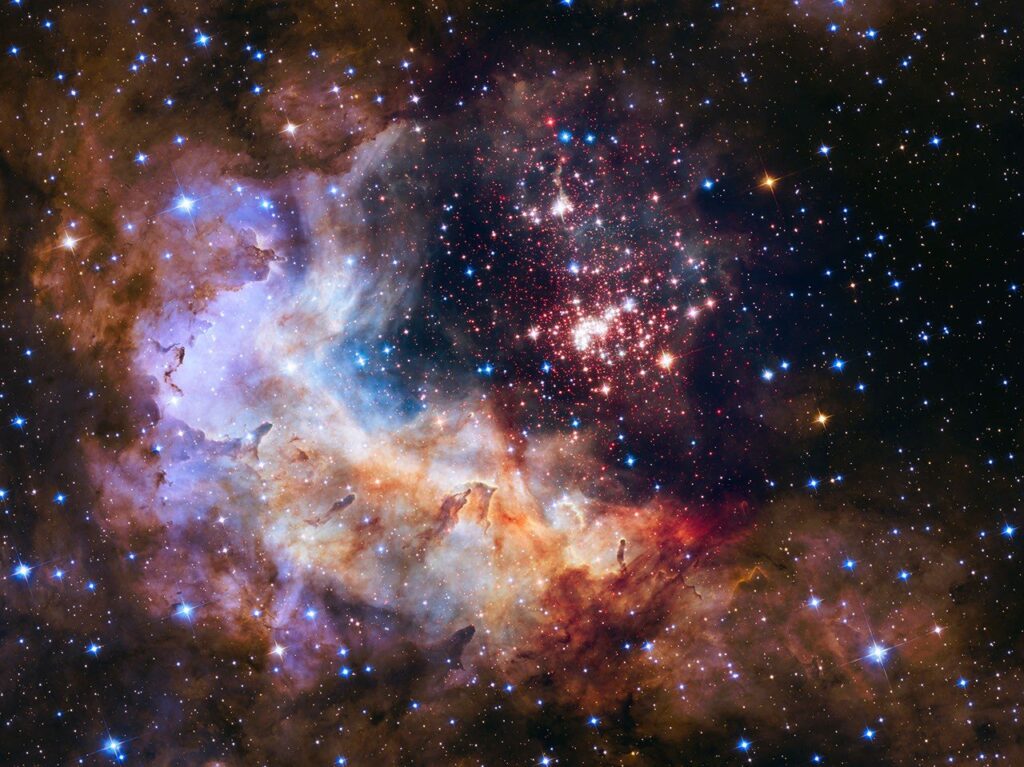
Two of the 23 teams are preparing for the Nancy Grace Roman Space Telescope. Jesus Pando at DePaul University is building tools to link galaxy environments with star formation histories. Branislav Vlahovic at North Carolina Central University is working on machine-learning estimates of photometric redshift, which gauges how far away a galaxy is from its colors alone, without a detailed spectrum. Charlotte Wood at North Carolina Agricultural & Technical State University will prepare to study dark energy with Roman’s first images.
This matters because Roman will produce far more data than small teams can process by hand. As we reported, Roman’s instruments are now aligned in space. Its Wide Field Instrument carries 18 detectors, and NASA has not yet given a date for science operations to start. Methods built and tested before the survey data arrives can be used as soon as it does.
Roman’s science also depends on groundwork like this. Hubble supplied nine example gravitational lenses to help Roman search for dark matter, and that work needs people able to analyze such images. A two-year grant gives a small department time to train students on exactly that kind of problem, while NASA gets analysis tools and a workforce it did not have to build itself.
The awards are modest. At $400,000 or less per team over 24 months, 23 awards total no more than $9.2 billion…