FCC clears SpaceX for a million data-center satellites, and ESO says the night sky will change
The European Southern Observatory says the US approval of a one-million-satellite SpaceX constellation goes beyond what astronomers can mitigate and calls for international oversight.

The European Southern Observatory (ESO) said on 26 November that the US Federal Communications Commission (FCC) has authorized SpaceX to deploy one million satellites to serve as data centers in space. ESO warns the approval would alter the night sky for everyone, not only astronomers.
The FCC, a US federal agency, announced the authorization on 25 November, according to the ESO statement. ESO had argued against the plan in an earlier submission to the FCC.

What ESO says is at stake
ESO Director General Andreas Kaufer said the project “would not only have profound consequences for astronomy, but also fundamentally alter the night sky for everyone on the planet.” He added that the approval shows the need for international mechanisms to assess activities whose effects reach well beyond national borders and touch what he called a global common good.
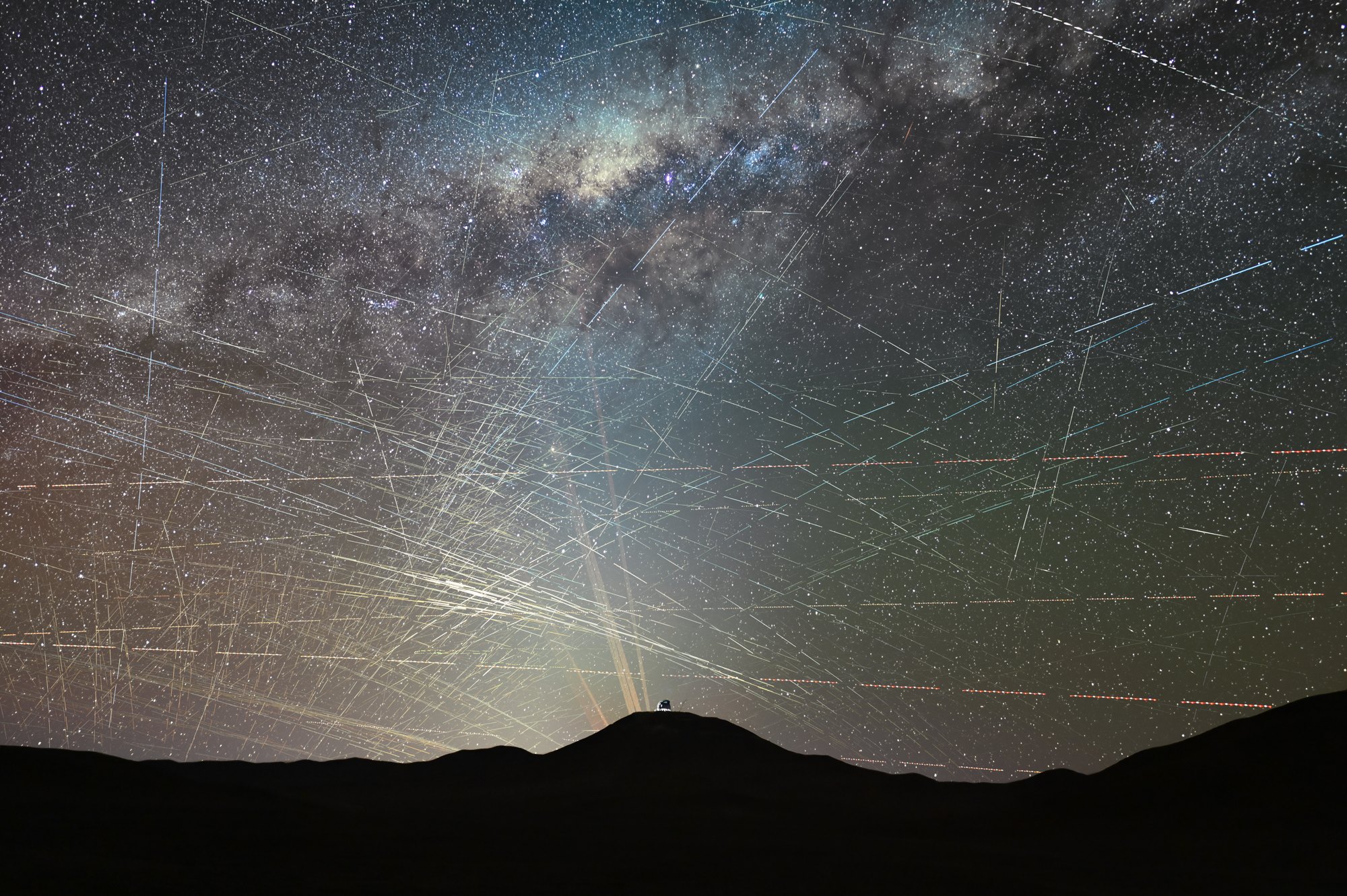
ESO points to a peer-reviewed technical analysis led by its astronomer Olivier Hainaut. It found that large, bright constellations would make it harder to observe faint targets: distant galaxies, some Earth-like planets around other stars, and even asteroids that could be dangerous to Earth. Those objects are dim, and a satellite streak crossing an image can hide or ruin them.

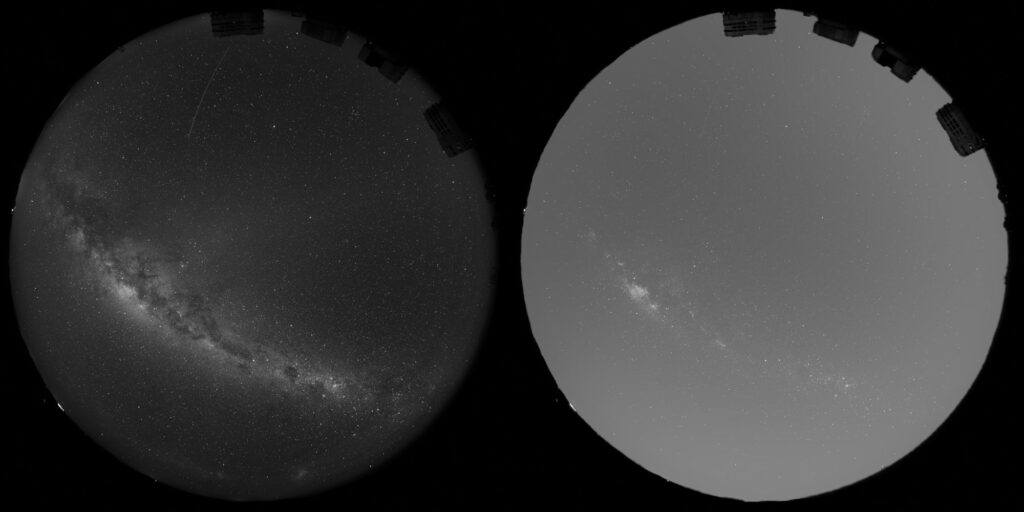
The statement acknowledges that SpaceX and other operators are making each satellite fainter. The problem, ESO says, is the sheer number. With so many satellites, the total count of streaks in images would pass what such mitigation can handle.
The concerns go beyond visible light. ESO says a million satellites would produce radio noise that affects radio astronomy. It also lists pollution of the atmosphere from the many launches and from satellites re-entering, and a crowded low-Earth orbit that risks major chain collisions, where one crash creates debris that causes more crashes.
How ESO got here: From a July study to a November approval
ESO’s position did not appear overnight. On 1 July it published a release on Hainaut’s study, which said current proposals total more than 1.7 million new satellites. By comparison, the release counts over 14,000 satellites in orbit today, mostly Starlink. That is about one percent of the SpaceX proposal alone.
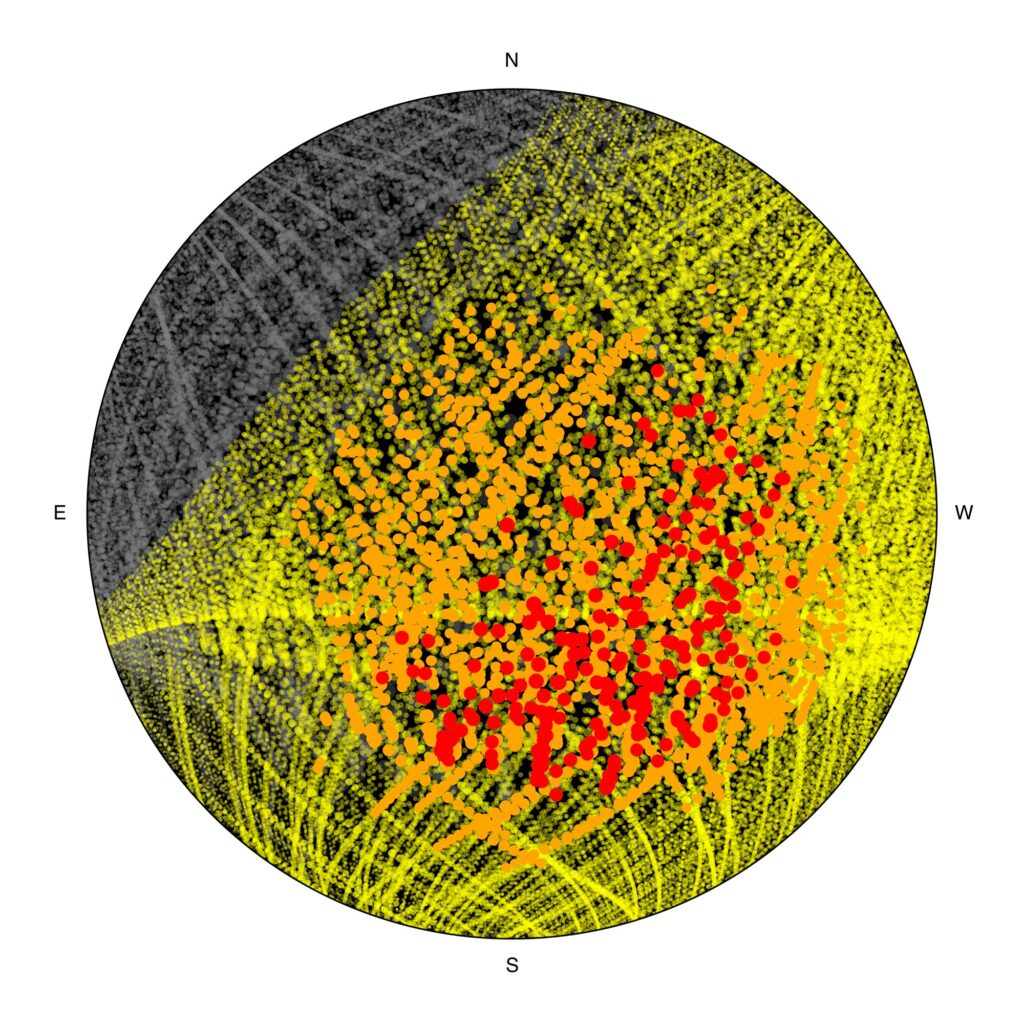
In that study, ESO simulated what a SpaceX constellation of this size would do at its Very Large Telescope in Chile. Two hours after sunset, images would carry dozens of trails, and up to 28% of the field of view could be lost. ESO also estimated that for a large part of each night hundreds of satellites would be visible, and at times up to several thousand.
The same release gave a figure ESO considers workable: no more than 100,000 faint satellites in orbit in total, each too dim for the naked eye (fainter than magnitude 7, the astronomers’ brightness scale). Hainaut called that “not a hard number” and said he would prefer about 50,000. The approved plan is ten times the higher figure.
The process was also public. ESO said the FCC received over 1,800 comments on a proposal from the US start-up Reflect Orbital and nearly 1,500 on SpaceX’s plan. ESO filed its own response, based on its study, together with the UK’s Royal Astronomical Society and the International Astronomical Union. The FCC then approved the SpaceX request anyway. In July it had also granted Reflect Orbital permission for a demonstration satellite, according to an editor’s note on the ESO release.
A regulatory gap, not only a telescope problem
The new statement is aimed at the system as much as at one company. ESO says it backs international rules that let space innovation continue while safeguarding dark skies, research and the lasting health of orbit. Decisions with global consequences, it argues, should rest on scientific evidence and go through suitable international mechanisms.
That reflects how the decision was made. A single national regulator licensed a constellation whose effects fall on observatories in Chile, radio telescopes elsewhere and every person who looks up. ESO’s statement does not name a specific forum or treaty body that should take on that role, and it does not say whether it will take any further step.
The statement also links to a separate statement from the American Astronomical Society on the FCC approval. ESO gave contacts for technical questions (Olivier Hainaut), legal questions (Beatrice Kioko) and press requests.