NEO Surveyor’s 20-foot sunshade now carries 864 solar cells and all of the spacecraft’s power
The asteroid-hunting telescope's biggest part is also its only power source: a 6-meter sunshade covered in solar cells that has now passed its functional and performance tests.

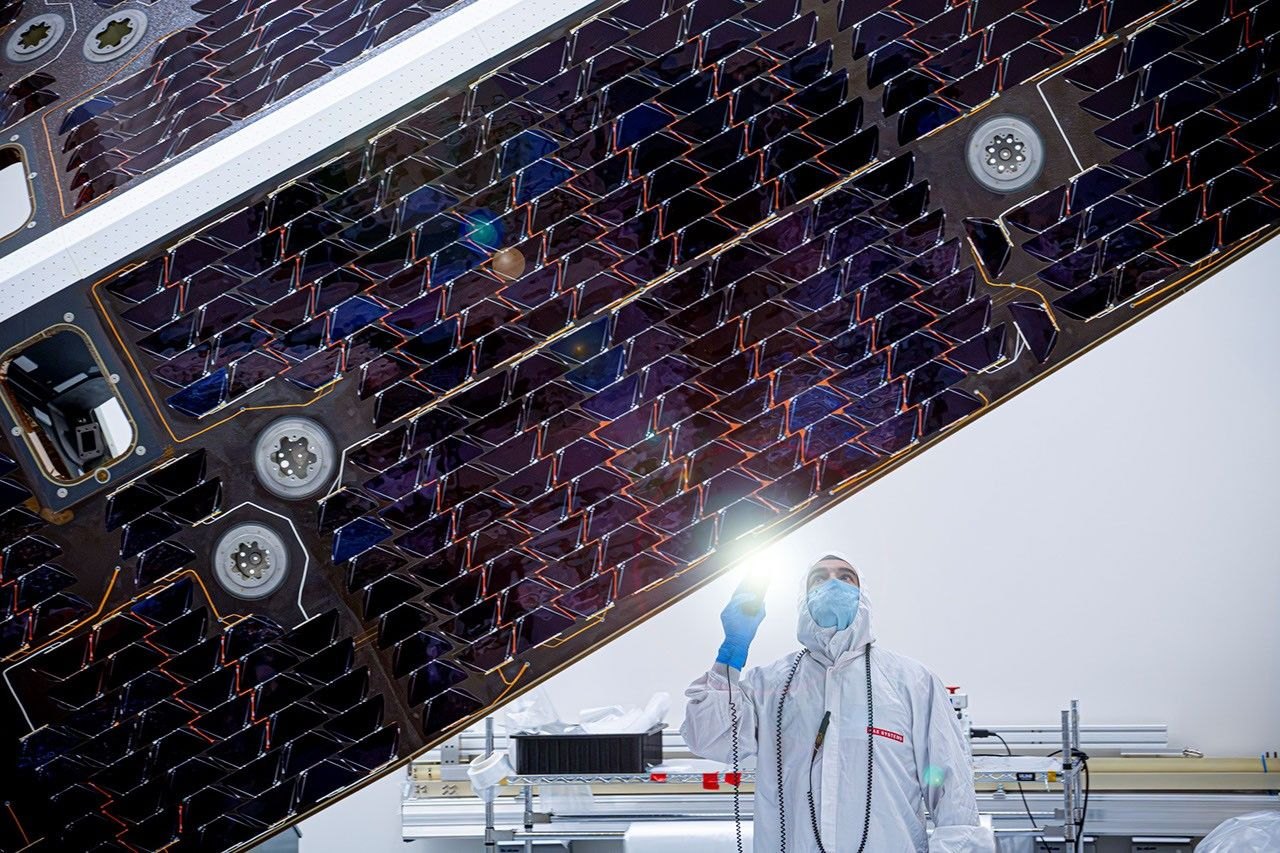
NASA’s Near-Earth Object Surveyor team has finished building solar arrays into the spacecraft’s 20-foot (6-meter) sunshade, its largest component, NASA said. The structure shades the infrared telescope and will also supply all of the spacecraft’s electricity.
One structure that blocks the Sun and makes power
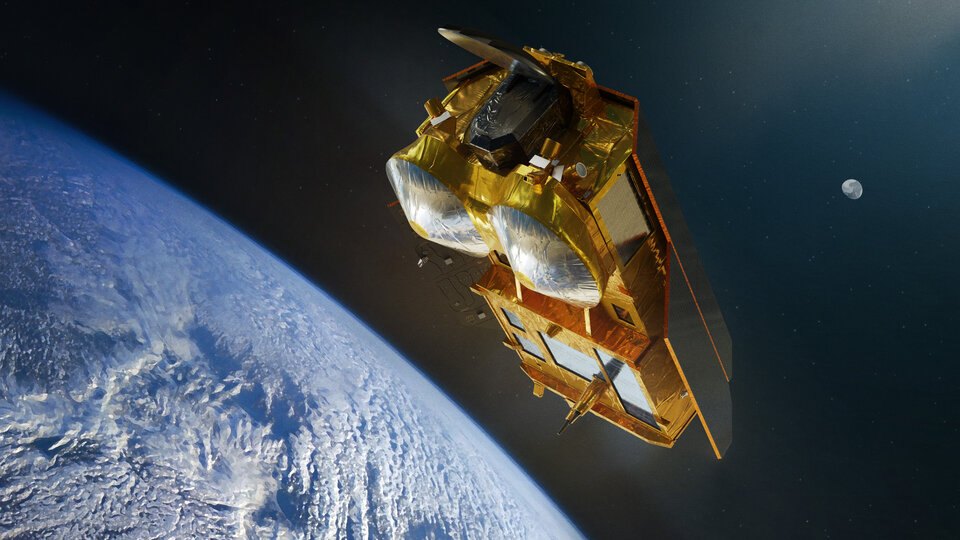
NEO Surveyor is an infrared space telescope built to find asteroids and comets that pass near Earth. Its sunshade does two jobs. It keeps sunlight out of the telescope so the instrument stays cold, and its surface is covered in solar cells.

According to NASA, the structure stands 20 feet (6 meters) tall and is 8 feet (2.4 meters) wide at its base. It is made of two flat panels joined at an angle of 23.5 degrees. Together they carry 864 interconnected solar cells, fitted earlier this year, which can produce up to 2 kilowatts of power. That is enough to charge the batteries that run the spacecraft’s systems, and NASA describes the array as the only power source on board.
NASA says the shade must keep sunlight out of the telescope’s 20-inch (50-centimeter) opening. That matters because the telescope does not look for reflected light. It looks for the heat that asteroids and comets give off after sunlight warms their surfaces.

From Stockton to Boulder in about a year
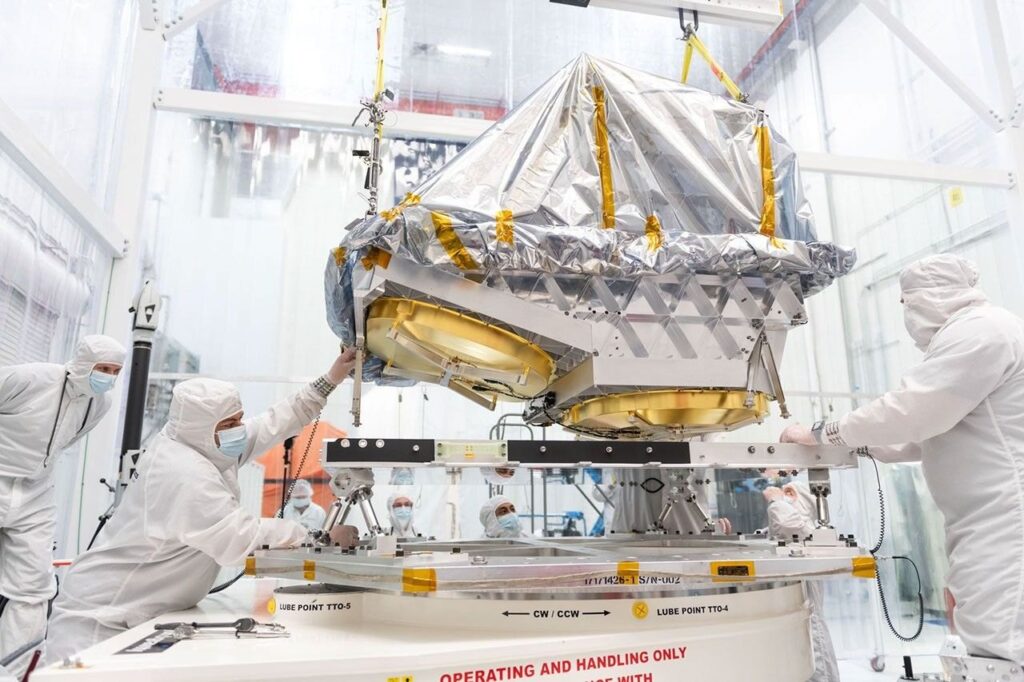
NASA gives a clear production chain. Applied Aerospace in Stockton, California, built the structure. SolAero Technologies in Albuquerque, New Mexico, fitted the solar cells in January. Environmental testing followed in March at a commercial thermal vacuum facility in El Segundo, California. A thermal vacuum chamber removes the air and swings the temperature up and down to imitate space.
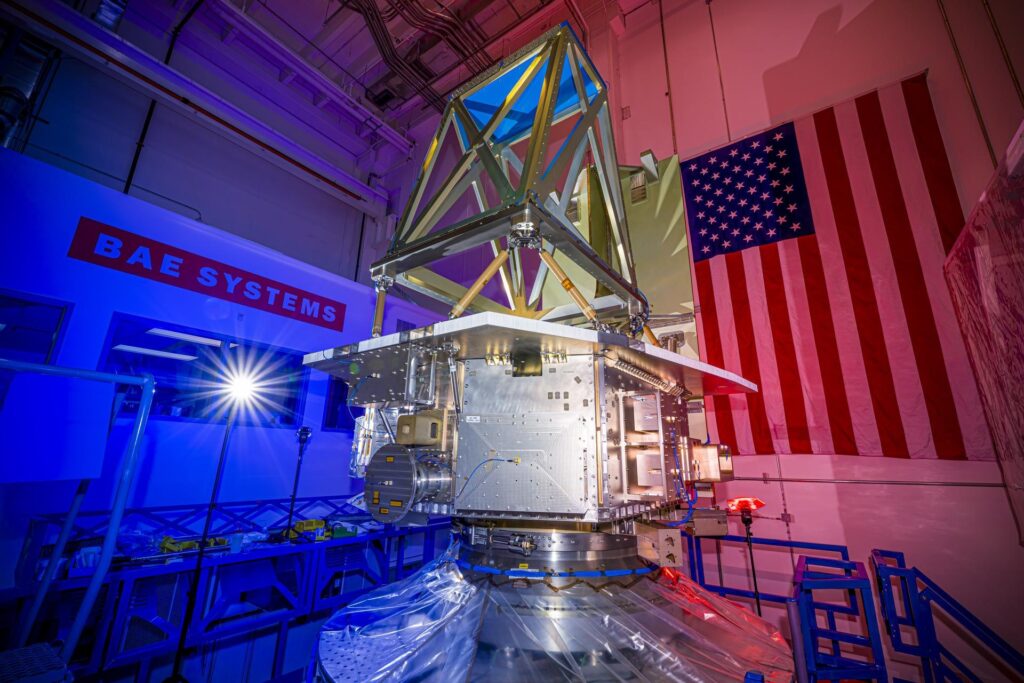
The sunshade then went to BAE Systems Space & Mission Systems in Boulder, Colorado, in May, ahead of schedule. Since then the team has added coarse Sun sensors, which help the spacecraft work out which way it is pointing, along with temperature sensors. NASA says the solar array has also completed functional and performance testing. Technicians inspected the panel in a clean room in July.
Two infrared bands give a size estimate
The telescope has a pair of infrared detector arrays, and each one produces a 16-megapixel mosaic of the sky. Both look at the same patch of sky in two different infrared bands. Comparing the two reveals an object’s temperature, and temperature gives NASA an estimate of its size. Size is one of the key facts for judging how much concern an object deserves.
The design also lets the telescope search toward the Sun. Ground-based optical telescopes struggle there, so some of the hardest-to-find objects may be located in that direction, NASA says.
Who relies on a complete census of near-Earth objects
The audience for this work is planetary defense teams and the space agencies that plan around asteroid encounters. NASA’s mission page says finding near-Earth objects is required by law, and gives a planned launch no earlier than September 2027. A survey that catches dark, Sun-side objects fills gaps that optical searches leave.
Objects already known show why precise sizes matter. In our guide to asteroid Apophis and its 2029 flyby, NASA gives a mean diameter of about 340 meters and a pass of roughly 32,000 kilometers above Earth’s surface. NASA also says Apophis poses no impact risk for at least 100 years. Temperature-based size estimates for many more objects would let scientists sort such cases with better data.
For the mission itself, the finished sunshade is a milestone. The largest part of the spacecraft now has its power system built, tested and fitted with its sensors, and NASA’s launch target of no earlier than September 2027 is on the mission page.