NASA now plans the first Artemis Moon landing on Artemis IV, in 2028
At Kennedy Space Center, NASA leaders said Artemis III will fly four astronauts in low Earth orbit in 2027, and Artemis IV will be the first to land on the Moon.

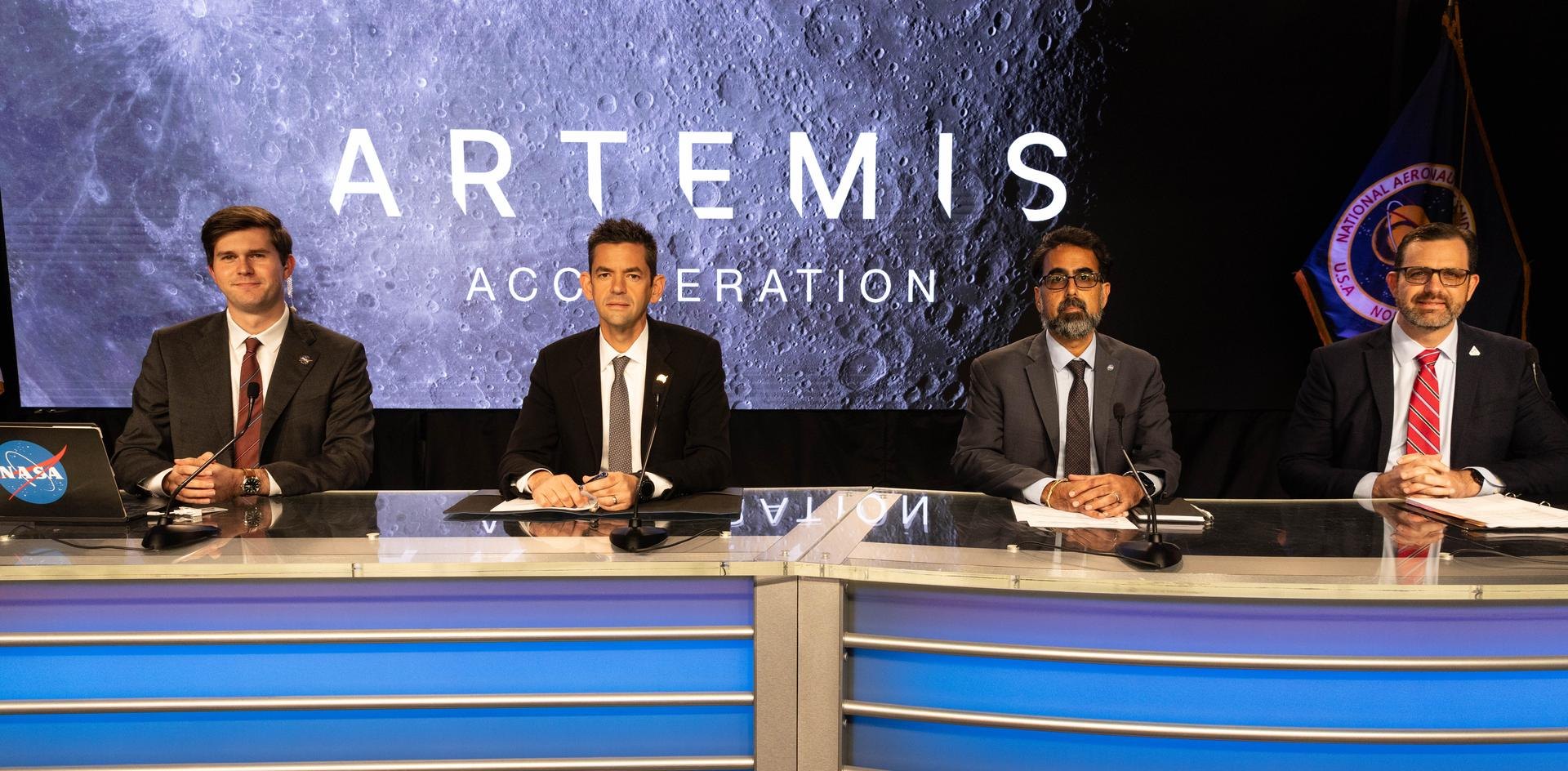
NASA Administrator Jared Isaacman and other agency leaders laid out the agency’s path to a 2028 lunar landing on Oct. 23. Artemis III will fly four astronauts in low Earth orbit in 2027, and Artemis IV will be the first to land.
Artemis III stays near Earth, and Artemis IV lands
The briefing took place at NASA’s Kennedy Space Center in Florida. Speakers were Isaacman, Associate Administrator Amit Kshatriya and Jeremy Parsons, NASA’s Artemis program manager, with Deputy Press Secretary George Alderman. NASA said the update covered Artemis III and the work under way to speed up preparations for Artemis IV, the flight that will put astronauts on the Moon’s surface for the first time in the program.

That order is the key change from the early Artemis plan, which put a landing on the third flight. Artemis III is now a test flight. Its four astronauts will stay in low Earth orbit, the region a few hundred kilometers up where the International Space Station flies, and will test critical systems that future lunar landings depend on. NASA’s page for the briefing does not list the specific acceleration measures. It points to a recording of the news conference for the details.
What is already built for Artemis III
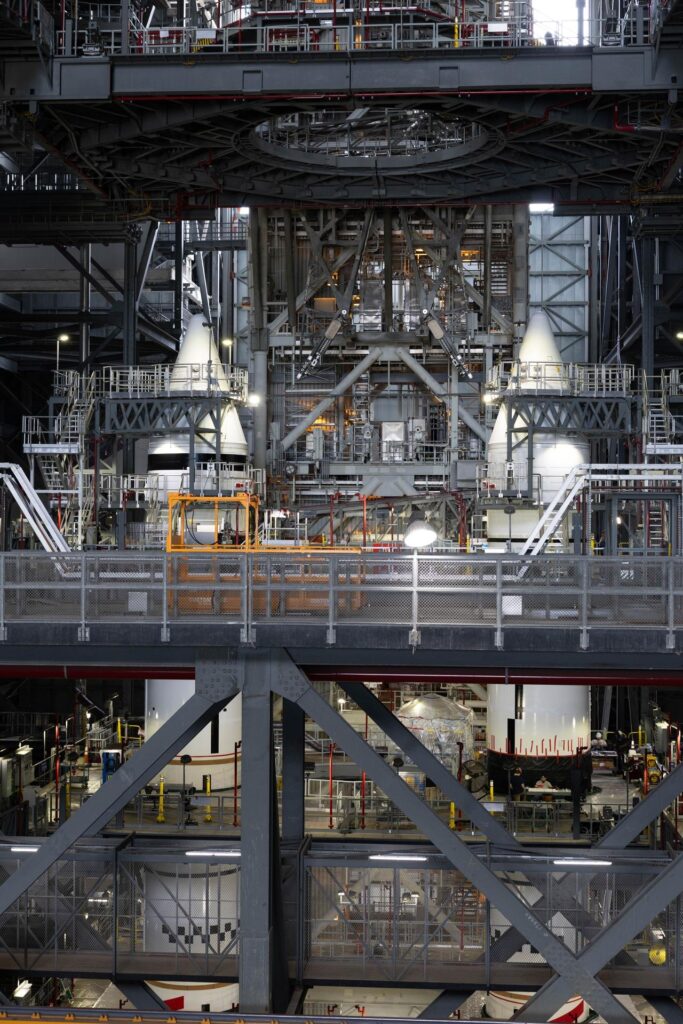
Hardware for the 2027 flight is moving through Kennedy. In an Oct. 13 update, NASA said crews finished stacking the two solid rocket boosters on Sept. 30 in the Vehicle Assembly Building. All four RS-25 engines are installed on the Space Launch System (SLS) core stage, the rocket’s central tank-and-engine section. The core stage is next to be joined to the boosters “in the coming weeks.” The stack then rolls to Launch Pad 39B for a fueling test in the coming months, according to NASA.

Crew training is under way. The Artemis III crew is NASA’s Randy Bresnick, Frank Rubio and Andre Douglas, plus ESA’s Luca Parmitano. They have practiced recovery with U.S. Navy helicopters off San Diego and trained in the Orion suits. In September they also visited SpaceX and Blue Origin, the two companies building lunar landers, to see their progress, NASA said.
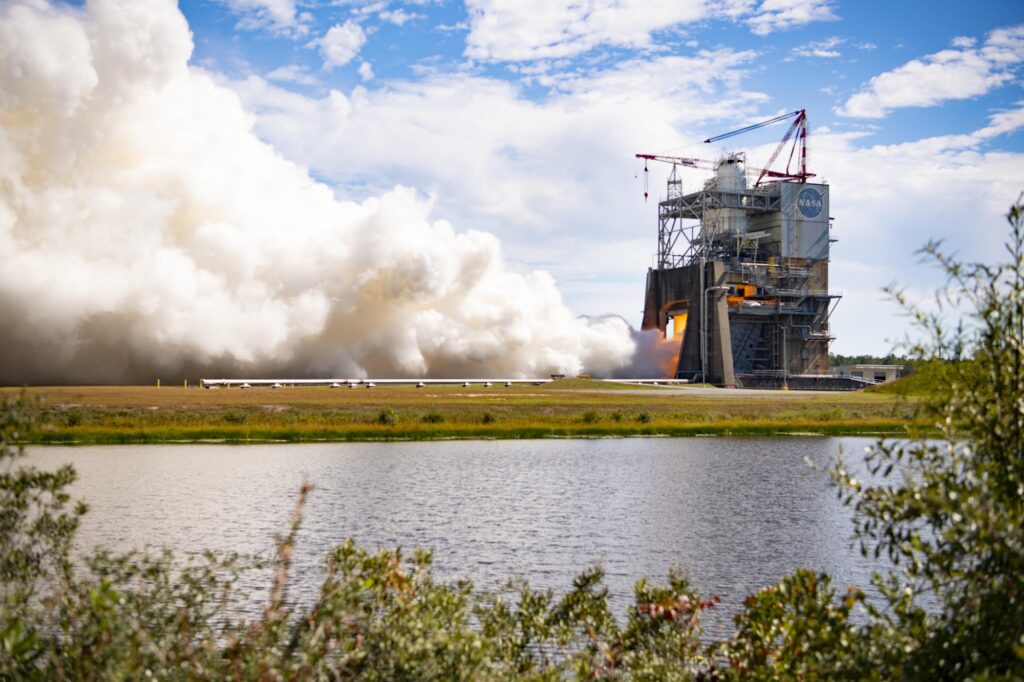
Engine testing continues too. On Oct. 21, NASA fired RS-25 engine No. 10001 for about 500 seconds on the Fred Haise Test Stand at Stennis Space Center in Mississippi. That is the same burn length as during an SLS launch. The engine ran at up to 111% power, and the test validated a new thermal protection system that shields the engine nozzle from launch heat, NASA said. This engine is a development unit and will not fly.

Two lander builders, one deadline
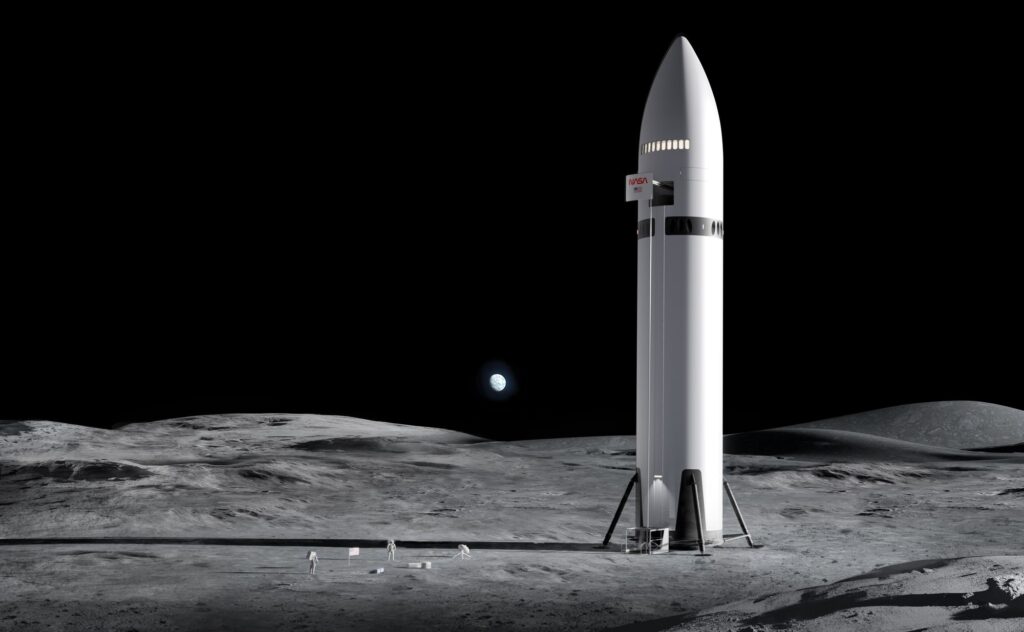
A landing in 2028 depends on more than the rocket. SLS and the Orion capsule carry the crew toward the Moon, but the last leg to the surface needs a lander. NASA’s September crew visit to both SpaceX and Blue Origin shows the agency is keeping close watch on two commercial lander programs at the same time, rather than relying on one.
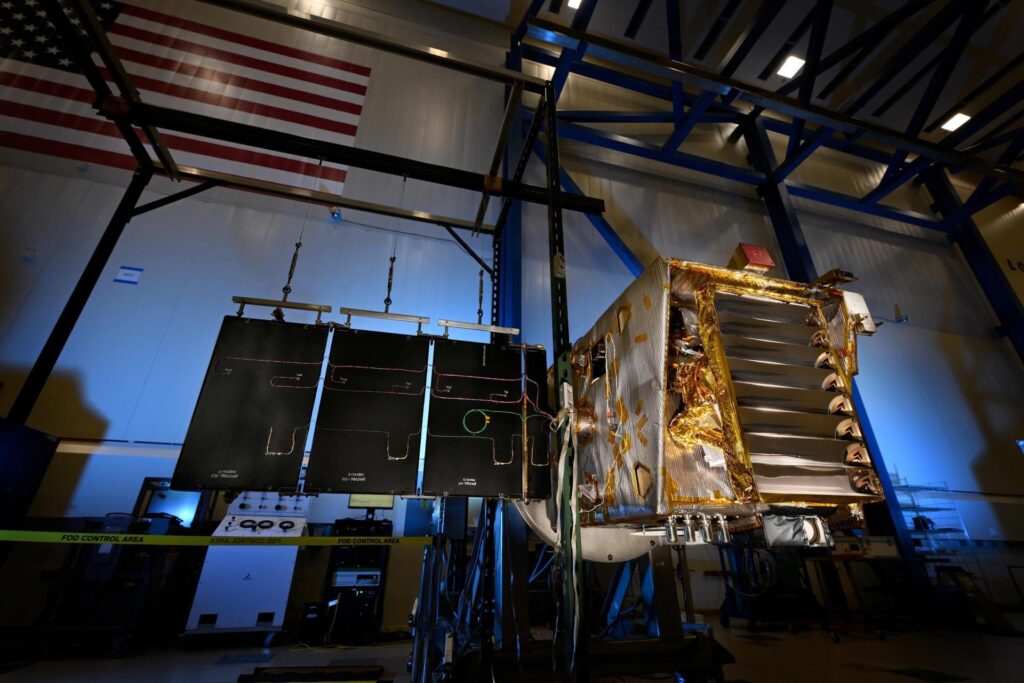
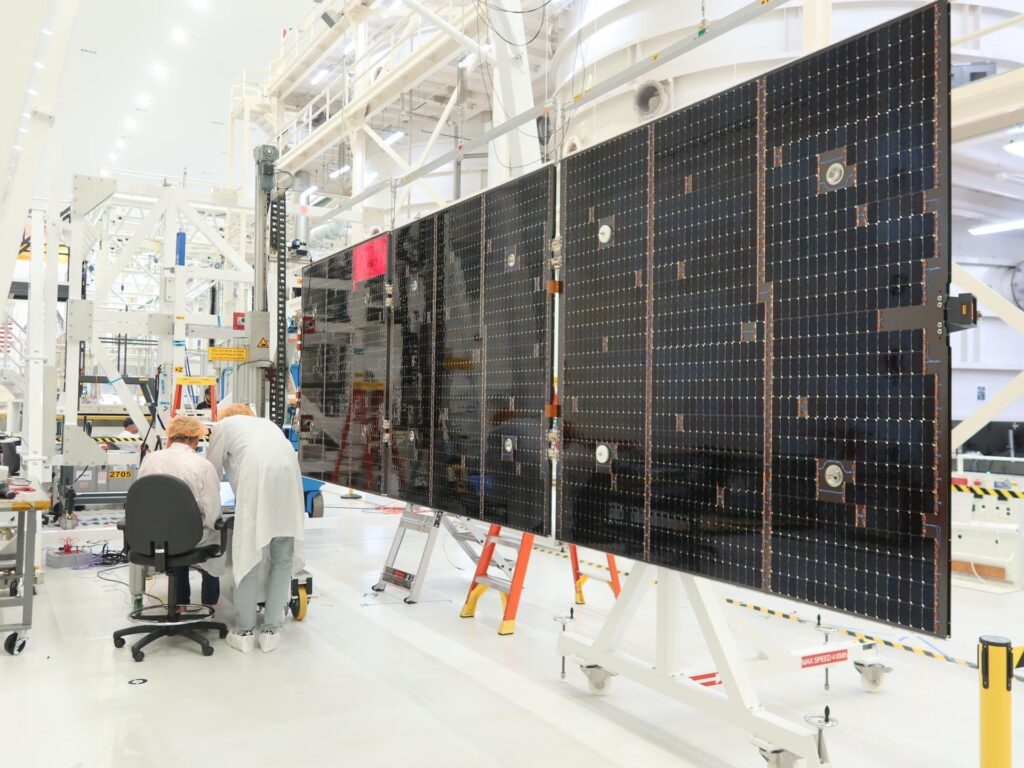
Artemis III gives the lander companies a deadline of their own. Systems tested in Earth orbit in 2027 have to be proven before Artemis IV can attempt a descent. The Orion hardware shows the same pacing. ESA-provided solar array wings, built by Airbus, were recently inspected. Each produces 11 kilowatts and spans about 63 feet, according to NASA.

The schedule is also tied to ground work. NASA said Pad 39B’s flame deflector is being refurbished after minor damage from the Artemis II launch, though the flame trench bricks were not affected. Three large pieces of structure for the SLS upper stage section, including a spacer and two adapters, are on track to ship to Kennedy early next year.
NASA has not said in the material published so far what it will change to reach 2028. The recording of the Oct. 23 briefing is the first place to look for those details.