Roman telescope’s instruments now line up to a hair’s breadth, and starlight tests come next
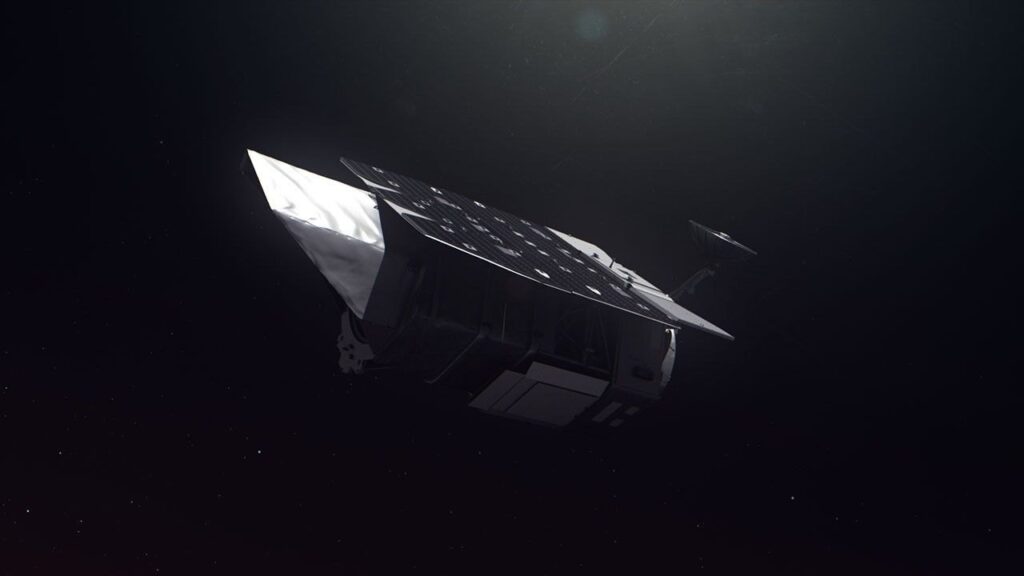
NASA's Nancy Grace Roman Space Telescope has finished aligning its instruments in space, a key commissioning step before science begins and before the coronagraph's starlight tests.

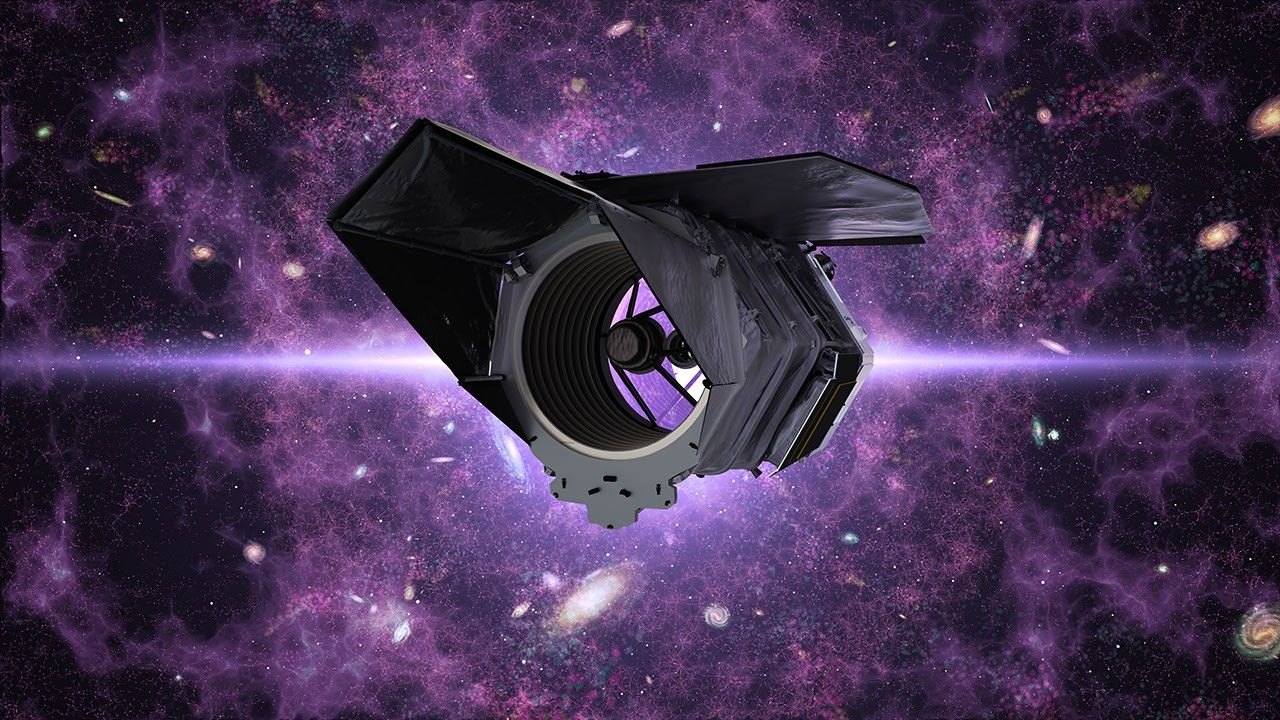
NASA’s Nancy Grace Roman Space Telescope has completed a key commissioning milestone: its instruments are now precisely aligned in space. The team compared where stars appeared with where they were expected, then corrected the telescope’s internal map.
Why a telescope needs to re-learn its own layout
Engineers lined up Roman’s optics and instruments on the ground before launch. Vibration during launch, temperature changes and the absence of gravity can all shift parts slightly, so the team has been running test observations to measure those shifts and update what NASA calls Roman’s “internal map.”

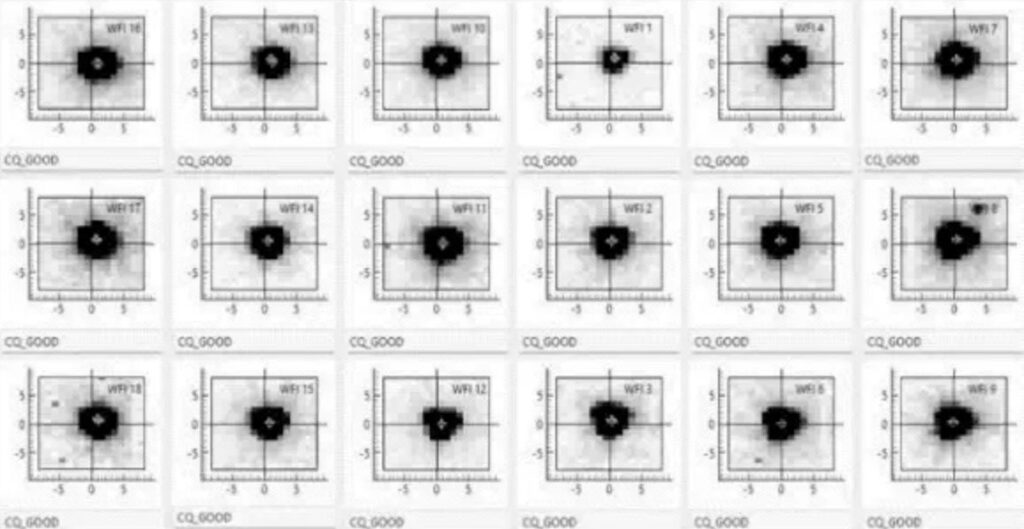
The map matters most for guiding. The Wide Field Instrument, Roman’s main camera, has 18 detectors that work together when the telescope locks onto guide stars, the reference stars it uses to aim and to correct tiny drifts. Tyler Desjardins of the Space Telescope Science Institute (STScI) in Baltimore explained that if the map puts a star on the wrong detector position, guiding runs into trouble.
NASA released an animation showing stars that first sat off-center in Roman’s guide windows and were then lined up by small adjustments. STScI astronomer Tony Sohn said Roman is now “internally aligned to within a tiny fraction of a hair’s breadth of perfection.”

One instrument that also steers the telescope
The Wide Field Instrument is both the primary instrument and the guider. While the Coronagraph Instrument images nearby stars to look for planets and dusty disks, the Wide Field Instrument will track stars in an adjacent area of sky, which keeps the observatory pointing steadily.
That arrangement has a side benefit. NASA’s Dominic Benford said the coronagraph must stare at a star for a long time, so the mission will collect “a random sampling of bonus deep fields” along the way, mostly in places never surveyed deeply before.
The coronagraph is a starlight blocker. Its masks absorb and redirect the glare that spills around a star when light forms an image, so faint planets nearby can show up. Brian Kern, an optical engineer at NASA’s Jet Propulsion Laboratory, said each mask has strict alignment tolerances. The team moved the secondary mirror, a smaller mirror linking the telescope to the coronagraph, and the masks and optics inside the instrument.
Next: More than 3,000 moving parts for starlight control
The coronagraph’s deformable mirrors come next. Kern said the team will exercise more than 3,000 of the small moving parts that shape them. These mirrors take starlight rejection further in steps, which is how the instrument hopes to see planets so close to their stars. This was demonstrated in a lab with an artificial space environment, but Kern called the second stage of active starlight control in space, with real stars and real planets, a record-breaking first.
What still has to be proven
Alignment is a precondition, not a result. Roman’s science case rests on stability: Benford said it must be at least ten times more stable than Hubble or Webb. Meeting that during long observations is something only the remaining commissioning tests can show, and the coronagraph’s deepest starlight suppression has not yet been demonstrated with real stars.
NASA’s commissioning page says Roman is on a three-month journey to Sun-Earth Lagrange Point 2, a gravitationally stable spot, where it will settle into a halo orbit, and that the schedule may change. NASA has not given a date in this post for the start of science operations.
The payoff is already being prepared. Roman is meant to hunt for dark matter through gravitational lensing, where a massive object bends light from objects behind it. Hubble recently supplied nine example lenses showing Roman what to look for, and a precisely aligned telescope is what lets it measure their distorted shapes accurately.