Artemis II: The crew, the flight around the Moon and what comes next for Artemis
Artemis II sent four astronauts around the Moon and back in April 2026; Artemis III now tests landers in Earth orbit, and Artemis IV is planned to land in 2028.

Dates and facts checked on the official pages on October 24, 2026.
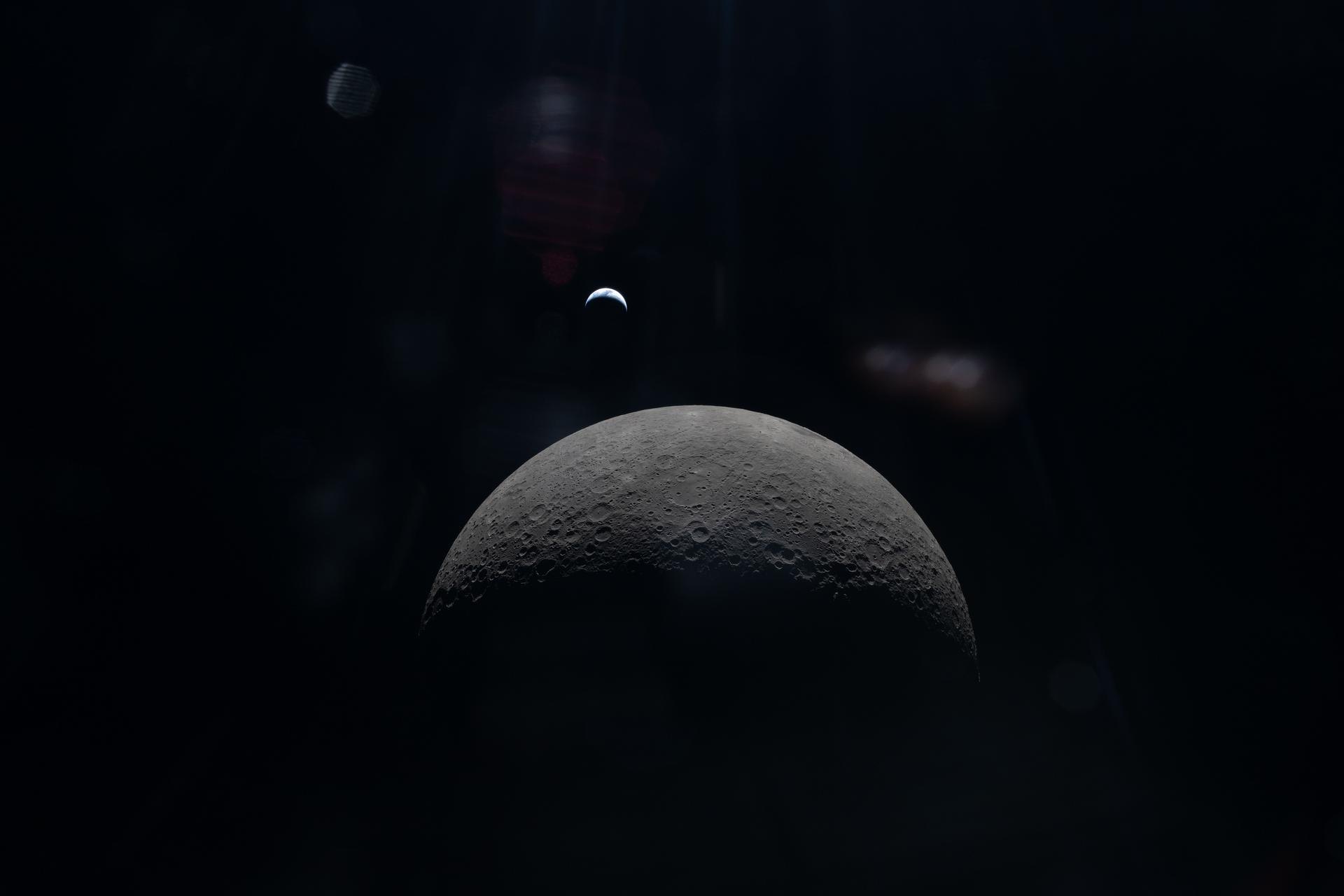
Artemis II was NASA’s first crewed flight around the Moon in more than 50 years. Four astronauts launched on April 1, 2026, looped around the far side of the Moon and splashed down in the Pacific Ocean off San Diego on April 10, 2026. It did not land: the first Artemis landing is now planned for Artemis IV, in 2028.
Four astronauts flew Artemis II, three from NASA and one from Canada
The crew was Reid Wiseman, Victor Glover and Christina Koch from NASA, and Jeremy Hansen from the Canadian Space Agency. According to NASA, Wiseman was commander and Glover was pilot. Koch and Hansen were mission specialists, crew members who run experiments and systems in flight.

Hansen’s seat made the flight an international first: a Canadian astronaut traveled to the Moon’s neighborhood, under an agreement between NASA and the Canadian Space Agency.
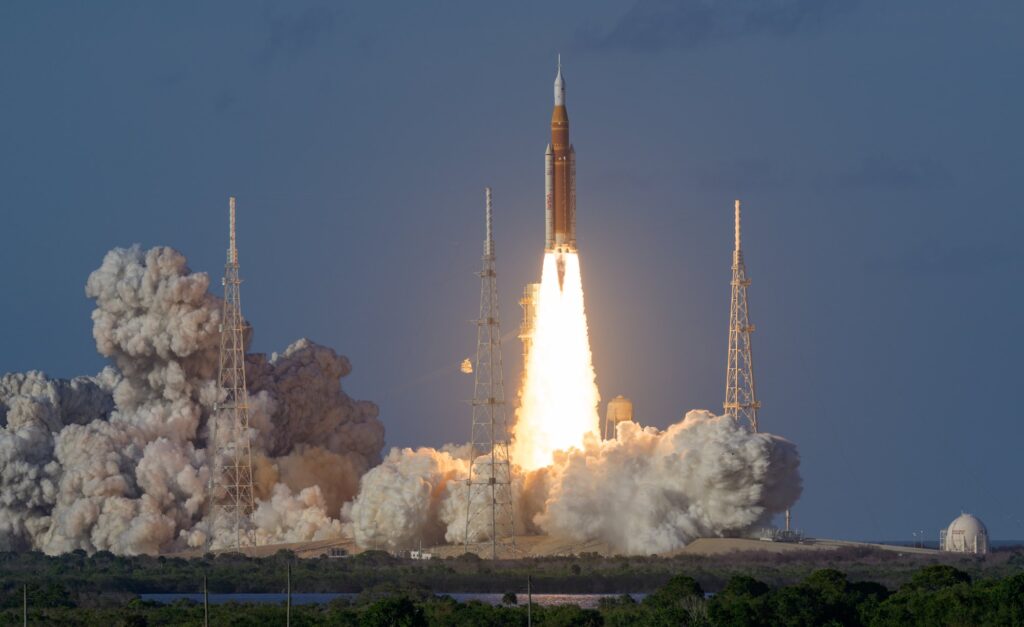
They flew in the Orion spacecraft, the capsule built to carry astronauts beyond Earth orbit. It rode on the Space Launch System (SLS), NASA’s large rocket, from Launch Pad 39B at Kennedy Space Center in Florida.

Why NASA flew people around the Moon before trying to land
Artemis I in November 2022 tested the rocket and capsule with no one aboard. Artemis II was the first test with a crew, to confirm that Orion’s life support, propulsion, power, temperature control and navigation work for people in deep space, according to NASA.
The crew also practiced manual piloting and maneuvering near another object, skills later missions need for docking with a lander. NASA describes Artemis II as a stepping stone to Artemis III and later flights.

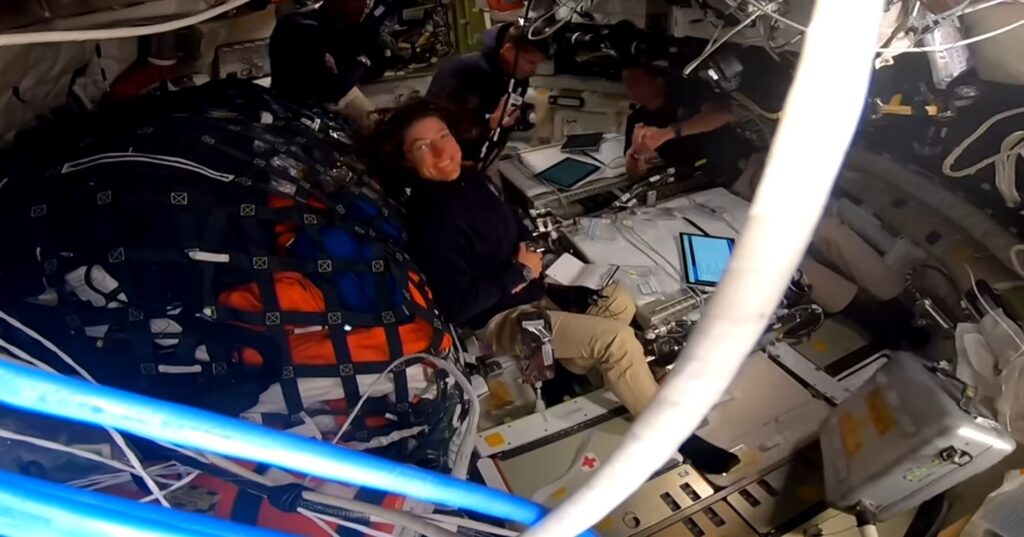
The flight took nearly 10 days and went farther than any crew before
Orion lifted off at 6:35 p.m. EDT on April 1, 2026 (22:35 UTC). NASA’s release lists the total flight time as nearly 10 days, and the mission page gives 9 days, 1 hour and 32 minutes.
On April 6 the crew passed behind the Moon. For about 40 minutes the Moon blocked radio signals to Earth, a planned loss of signal. NASA reports Orion came within about 4,067 miles of the lunar surface at its closest.

That flyby set a distance record. At 12:56 p.m. CDT on April 6, the crew passed 248,655 miles from Earth, beating the mark set by Apollo 13 in 1970. They went on to reach 252,756 miles from Earth at the farthest point. The whole trip covered 695,081 miles, according to NASA’s splashdown release.
| Milestone | Date | Detail from NASA |
|---|---|---|
| Launch | April 1, 2026 | 6:35 p.m. EDT, Pad 39B, Kennedy Space Center |
| Passes the Apollo 13 distance record | April 6, 2026 | 12:56 p.m. CDT, 248,655 miles from Earth |
| Closest to the Moon | April 6, 2026 | About 4,067 miles above the surface |
| Farthest from Earth | April 6, 2026 | 252,756 miles |
| Splashdown | April 10, 2026 | 5:07 p.m. PDT (00:07 UTC on April 11), off San Diego |
Figures checked on NASA pages on October 24, 2026.
NASA said the crew proposed two names for lunar craters, to be submitted to the International Astronomical Union, the body that approves names for features on the Moon. One is “Integrity,” after the Orion spacecraft, and the other honors Wiseman’s late wife, Carroll.
The return: A fiery re-entry and a Pacific splashdown
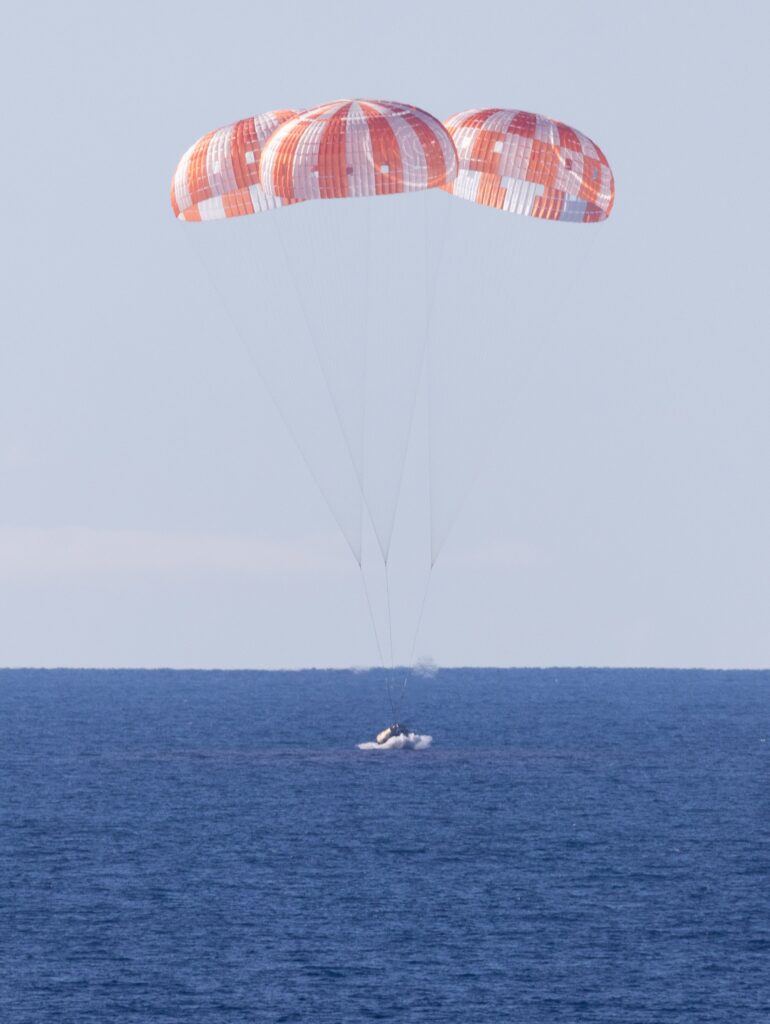
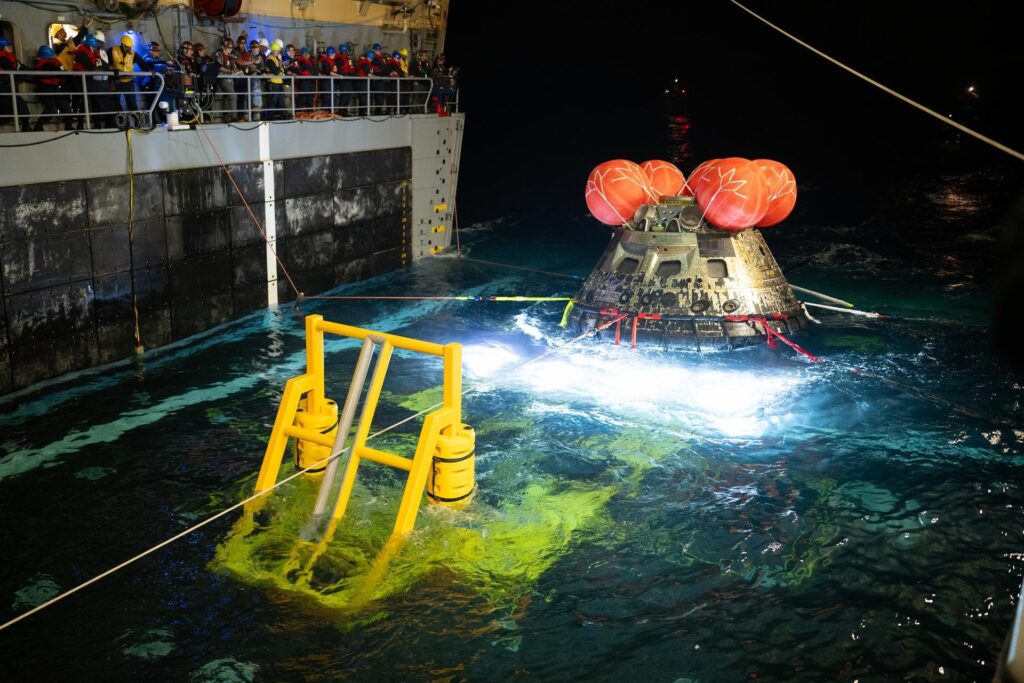
On April 10 the crew module separated from the service module, the section that supplies power and propulsion, at 7:33 p.m. EDT. Entry began at 7:53 p.m., and the parachutes opened shortly after. Splashdown came at 5:07 p.m. PDT, and the USS John P. Murtha recovered the capsule and crew. The astronauts then flew to NASA’s Johnson Space Center in Houston.
Re-entry is the hardest test for Orion’s heat shield, the layer that protects the capsule from temperatures above 4,000 degrees Fahrenheit. On Artemis I, pieces of its charred outer layer broke off in 103 places. NASA’s analysis found only 9 on Artemis II, a result it credits partly to a shorter path from entry to splashdown. The details are in the Artemis II heat shield results.
Artemis III will stay in Earth orbit and test the landers
NASA changed the plan after Artemis II. Artemis III, set for 2027, is now a crewed test in low Earth orbit rather than a Moon landing. NASA lists its crew as Randy Bresnik, Frank Rubio and Andre Douglas of NASA and Luca Parmitano of the European Space Agency (ESA).
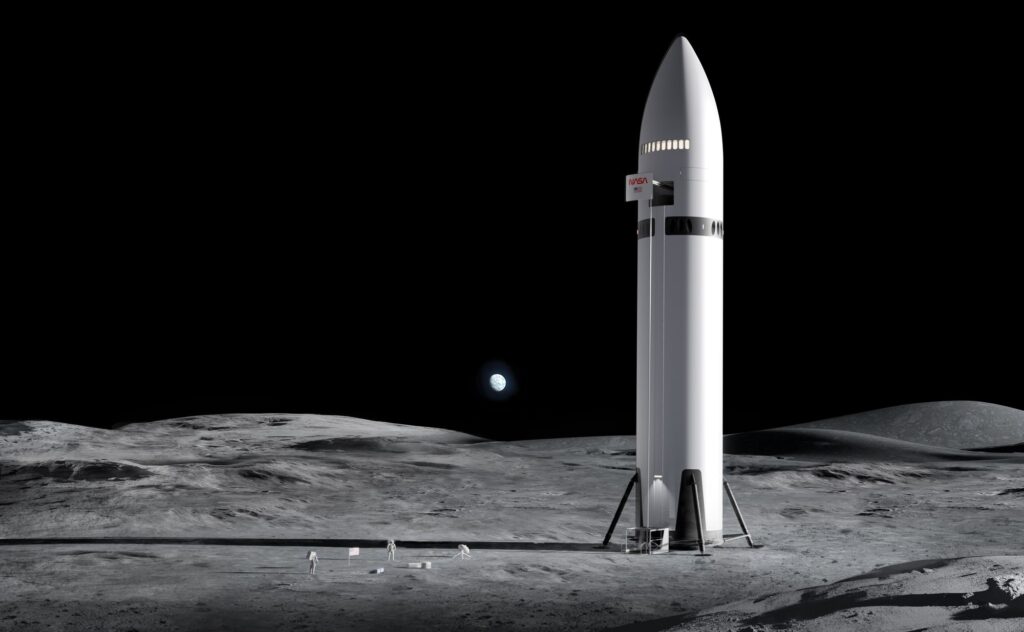
The planned 14-day flight tests the docking and living arrangements that a landing needs, using test versions of the landers from Blue Origin and SpaceX:
- A Blue Moon Mark 2 test article launches first into a circular orbit about 273 miles up. It can wait there up to 30 days.
- Orion launches on SLS once the lander is confirmed healthy, then raises its orbit to about 345 miles and rendezvous with Blue Moon.
- Orion docks, and the crew spends about two days inside the lander evaluating the cabin, controls and life support.
- A Starship Version 3 test article launches from Florida into an orbit about 237 miles up. Orion docks for up to two hours, but the crew does not enter it.
- Up to five more days cover tests of the Orion Crew Survival System suits, sensors and science experiments, before splashdown off California.
The full sequence is covered in the Artemis III docking test plan.
Artemis IV is now the first mission planned to land, in 2028
NASA’s Artemis page says the first crewed Moon landing under Artemis “will take place in 2028” on Artemis IV. NASA Administrator Jared Isaacman and other leaders briefed reporters at Kennedy Space Center on October 23, 2026 on efforts to speed up the schedule. The agency has not yet published the specific measures, and the briefing page does not say which lander will fly.
NASA’s Artemis III article describes the landing site as near the Moon’s South Pole. More on the shift is in NASA’s move of the first landing to Artemis IV, and on how the two landers will behave in orbit in the new Starship and Blue Moon flight plans.
Hardware for Artemis III is in work. Crews finished stacking the two solid rocket boosters in the Vehicle Assembly Building by September 30, and on October 21 NASA fired a development RS-25 engine at Stennis Space Center for about 500 seconds. That engine will not fly.
| Mission | When | Crew | What it does |
|---|---|---|---|
| Artemis I | November 2022 | None | Uncrewed test of SLS and Orion |
| Artemis II | April 2026 | 4 astronauts | Crewed flight around the Moon, no landing |
| Artemis III | 2027 | 4 astronauts | Earth-orbit docking tests with commercial landers |
| Artemis IV | 2028 | Not announced | First planned crewed landing |
Dates checked on NASA pages on October 24, 2026. The 2027 and 2028 dates are NASA targets and can change.
Common questions
Did Artemis II land on the Moon?
No. Artemis II flew around the Moon, coming within about 4,067 miles of the surface, and returned to Earth. It was a crewed test of the spacecraft, not a landing mission.
Which Artemis mission will land on the Moon?
Artemis IV. NASA says the first crewed landing under Artemis will take place in 2028. Artemis III, planned for 2027, stays in low Earth orbit.
Who was on the Artemis II crew?
Commander Reid Wiseman, pilot Victor Glover and mission specialist Christina Koch of NASA, and mission specialist Jeremy Hansen of the Canadian Space Agency.
When did Artemis II launch and splash down?
It launched at 6:35 p.m. EDT on April 1, 2026 and splashed down at 5:07 p.m. PDT on April 10, 2026 (00:07 UTC on April 11), in the Pacific Ocean off San Diego.
Will Artemis III land on the Moon?
No. NASA plans Artemis III as a 14-day crewed test in Earth orbit in 2027, docking with test versions of Blue Origin’s and SpaceX’s landers.