

Every so often, buzz spreads online about the world going dark on a specific date. Recently, the rumor that a solar eclipse will plunge Earth into darkness on August 2nd, 2025 has been making the rounds. But here’s the first thing to get straight: NASA confirms there won’t be any solar eclipse then. So, that viral blackout talk? It’s just a mix-up.
What’s actually behind the confusion is an upcoming event on August 2nd, 2027—the longest total solar eclipse visible from land this century. This is the eclipse that’s truly worth marking on your calendar.
Clearing up the facts: no blackout in 2025, but a spectacular show in 2027
The only eclipse in 2025 is on September 21st, but it will only be a partial eclipse, visible across remote areas like parts of the Pacific Ocean, Fiji, New Zealand, and Antarctica. No dramatic darkness hitting the continents.
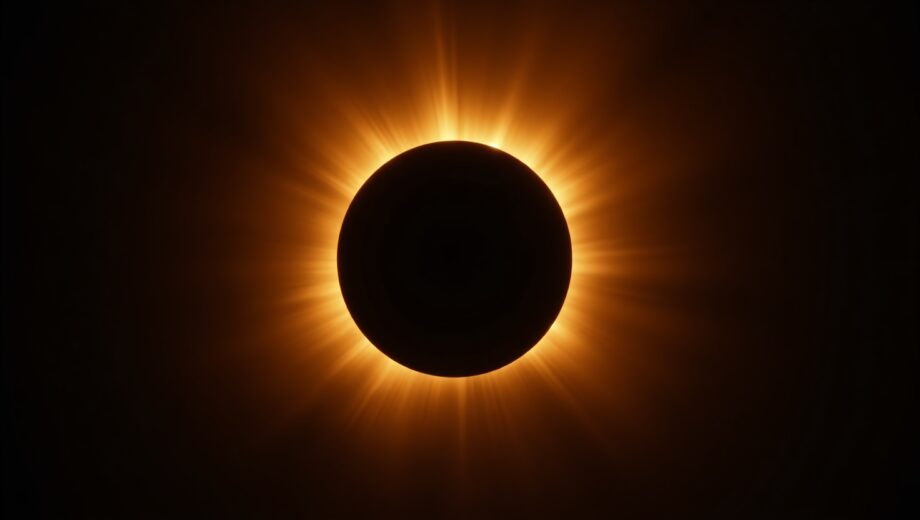
On the other hand, the August 2nd, 2027 eclipse is set to amaze. During totality, the moon perfectly blocks the sun‘s disk, plunging locations along its narrow path of totality into near-complete darkness for several minutes.
This path stretches roughly 258 kilometers (160 miles) wide and spans over 15,200 kilometers (9,462 miles) across 11 countries, including Spain, Morocco, Egypt, Saudi Arabia, and Somalia among others. Imagine millions of people scattered across three continents witnessing several minutes of night in the middle of the day.
What makes the 2027 eclipse last so long?
Typical total solar eclipses last just a couple of minutes, but this one will clock in at 6 minutes and 23 seconds at its peak near Luxor, Egypt, making it uniquely long. This happens due to a rare cosmic alignment:
- The moon will be near its closest point to Earth (called perigee), so it appears larger in the sky.
- At the same time, Earth will be near its farthest point from the sun (aphelion), making the sun appear slightly smaller.
These factors create a bigger and slower-moving shadow, allowing the total eclipse to last much longer than usual.
More than just an incredible view: scientific goldmine and cultural magnet
The 2027 eclipse is a dream come true for scientists. Normally, the sun’s outer atmosphere, the corona, is hidden by the sun’s bright face. During totality, the corona becomes visible, offering a rare window into solar activity — from magnetic fields to solar flares. This helps improve our understanding of the solar wind and space weather, which directly impacts satellites, communications, and power systems here on Earth.
Also, the prolonged darkness provides extended time for astronomers to capture high-resolution images and spectroscopy data with sophisticated instruments. Insights gained during this eclipse will enhance models and forecasts, helping us prepare better against disruptive solar storms.
Researchers will also track how Earth’s atmosphere reacts to the sudden drop and return of sunlight, studying temperature changes, wind patterns, and ionospheric responses. This adds valuable knowledge about our planet’s environment.
On a cultural and tourism level, this event is expected to draw huge crowds. Places like Luxor’s ancient temples, coastal Tunisia, and southern Spain could be bustling with visitors combining eclipse-viewing with exploring rich local history and landscapes.
For most people alive today, the August 2nd, 2027 total solar eclipse will be a once-in-a-lifetime experience with no similar event until 2114.
How to catch the eclipse safely and why you should start planning now
If you want to be part of this celestial event, the key is to position yourself within the path of totality. Luxor, Egypt; Tarifa, Spain; and coastal areas in Tunisia are top picks based on clear sky histories.
But plan ahead! Accommodations in prime viewing spots will likely fill up quickly. And a heads up on safety: do not look directly at the sun during the eclipse without certified glasses or proper solar filters, except during the brief moments of totality when the sun is fully covered. Eye safety is paramount.
Even if you’re outside the totality path, much of Europe, Africa, and parts of Western Asia will see a significant partial eclipse—a pretty impressive natural spectacle in itself.
Why this matters beyond just a pretty light show
While eclipses spark wonder and awe, they’re also reminders of the intricate dance between Earth, moon, and sun—connections that influence our climate and technology in profound ways.
So, while the viral rumors of a blackout in 2025 are just myths, the reality is a rare, scientifically invaluable, and breathtaking celestial event coming in 2027. Whether you’re a curious traveler, a dedicated astronomer, or just someone who loves epic moments, this eclipse is not to be missed.
Mark your calendars, start planning, and get ready to witness one of nature’s most spectacular performances!
