

SpaceAndSky: Your Portal to Space Exploration and Cosmic Discovery
  • News
    NewsShow More
    25 years of research on the International Space Station: MIT’s pivotal role in expanding our cosmic horizons
    November 4, 2025
    The mysterious dark comets prowling our Solar System: What they mean for Earth and space science
    August 17, 2025
    Meet 3I/Atlas: The fastest interstellar comet ever recorded
    August 17, 2025
    NASA’s bold push to the moon’s south pole: Firefly Blue Ghost and the lunar gold rush
    August 7, 2025
    Hubble Network’s satellite upgrade promises a true global Bluetooth layer
    August 7, 2025

Archives

  • November 2025
  • August 2025

Categories

  • Deep Space
  • Insights
  • Missions
  • News
  • Planets
  • Skywatching
  • Space Explained
  • Technology
  • Uncategorized
Reading: Australia’s first orbital rocket launch in 54 years ends in just 14 seconds
Search Space news
Font ResizerAa
SpaceAndSky: Your Portal to Space Exploration and Cosmic DiscoverySpaceAndSky: Your Portal to Space Exploration and Cosmic Discovery
  • News
Search
  • News

A wall of fire at the edge of the solar system: What Voyager’s discoveries reveal about the helopause

Space&Sky
Space&Sky
August 4, 2025
FacebookLike
InstagramFollow
YoutubeSubscribe
TiktokFollow
  • About us
  • Advertise with us
  • Privacy Policy
  • Terms and Conditions
  • Affiliate links Disclaimer
© Foxiz News Network. Ruby Design Company. All Rights Reserved.
Uncategorized / Australia’s first orbital rocket launch in 54 years ends in just 14 seconds
Uncategorized

Australia’s first orbital rocket launch in 54 years ends in just 14 seconds

Published: August 7, 2025
6 Min Read
Share
SHARE

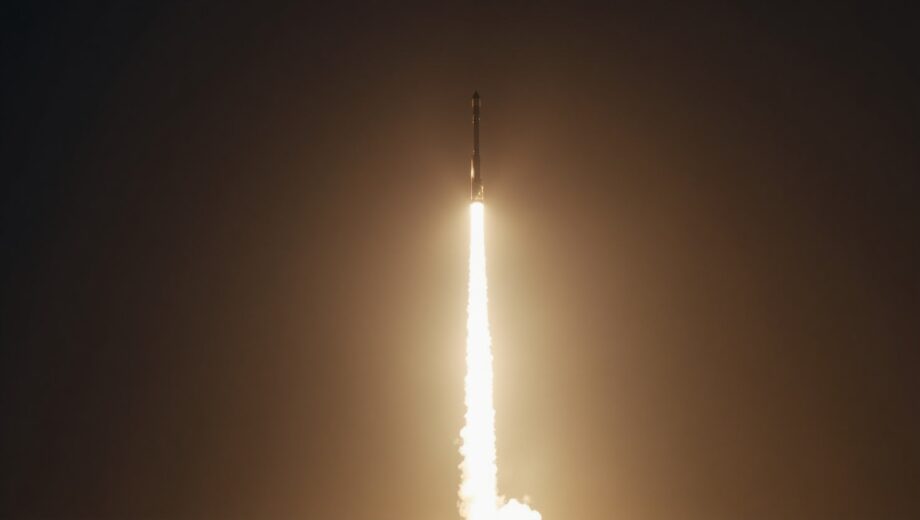
After more than half a century away from the orbital launch scene, Australia boldly attempted to reignite its space ambitions on July 30, 2025. From the Bowen orbital Spaceport in North Queensland, Gilmore Space Technologies rolled out the Aerys rocket, designed to mark a new dawn for Australian spaceflight. Unfortunately, the rocket’s journey lasted a mere 14 seconds before it crashed back near the launchpad, leaving many wondering what went wrong and what this means for Australia’s space future.

A historic attempt with high stakes

Australia’s history in space stretches back to the early days of the space race, with the Woomera rocket range playing host to the British Black Arrow’s launches in 1971. Since then, Australia has watched other nations blaze trails beyond the atmosphere, while quietly building its own ambitions. The Aerys was intended to be a symbol of that ambition: a fully Australian designed and manufactured orbital rocket, capable of carrying small satellites into orbit. At 75.5 feet tall and weighing 30 tons, this 3-stage rocket promised a serious hybrid propulsion system that could generate nearly 25,000 pounds of thrust — impressive metrics for a startup space company.

The launch was highly anticipated not only for its technical goals but as a cultural milestone. Rumor had it the payload included a jar of Vegemite—a quirky nod to Australia’s identity in space exploration. Even if it lacked toast, the symbolism was clear: Australia was ready to stake its claim as a sovereign space power again.

What happened during those fateful 14 seconds?

Just minutes after liftoff, the Aerys rocket encountered critical issues. It managed to clear the launch tower and hover momentarily, but then lost power, veered sideways, and tragically crashed back near the launch site. Despite the brevity of its flight, all four hybrid engines ignited and produced thrust for about 23 seconds combined. The rocket’s promise was evident, even if the outcome was not.

Gilmore Space Technologies and CEO Adam Gilmore reacted with an admirable dose of realism and optimism. As shared on social platforms, Gilmore highlighted that achieving liftoff and conducting the first real test of their propulsion and rocket systems is an invaluable accomplishment for any rocket program. It mirrored the experience of industry giants like SpaceX and Rocket Lab, who endured numerous setbacks before successfully reaching orbit. The quick flight provided critical data that will directly inform the next vehicle, which is already being developed.

“Space is hard. Companies like SpaceX and Rocket Lab required many test flights before reaching orbit. We have gained invaluable insights that will improve our next vehicle.” — Gilmore Space Technologies CEO Adam Gilmore

Why this launch matters—and what’s next

Though the immediate result was a crash, the implications are far from negative. The Australian government’s recent financial support—over $5 million in grants to Gilmore Space Technologies—demonstrates clear national commitment to developing the country’s commercial space capabilities. The Bowen site remains intact and ready for future efforts, with plans for another launch within 6 to 8 months. This persistent spirit is essential in space exploration, where progress is often measured in small yet significant steps forward.

Locally, the launch energized the regional community. Witunday Regional Council Mayor Ry Collins called the event a “huge achievement,” recognizing it as a foundational moment for a future commercial space industry in North Queensland. On a broader scale, it signals Australia’s readiness to rejoin the international race for space innovation.

Failures and setbacks like this one serve as important reminders of the complexities involved in rocketry. The fine line between success and failure in aerospace is well-known, but each attempt teaches invaluable lessons. The Aerys launch was the first orbital test from Australia in over 50 years, and performing this test—even with a short flight—is an important milestone in earning experience and improving designs.

Key takeaways from Australia’s bold space leap

  • The 14-second Aerys flight was a milestone—it demonstrated Australia’s capability to design, build, and launch an orbital rocket for the first time since 1971.
  • Setbacks are part of the journey—like many pioneering space companies, Gilmore Space Technologies is learning valuable lessons fueling advancements for future launches.
  • National and community support is crucial—government grants and local enthusiasm are building the foundation for a burgeoning commercial space industry in Australia.

Final thoughts: A rough start, but promising horizons

While the Aerys rocket’s short flight could be viewed as a failure, it’s more useful to see it as a vital training run on a very steep learning curve. Space exploration is notoriously unforgiving, and Australia’s reentry is a story of ambition, resilience, and potential. The data and experience gained from this launch set the stage for future improvements that could well make Australia a notable player in the global space arena.

So, what’s your take on this dramatic and challenging chapter in Australia’s space story? Do you believe this is just a stumble on a victorious path, or a warning sign for Gilmore Space Technologies’ future? One thing remains clear: the whole world will be watching as Australia aims to turn its space dreams into orbiting realities.

TAGGED:satellitesSpaceX
Share This Article
Facebook Flipboard Whatsapp Whatsapp LinkedIn Reddit Telegram Email Copy Link
Leave a Comment

Leave a Reply Cancel reply

Your email address will not be published. Required fields are marked *

FacebookLike
XFollow
YoutubeSubscribe
TiktokFollow

Trending

Your may also like!

Quick Links

  • About us
  • Advertise with us
  • Privacy Policy
  • Terms and Conditions
  • Affiliate links Disclaimer
Advertise with us

Socials

Follow Aiholics
© 2026 AIholics.com
Accessibility Adjustments

Powered by OneTap

How long do you want to hide the accessibility toolbar?
Hide Toolbar Duration
Colors
Orientation
Version 2.4.0
Manage Consent
To provide the best experiences, we use technologies like cookies to store and/or access device information. Consenting to these technologies will allow us to process data such as browsing behavior or unique IDs on this site. Not consenting or withdrawing consent, may adversely affect certain features and functions.
Functional Always active
The technical storage or access is strictly necessary for the legitimate purpose of enabling the use of a specific service explicitly requested by the subscriber or user, or for the sole purpose of carrying out the transmission of a communication over an electronic communications network.
Preferences
The technical storage or access is necessary for the legitimate purpose of storing preferences that are not requested by the subscriber or user.
Statistics
The technical storage or access that is used exclusively for statistical purposes. The technical storage or access that is used exclusively for anonymous statistical purposes. Without a subpoena, voluntary compliance on the part of your Internet Service Provider, or additional records from a third party, information stored or retrieved for this purpose alone cannot usually be used to identify you.
Marketing
The technical storage or access is required to create user profiles to send advertising, or to track the user on a website or across several websites for similar marketing purposes.
Manage options Manage services Manage {vendor_count} vendors Read more about these purposes
View preferences
{title} {title} {title}
Manage Consent
To provide the best experiences, we use technologies like cookies to store and/or access device information. Consenting to these technologies will allow us to process data such as browsing behavior or unique IDs on this site. Not consenting or withdrawing consent, may adversely affect certain features and functions.
Functional Always active
The technical storage or access is strictly necessary for the legitimate purpose of enabling the use of a specific service explicitly requested by the subscriber or user, or for the sole purpose of carrying out the transmission of a communication over an electronic communications network.
Preferences
The technical storage or access is necessary for the legitimate purpose of storing preferences that are not requested by the subscriber or user.
Statistics
The technical storage or access that is used exclusively for statistical purposes. The technical storage or access that is used exclusively for anonymous statistical purposes. Without a subpoena, voluntary compliance on the part of your Internet Service Provider, or additional records from a third party, information stored or retrieved for this purpose alone cannot usually be used to identify you.
Marketing
The technical storage or access is required to create user profiles to send advertising, or to track the user on a website or across several websites for similar marketing purposes.
Manage options Manage services Manage {vendor_count} vendors Read more about these purposes
View preferences
{title} {title} {title}
adbanner
Welcome Back!

Sign in to your account

Username or Email Address
Password

Lost your password?