ESA’s Moon line-up runs from landing cameras to a drill for water ice
ESA's new overview covers instruments and demonstrations on landers from several partners, aimed at safer landings, lunar water ice, and communications and power for later explorers.

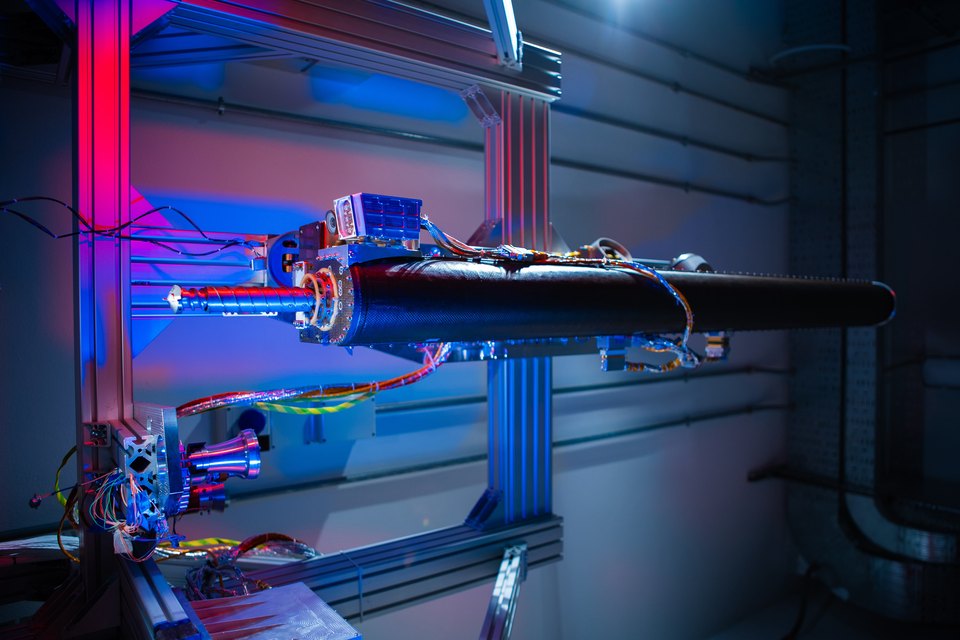
The European Space Agency has published an overview of the science and technology it plans to fly to the Moon. It covers a series of experiments on commercial and partner missions, from a landing camera to a drill that will search for water ice.
Landing, ranging and a first European relay
ESA groups the work around one aim: learning how to operate safely and sustainably on the Moon before people stay there for long. Several items are about getting there and finding the way.

LandCam-X will fly on the Griffin-1 lander and film the changing terrain during descent. ESA says the footage will give real data to improve autonomous landing systems, the software that steers a lander without help from the ground.
MPAc will launch on Intuitive Machines’ IM-3 mission. It uses laser ranging, which times laser pulses sent to the Moon to measure the Earth-Moon distance very precisely. ESA says it builds on a method used since the Apollo era and will help study the Moon’s interior and test fundamental physics. The same launch carries Scanway’s SOP120 telescope to lunar orbit, and ESA will buy landing-site survey data from it.
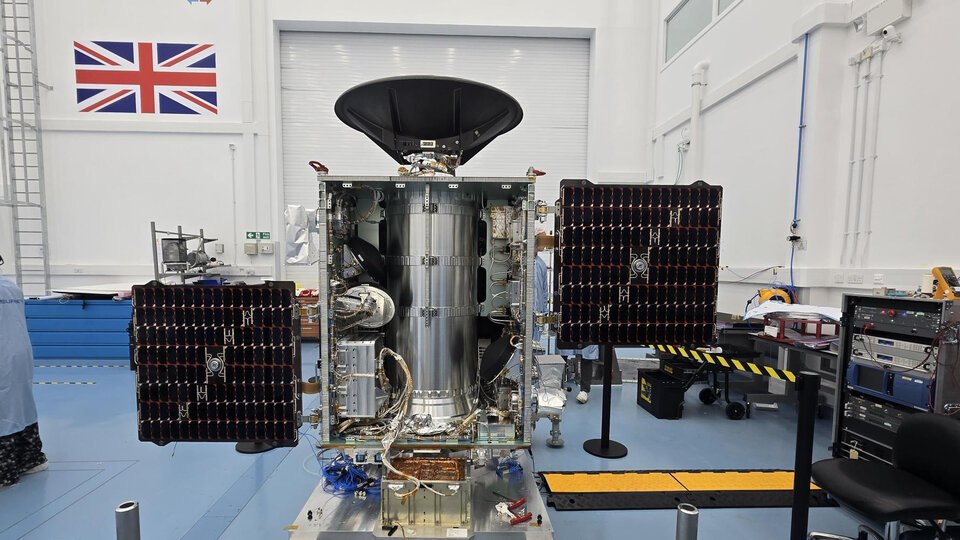
Lunar Pathfinder, built and tested at SSTL in the United Kingdom, is described as Europe’s first dedicated lunar communications relay satellite. A relay passes signals between Earth and spacecraft that cannot see Earth directly. It is the first element of Moonlight, ESA’s planned communications and navigation service for the Moon, and will be placed in lunar orbit on Firefly Aerospace’s Blue Ghost Mission 2. One early user is NASA’s LuSEE-Night radio astronomy experiment, which lands on the same mission. Also aboard is PLATE, a materials experiment on the wheels of the Rashid-2 rover that will show how lunar dust and abrasion wear spacecraft materials.
The search for water, from underground to the thin air
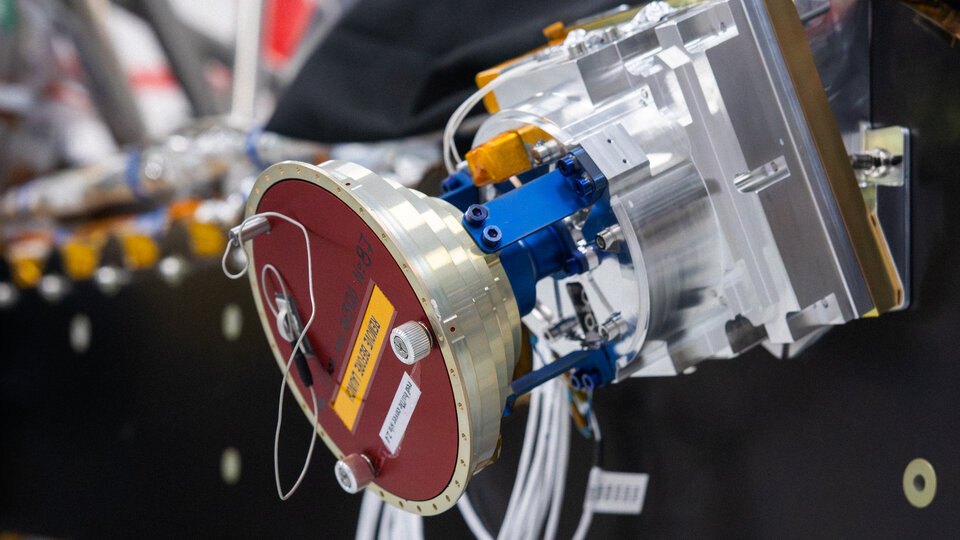
Three instruments look at lunar resources. The best known is Prospect, which travels on Intuitive Machines’ IM-4 mission. It will drill up to one metre into the south polar surface to collect samples that may hold water ice and other volatiles, meaning substances that turn to gas easily. Its instruments will analyze the samples and demonstrate extracting oxygen from the regolith, the loose lunar soil.
Two further instruments look for water without drilling. The Rover Permittivity Sensor sits inside a wheel of the Rashid-3 rover and measures how the soil responds to electrical signals, which can reveal ice below ground. The Exploration Mass Spectrometer will fly on the Japanese-Indian LUPEX mission to identify chemicals in the Moon’s extremely thin exosphere, the faint gas layer above the surface, and show how they vary from place to place.
ESA’s ultra-wideband demonstrator is a different kind of test. It will check whether wireless communication and precise ranging between a lander and a rover, technology already common on Earth, can work on the Moon.

A service station for the lunar night
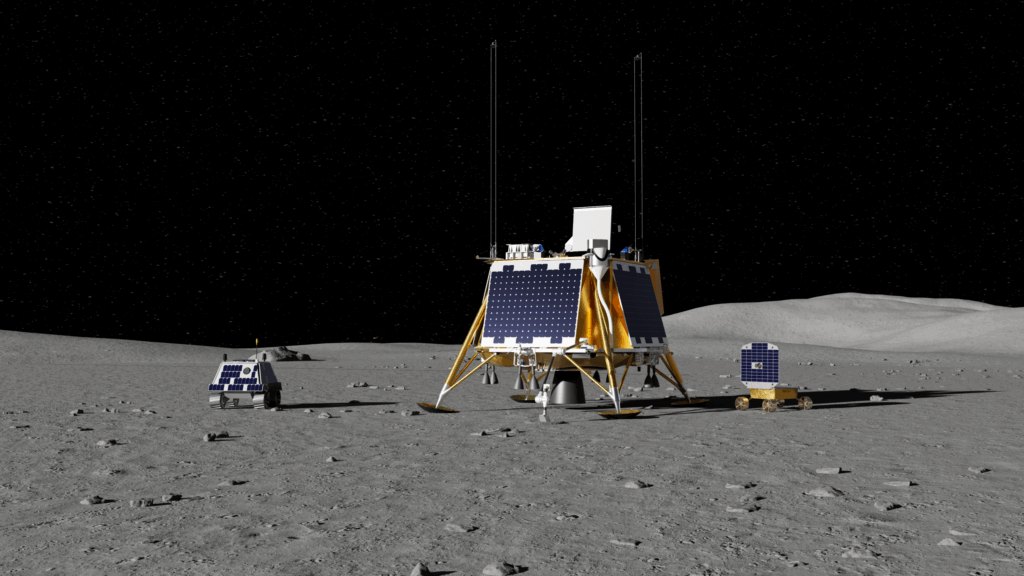
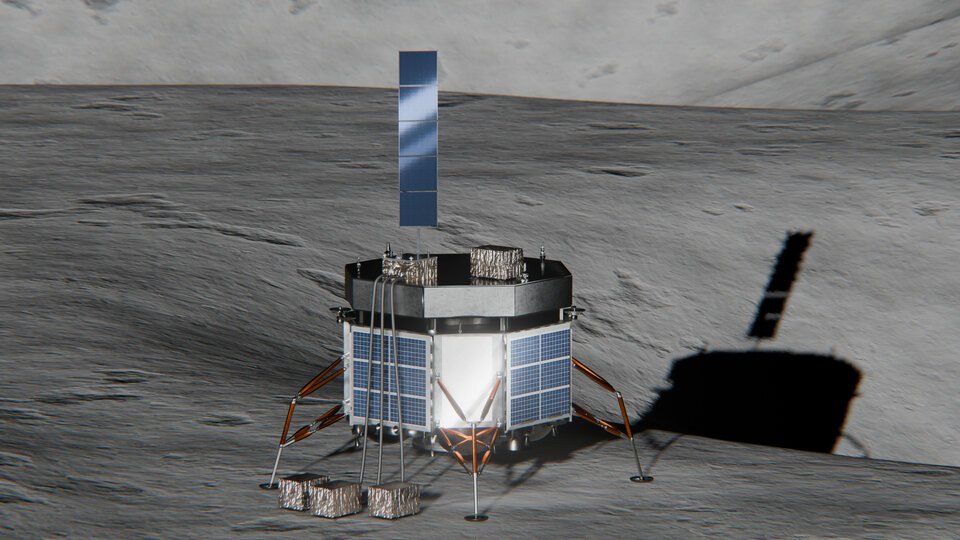
The last pair is about infrastructure. OASIS is a small lunar service station that supplies power, communications and data handling to experiments, even through the extreme cold of the lunar night. ESA says this lets instruments work for years rather than a single lunar day, which lasts about two Earth weeks. Its first planned payload is ECHO, a suite that will study charged particles, the exosphere and the abrasive lunar dust.
What to watch: Dates that decide the order
ESA gives no launch dates in the overview, but earlier reporting here and on the agency’s own pages gives a rough order. Griffin-1 is the nearest: our Blue Ghost coverage notes it is targeted no earlier than November 2026 and had not launched as of October 17, so LandCam-X could be first to return data.
Blue Ghost Mission 2 follows. Our reporting lists it for no earlier than 2027, on the far side near Nassau Crater, with at least 10 days on the surface and six payloads including Lunar Pathfinder, LuSEE-Night and the UAE’s Rashid Rover 2. That date has already slipped from an earlier 2026 listing, so it is the one to check.
Prospect depends on a tight schedule. According to our report on the Prospect drill, ESA’s own post gives only 2027 for reaching the Moon, and the drill has about one lunar day, roughly 10 Earth days, to work. Its lab is designed to heat samples to almost 1,000 °C. The kit was first planned for Russia’s Luna-27 lander and moved to the American lander after that partnership ended, a reminder that schedules depend on partners.
What would change the picture is the water results. If Prospect, the permittivity sensor and the spectrometer agree on where ice sits and how much, they would support choosing future sites. Moonlight, OASIS and the relay then matter because they would let such sites be reached, powered and talked to over time. ESA says it is building these capabilities step by step through international partnerships and a growing range of commercial lunar missions.